
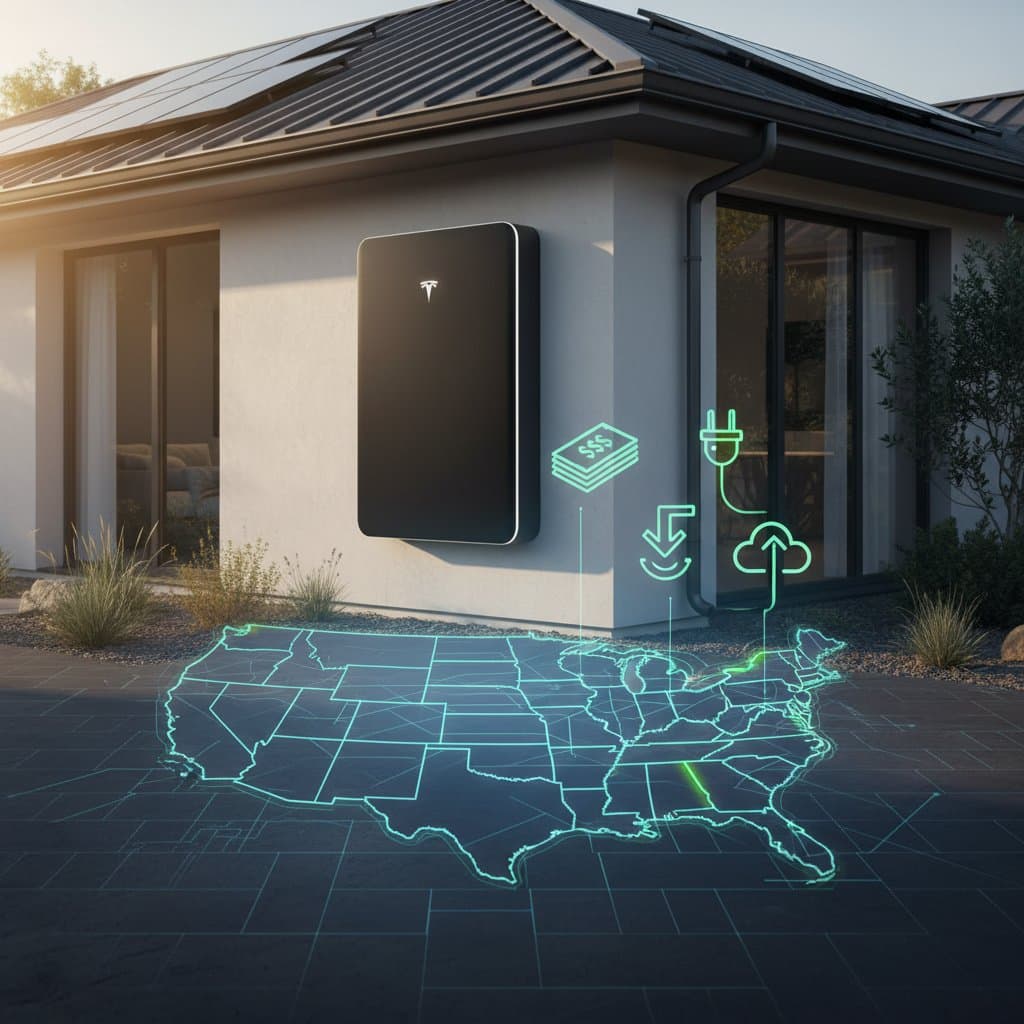
Discover the 12 States with $5K+ Battery Rebates
Energy storage incentives expand rapidly across the United States as states recognize the benefits of integrating batteries with solar systems. Homeowners and businesses gain substantial cost reductions, often thousands of dollars, while contributing to grid reliability and clean energy objectives. Several state programs now provide rebates exceeding $5,000 per installation, encouraging investment in battery storage.
This guide details twelve states with robust rebate programs. Each initiative features distinct eligibility criteria, capacity requirements, and funding mechanisms. All programs aim to promote distributed energy storage that enhances local power stability.
1. California
California leads through the Self-Generation Incentive Program, or SGIP. This initiative delivers tiered rebates for residential and commercial setups. Rebates surpass $5,000 for systems supporting critical loads or demand response, with elevated rates in wildfire zones or for low-income participants. The structure prioritizes resilience and equitable access to clean energy.
2. Massachusetts
Massachusetts provides battery rebates via the ConnectedSolutions program and the Solar Massachusetts Renewable Target incentive. Residential users enrolling in utility demand programs receive payments that exceed $5,000 over the participation term. Commercial projects secure larger incentives based on capacity and peak event contributions. These options integrate storage with solar to optimize energy use.
3. New York
The New York State Energy Research and Development Authority administers the Energy Storage Incentive Program for residential and commercial installations. Per-kilowatt-hour incentives reach or exceed $5,000 for standard home systems. Pairing these with federal tax credits covers a large share of expenses. The program advances the state's commitment to distributed energy resources.
4. Vermont
Green Mountain Power in Vermont delivers direct incentives for batteries shared during grid peaks. Upfront rebates often top $5,000 per household, scaled to system size and agreement duration. This utility-driven approach showcases effective storage deployment without major infrastructure upgrades. Participants enhance local reliability through controlled energy discharge.
5. Hawaii
Hawaii counters high electricity rates with storage incentives promoting self-reliance. The Battery Bonus program offers rebates over $5,000 for adding batteries to solar setups. Payments cover installation and grid services, stabilizing island grids and cutting fossil fuel dependence. Homeowners achieve greater energy independence in remote areas.
6. Maryland
Maryland's Residential Clean Energy Rebate Program pairs with tax credits to fund battery storage. Base rebates scale with capacity, and combined benefits exceed $5,000 for sizable residential projects. Policies favor solar-plus-storage and standalone systems to bolster energy security and emissions reductions. Applicants verify eligibility through state energy offices.
7. Oregon
Oregon's Energy Trust of Oregon, alongside utility programs, funds qualifying battery systems with rebates. Levels adjust for income and project scope, frequently surpassing $5,000 in savings. Utilities add time-of-use credits for peak-hour discharge, extending value past the initial payout. Residents target installations that align with personal energy needs.
8. New Jersey
New Jersey promotes batteries with solar through its Storage Incentive Program. Performance-based payments hit $5,000 for average residential systems and higher for commercial ones. These incentives offset costs for pioneers in distributed energy while aiding grid upgrades. Businesses explore options tied to capacity and operational contributions.
9. Connecticut
Connecticut's Energy Storage Solutions program combines upfront rebates and performance bonuses exceeding $5,000 for homes. Utilities and the Connecticut Green Bank manage the effort, providing financial and technical guidance. Higher rates apply in underserved areas to promote fair clean energy access. Participants coordinate with local providers for seamless integration.
10. Arizona
Arizona utilities maintain battery rebates amid evolving solar policies. Salt River Project provides up to $3,600 per system, and stacking with manufacturer or local offers pushes totals over $5,000. These target peak demand management during heat waves. Homeowners combine incentives to maximize returns on storage additions.
11. Nevada
Nevada Energy's Energy Storage Incentive scales rebates above $5,000 based on capacity and usage. Higher amounts go to participants allowing grid access for control. The program serves residential and small commercial needs, addressing solar fluctuations for balanced power. Users select systems that fit their consumption patterns.
12. Colorado
Colorado utilities like Xcel Energy offer rebates via the Renewable Battery Connect program. Combined incentives exceed $5,000 for eligible installations contributing to peak demand. These support renewable integration by enabling stored energy release. Property owners assess utility territories for optimal program fits.
Key Factors Influencing Rebate Amounts
Several elements determine rebate values, guiding effective planning for maximum returns.
- System size and capacity: Bigger batteries earn larger rebates, subject to per-kilowatt-hour caps in some programs.
- Grid services participation: Extra incentives reward demand response or peak support functions.
- Customer classification: Low-income or essential-use sites qualify for boosted rates.
- Utility jurisdiction: Rates and budgets vary by provider within states.
- Funding timelines: Phased allocations mean applying during open cycles secures access.
Broader Impacts of State Rebate Programs
These initiatives extend beyond immediate savings to foster enduring grid improvements. Batteries ease transmission burdens, integrate renewables smoothly, and drive widespread adoption. Utilities achieve superior demand control, while communities build outage resistance.
Federal tax credits and rate reforms further enhance battery viability, shortening payback to a few years. This shift benefits homeowners, businesses, installers, and developers through consistent demand. Professionals leverage program details for tailored project strategies.
Steps to Access Battery Storage Rebates
Prospective installers start by checking state and utility sites for updated guidelines. Eligibility and amounts shift with funding availability, so monitor application windows closely. Partner with certified professionals to ensure compliance and full benefit capture.
Contractors track program nuances to refine designs, financing, and grid ties. This knowledge enables customized solutions that align with client goals and advance clean energy transitions. Early action positions users to capitalize on these evolving opportunities.