
-
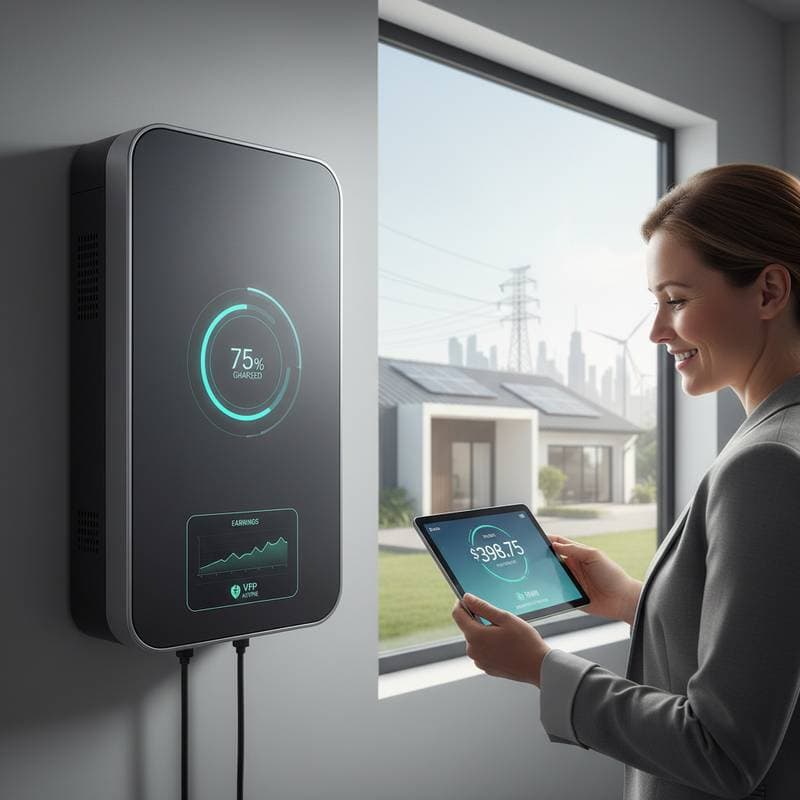
Homeowner: Supplies capacity and collects ongoing payments.
-
Aggregator: Handles integration, predictions, and control functions.
-
Utility or grid operator: Purchases services like capacity provision or demand response.
-
Manufacturers: See boosted demand as participation enhances battery value.
Energy analyst Robert Haines of Grid Economics Consulting observes, “Virtual power plants are changing the economics of residential storage. What was once a backup-only purchase now has a measurable payback potential. The $400 figure is real money for households and a scalable resource for utilities.”
Policies Fueling Program Growth
Federal and state regulations promote distributed resources in energy markets. Aggregated systems now bid into wholesale arenas, enabling efficient monetization. California, Vermont, and Massachusetts lead with established programs, as other states launch pilots.
Incentives for U.S. battery production lower costs, strengthening investment appeals. Paired with virtual power plant income, these factors make storage systems more viable.
Utility leaders see virtual power plants as efficient substitutes for peaker plants. Laura Kim, Director of Distributed Energy Programs at a Midwest utility, states, “We can meet peak demand without constructing new infrastructure. By aggregating behind-the-meter batteries, we gain flexible capacity that can respond within seconds.”
Requirements to Join a Virtual Power Plant
Participation demands a suitable battery and reliable internet for aggregator communication. Systems must allow remote oversight and comply with cybersecurity protocols.
Essential specifications include:
-
Usable capacity: Typically 5 to 10 kWh minimum.
-
Efficiency: Strong round-trip rates optimize performance and rewards.
-
Response speed: Quick activation, often in seconds, to meet grid signals.
-
Availability: Systems stay connected during agreed windows.
Installers verify compatibility and complete setup. Brands like Tesla Powerwall, Enphase IQ Batteries, and SolarEdge Home systems qualify for many programs. Knowledgeable installers guide clients toward income-generating options alongside energy savings.
Broader Economic and Environmental Benefits
Individual earnings provide modest gains, yet collective impacts prove significant. A network of 10,000 batteries contributing 10 kWh each yields 100 MWh, bolstering grids during peaks and cutting fossil fuel dependence.
Environmentally, virtual power plants reduce emissions by favoring renewables and avoiding dirty backups. Decentralized resources also build system resilience.
As markets emphasize performance, batteries may claim more service revenues, potentially raising payouts and aiding project financing for installers.
Barriers to Broader Participation
Adoption faces hurdles like complex interconnections, privacy worries, and varying state rules. Some utilities limit third-party access to customer assets over reliability concerns.
Battery diversity complicates integration due to proprietary protocols. Efforts toward open standards aim to ease these issues and cut expenses.
Education gaps persist, with many unaware of income possibilities. Installers increasingly highlight virtual power plants in consultations, presenting them as ROI boosters.
Opportunities for Installers and EPC Firms
Installers and engineering firms drive expansion by managing designs, connections, and enrollments. Familiarity with program needs allows matching equipment to client goals.
Partnerships with aggregators yield referral fees or revenue shares, fostering ongoing relationships. For commercial projects, virtual power plants monetize larger batteries, adding to savings from demand management.
Expert Views on Future Trends
Research predicts robust virtual power plant expansion as costs drop and utilities embrace distributed storage. Residential enrollments should surge with clearer programs.
Dana Lewis of Storage Insight Group notes, “Virtual power plants are moving from pilot stage to mainstream deployment. The homeowner rental model, with payments around four hundred dollars per year, is a tangible incentive that accelerates adoption. As program transparency improves, participation rates will rise.”
Lenders may factor in these incomes for financing, reducing rates and broadening access.
Building a Distributed Energy Landscape
Virtual power plants reshape energy dynamics, empowering customers as active participants. The $400 annual earning, though partial cost recovery, delivers real value and grid involvement.
Solar experts can leverage this by blending technical skills with market insights. As programs grow, informed professionals will meet rising demand for integrated solutions.
Widespread battery rentals enhance stability and clean energy progress, embedding income generation into everyday home systems.