
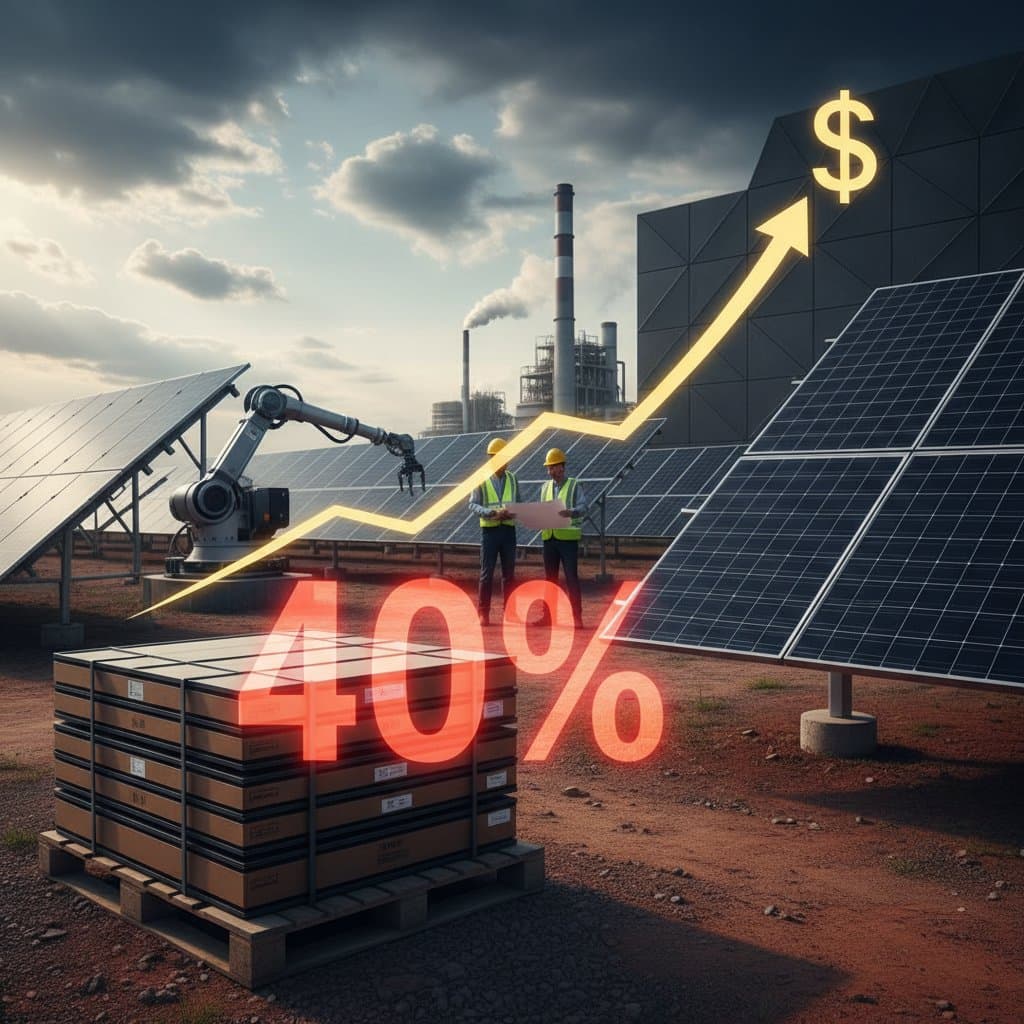
Upcoming U.S. Solar Tariffs Set to Increase Panel Prices by 40% in 2026
U.S. solar developers brace for significant price hikes in photovoltaic modules following confirmation of new federal tariffs. These duties target imports from key Asian suppliers and could elevate total system costs by up to 40 percent starting in 2026. Analysts predict shifts in procurement approaches, potential delays in project development, and heightened focus on building local production capacity.
Understanding the Tariffs and Their Reach
The new tariffs focus on crystalline silicon modules from Southeast Asian countries, where many producers shifted operations to sidestep prior trade barriers. U.S. International Trade Commission data indicates these areas provide over 80 percent of panels for utility-scale and commercial installations across the country. Duty rates will range from 35 to 40 percent, varying by material sources and cell types.
Officials from the Office of the U.S. Trade Representative describe the measures as essential for countering unfair pricing and bolstering American supply chains. One representative emphasized the goal of creating equitable conditions for U.S. producers. This approach aims to safeguard jobs and promote sustainable domestic growth in the solar sector.
Reactions from the Industry and Broader Market Effects
The Solar Energy Industries Association expresses concern that these tariffs may hinder installation growth, especially in high-activity states like Texas, California, and Florida. SEIA President and CEO Abigail Ross Hopper highlights the risk to recent progress. She notes that elevated costs could challenge developers, utilities, and end-users in achieving clean energy objectives.
Procurement teams at major power producers already calculate the fallout. A Houston-based executive reports that current contracts assume modules at 25 cents per watt. An increase to 35 cents or higher would require project redesigns or postponements to maintain financial feasibility.
Experts forecast an added 8 to 10 cents per watt for imported panels, equating to 8 to 10 million dollars extra for a 100 MW utility-scale installation. These costs extend beyond modules, influencing expenses for engineering, procurement, construction firms, mounting systems, and ancillary parts. Developers must now evaluate every element to mitigate overall budget pressures.
Boosting Domestic Production Capabilities
These tariffs align with national initiatives to expand U.S. solar manufacturing through incentives for modules, cells, and wafers. Recent factory commitments in Georgia, Ohio, and Colorado signal growing momentum. The duties are likely to enhance the appeal of local options by narrowing the price gap with imports.
First Solar, based in Tempe, Arizona, maintains three active U.S. facilities and develops a fourth. Its thin-film technology avoids the crystalline silicon tariffs. CEO Mark Widmar underscores the policy's role in fostering stability. He states that fair trade practices support employment, technological advances, and national energy independence.
Even so, current projections from BloombergNEF suggest U.S. output will cover under 50 percent of demand in the coming years, despite expansions. Developers dependent on imports will need to secure alternatives swiftly, possibly through stockpiling or early commitments.
Adapting Installation and Equipment Choices
Rising module prices prompt reviews of other system components to identify savings opportunities. Engineering, procurement, and construction professionals may prioritize cost-effective mounting and balance-of-system elements. Manufacturers of trackers observe increased demand for efficient designs that minimize material use.
A lead engineer at Nextracker discusses innovations in lightweight materials and modular setups. These changes aim to counteract panel cost surges by streamlining deployment. Collaboration with developers focuses on enhancing installation efficiency and optimizing land utilization.
Single-axis trackers dominate utility-scale ground-mount projects. Strategies like reduced tilt angles or bifacial panel adoption can improve energy output relative to investment. Such adjustments help sustain project returns amid economic shifts.
Navigating Financing Challenges and Policy Debates
Lenders scrutinize tariff effects on project profitability, potentially tightening terms like interest rates and debt coverage. Elevated upfront costs may compress expected revenues, requiring developers to demonstrate robust mitigation plans.
Experts question the tariffs' effectiveness without complementary support for upstream production, such as polysilicon and wafer facilities. A comprehensive strategy could fill gaps in the domestic ecosystem more rapidly.
Strategies for Industry Resilience
To counter these changes, developers diversify sourcing by blending domestic and exempt imports, while extending contract timelines for stability. Some firms pursue partnerships with U.S. manufacturers to secure priority access.
Engineering teams experiment with hybrid models that integrate local components where possible. These efforts not only address immediate cost pressures but also build a more adaptable supply network. Over time, the industry stands to gain from reduced import reliance, spurring innovation and aligning with national clean energy ambitions.