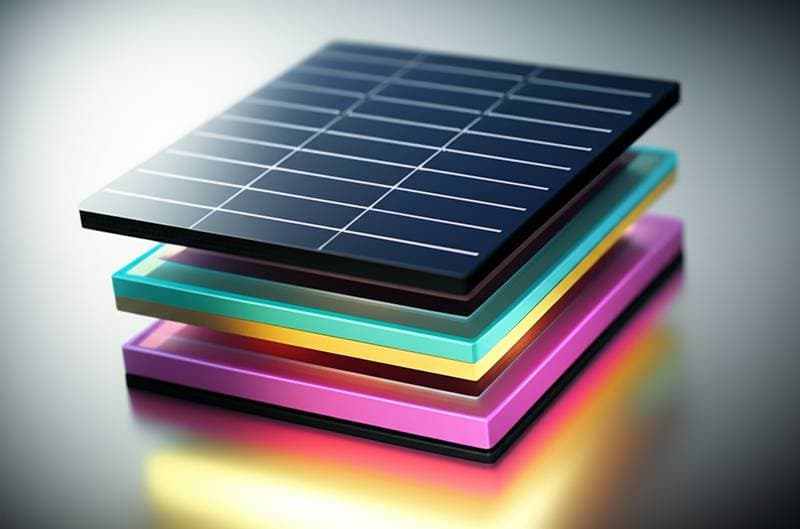
Perovskite Solar Cells Approaching 33% Efficiency Mark
Perovskite solar cells near 33 percent efficiency. Tandem designs, stability gains, and pilot production lines bring commercialization within reach for high-performance solar modules.
Loading...
Articles tagged with perovskite-solar
Perovskite solar cells near 33 percent efficiency. Tandem designs, stability gains, and pilot production lines bring commercialization within reach for high-performance solar modules.
Perovskite-silicon tandem solar cells have reached 33% efficiency in commercial settings, a pivotal advancement for photovoltaic technology. This achievement highlights improved stability, manufacturing scalability, and certified performance, boosting investor interest and paving the way for reduced energy costs and expanded sustainable power solutions worldwide.
A U.S. research team has set a new benchmark with tandem perovskite-silicon solar panels reaching 32% efficiency, exceeding standard silicon capabilities. This advancement holds potential to overhaul U.S. solar production, deployment strategies, and regulatory frameworks, despite ongoing issues with longevity and mass production. Experts predict that overcoming these barriers could dramatically lower costs and enhance performance in the renewable energy market.
Perovskite-silicon tandem solar panels have surpassed the 30% efficiency mark, marking a pivotal advancement in solar technology. Enhanced stability, scalable manufacturing, and cost reductions enable lighter, higher-output modules. As production ramps up, perovskites stand to transform solar economics, production methods, and sustainable energy deployment.
Perovskite solar cells offer exceptional efficiency potential yet face significant obstacles in stability and production scale. Heavy investments and evolving tests signal progress, but 2025 will determine if they achieve commercial viability for everyday rooftop use.
Perovskite-silicon tandem solar modules now achieve 30% efficiency, revolutionizing renewable energy with superior output, enhanced durability, and cost-effective production. As certifications progress and manufacturing scales, this innovation sets new standards for solar performance and economic viability worldwide.
Perovskite-silicon tandem solar panels now achieve 31% efficiency, a record that promises to transform US renewable energy. Pilot deployments test real-world viability, while manufacturing expansions signal stronger domestic production and global leadership in photovoltaics.
Perovskite solar panels attain 30% efficiency, exceeding silicon benchmarks and ushering in advancements for affordable, high-output renewable energy. Tandem designs lower costs, enhance durability, and support commercialization, influencing United States solar projects and economics.
Perovskite solar modules now verify 31% efficiency in commercial production, ushering in superior photovoltaic capabilities. This innovation delivers enhanced stability, scalable production, and seamless integration with current systems, poised to cut energy costs and boost solar adoption in residential, commercial, and utility applications.
Perovskite solar panels transition from labs to markets with lightweight, flexible modules and tandem efficiencies exceeding 30 percent. Durability enhancements and industry partnerships position this technology to challenge silicon dominance and accelerate solar adoption.
Perovskite solar cells offer lightweight, affordable, and highly efficient alternatives to traditional silicon panels, yet stability under real-world conditions remains a critical obstacle. Advances in hybrid tandem designs and protective encapsulation are addressing these issues, potentially enabling scalable production and new applications in building-integrated photovoltaics. As research accelerates, perovskites may soon complement silicon in transforming global solar energy landscapes.
Perovskite solar cells edge toward 40% efficiency, exceeding silicon benchmarks and reshaping clean energy landscapes. Tandem architectures, enhanced stability, and manufacturing advances propel this shift, despite ongoing concerns over longevity, lead content, and market scaling. Surging investments and supportive policies position perovskite to influence solar affordability and versatility in the decade ahead.