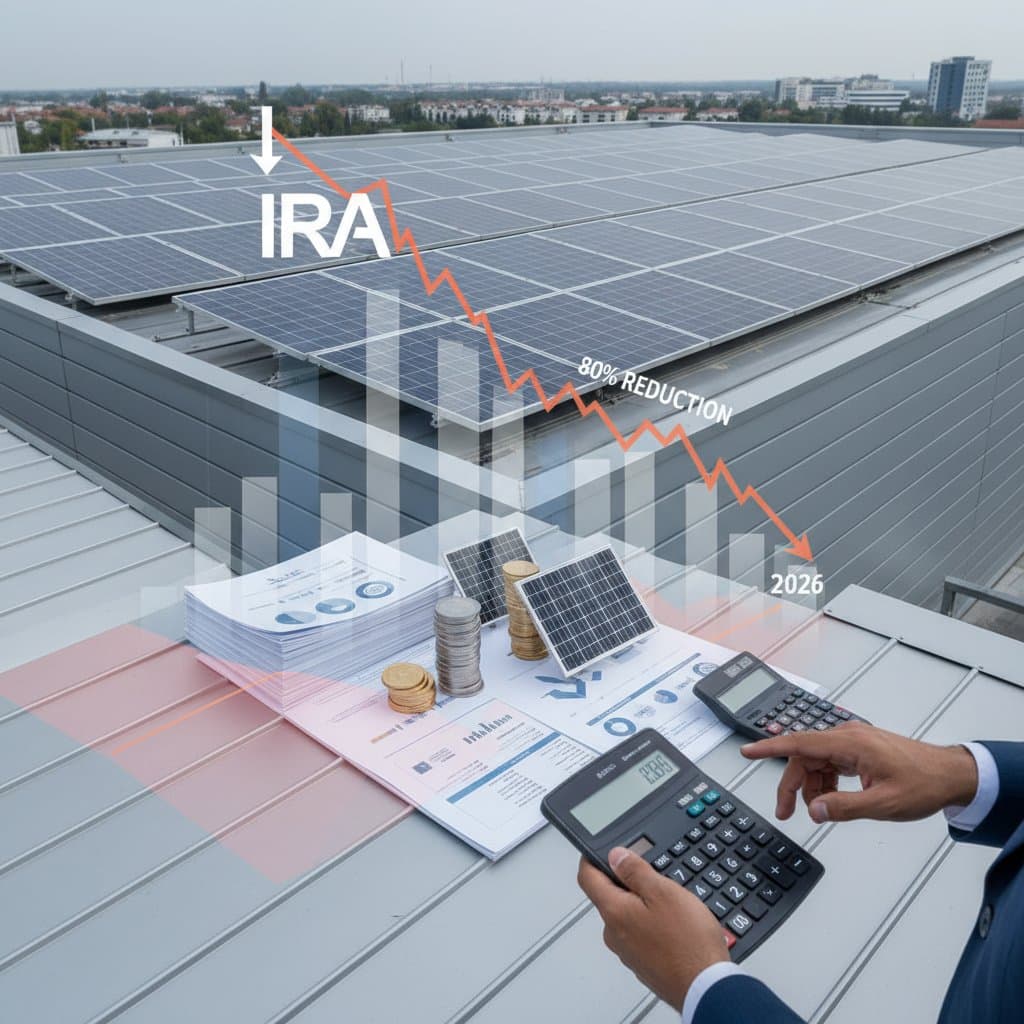
IRA Cuts Solar Depreciation 80% by 2026
New IRS rules under the Inflation Reduction Act phase out accelerated solar depreciation by 2026. Developers face tighter margins yet can use timing, cost segregation, and new credits to stay competitive.
Loading...
Articles tagged with depreciation
New IRS rules under the Inflation Reduction Act phase out accelerated solar depreciation by 2026. Developers face tighter margins yet can use timing, cost segregation, and new credits to stay competitive.
The 2026 IRA depreciation changes alter solar project economics by phasing out bonus depreciation and enhancing credit options. These modifications influence cash flow, valuations, and financing. Developers must grasp the interplay of depreciation, credits, and transferability to maximize returns and ensure compliance.
From 2026, U.S. solar assets qualify for five-year depreciation under updated IRS rules, speeding up cost recovery and enhancing project viability. This adjustment improves financial liquidity, standardizes treatment with other renewables, and positions the solar sector for increased investment, manufacturing, and infrastructure development.
From 2026, solar systems depreciate over decades like real estate, stabilizing valuations and favoring long-term holds. Developers and investors adapt to extended schedules, integrated assessments, and new ownership paradigms, positioning solar as enduring built-environment infrastructure.
Beginning in 2026, updated IRS guidelines allow solar projects to depreciate their full cost basis alongside the Investment Tax Credit, effectively doubling depreciation benefits. This shift enhances project viability, improves cash flows, and may drive faster solar adoption across the United States, requiring developers and investors to adjust their strategies promptly.
The IRS's recent solar depreciation clarification allows full tax credits alongside faster cost recovery, enhancing cash flow and investor returns. Developers can optimize financing, leverage domestic incentives, and shorten payback for commercial and utility-scale solar projects with precise compliance.
A recent IRS rule alters depreciation for commercial solar assets, offering businesses enhanced tax deductions, refined financial modeling, and stronger incentives for direct ownership. This change clarifies component treatment, boosts net present value, and positions solar investments as more viable long-term options amid evolving clean energy policies.
The Inflation Reduction Act delivers transformative tax incentives for commercial solar projects. Businesses can now combine the Investment Tax Credit with accelerated depreciation to effectively double their financial returns. This approach lowers costs, improves cash flow, and advances sustainability objectives, positioning 2026 as a key opportunity to leverage these enhanced benefits.
A key provision in the Inflation Reduction Act permits solar investors to pair accelerated depreciation with comprehensive tax credits, accelerating paybacks and boosting returns. Known as the IRA solar provision, this strategy lowers project costs when implemented with precision. Understand compliance essentials, documentation needs, and structuring tips to realize these savings.
The IRS has reduced the depreciation period for solar energy systems to five years, enabling faster cost recovery and higher project returns. This standardized approach simplifies asset classifications, improves financing options, and could drive growth in domestic manufacturing. Developers, investors, and tax professionals need to adjust strategies promptly to leverage these changes in solar economics and planning.
The IRS has clarified eligibility for a 12-year MACRS depreciation schedule on certain solar assets. This development provides developers with expanded options for cost recovery, influencing project financing, investor strategies, and compliance in the solar sector.
The IRS now requires separate depreciation for solar energy systems and roof structures, clarifying tax treatment for rooftop projects. This impacts cost recovery and documentation, providing consistency for developers while adjusting initial benefits. See how the industry is responding and adapting strategies.
New 2026 IRS rules phase out bonus depreciation, slashing first-year solar deductions by up to 60 percent. This impacts developers, investors, and EPCs through altered financing, margins, and accounting, yet prompts innovation and efficiency in the solar sector.
The Inflation Reduction Act offers solar investors a key advantage: accelerated depreciation that cuts taxes upfront and amplifies returns. Paired with the investment tax credit, this incentive acts as a powerful enhancer, improving cash flow and driving faster reinvestment in U.S. clean energy initiatives.
Businesses can leverage a powerful financial strategy by pairing federal solar investment tax credits with accelerated depreciation. This approach minimizes initial outlays, speeds up payback periods, and enhances overall profitability for renewable energy initiatives. Understand the key elements of timing, eligibility, and planning to optimize savings starting in 2026.
The Inflation Reduction Act’s 60% first-year solar depreciation provision revolutionizes project economics, accelerating cost recovery, bolstering cash flow, and elevating investor returns. Paired with the Investment Tax Credit, it can reduce net system costs by half, while promoting domestic manufacturing and spurring commercial solar growth across the U.S.
Effective 2026, solar energy systems depreciate alongside real estate, reclassifying them as enduring property assets. This policy evolution streamlines tax strategies, prolongs deduction periods, and elevates the financial appeal of solar for homeowners, developers, and commercial investors seeking stable, green enhancements.
The IRS has finalized a 5-year depreciation schedule for solar energy property effective 2026, offering developers and investors reliable tax treatment. This policy enhances project economics, speeds up capital recovery, and bolsters U.S. manufacturing initiatives. Clear depreciation rules now support stable financing, procurement, and investment decisions in solar markets nationwide.
Starting in 2026, the IRS will revise depreciation rules for solar equipment, creating distinct tiers for components under MACRS. These shifts affect tax benefits, financing models, and design choices for solar developers and investors nationwide.
As 2026 nears, solar investors must navigate IRA depreciation changes that alter project economics and tax strategies. With bonus depreciation phasing out, expect tighter cash flows and lower net present values, requiring advanced modeling, partnerships, and planning to thrive in the evolving renewables market.