
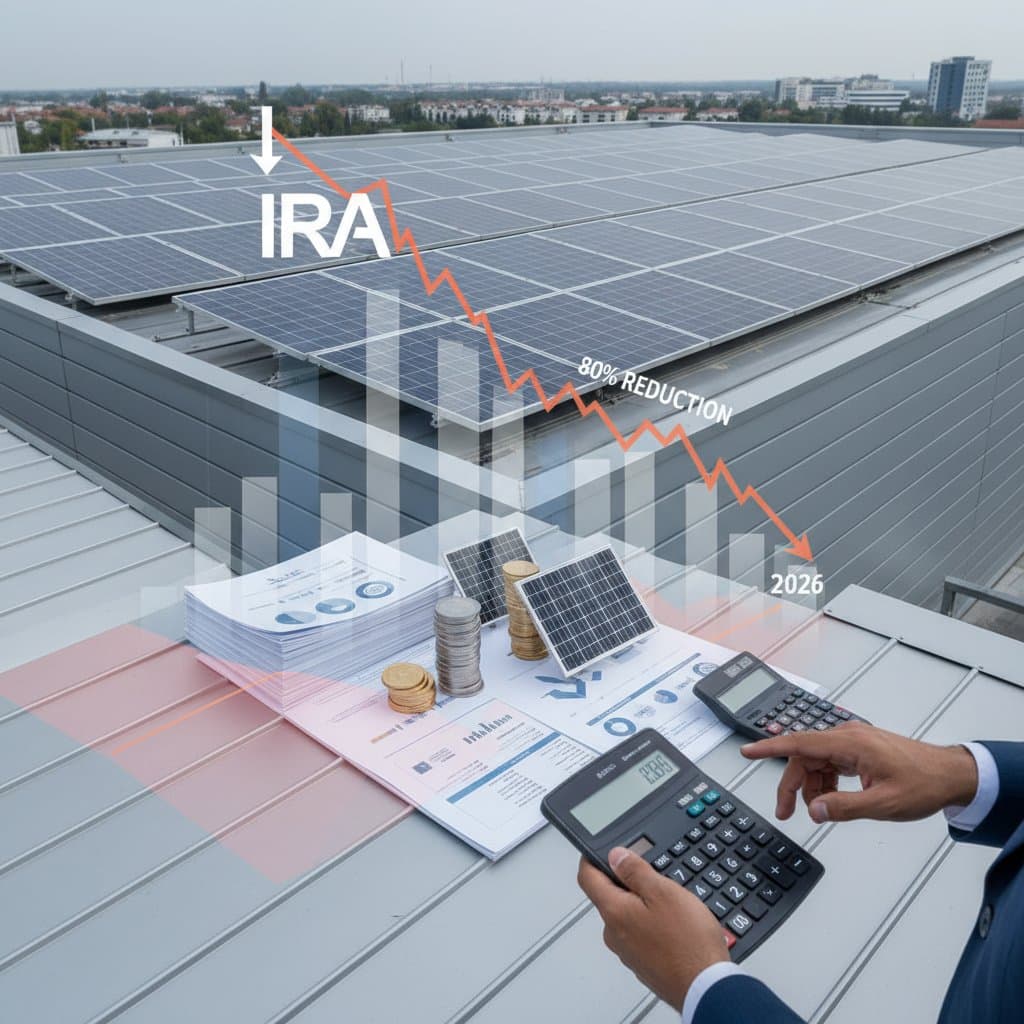
New Rules Under the Inflation Reduction Act Reduce Solar Depreciation Benefits by 2026
Commercial and industrial solar developers face a sharp reduction in tax benefits. New Internal Revenue Service rules under the Inflation Reduction Act phase out accelerated depreciation for clean energy assets. Analysts estimate this adjustment could lower after-tax internal rates of return by up to 20 percent for some commercial installations.
The modified structure marks one of the largest shifts in federal tax treatment for solar assets since the Investment Tax Credit began. Developers, investors, and suppliers must update project models, financing plans, and asset valuations.
Phasing Out Accelerated Depreciation
Prior rules allowed commercial solar projects to claim 100 percent bonus depreciation. Owners deducted the full cost of equipment in the year it entered service. This approach, paired with the Investment Tax Credit, sped up cash flow and shortened payback periods. The new framework cuts bonus depreciation each year until it reaches a permanent 20 percent level by 2026.
Laura McKinney, tax director at SunGrid Energy, noted that the prior policy drew private capital into commercial solar. The loss of acceleration changes how investors assess short-term returns and may delay some project starts.
The phase-down covers all energy-related property under the Modified Accelerated Cost Recovery System. This includes photovoltaic panels, inverters, racking, and integrated storage equipment. Owners retain standard five-year MACRS depreciation, yet the immediate deduction shrinks.
Effects on Project Economics
Depreciation has shaped financial models for tax equity investors. A typical 2 MW rooftop system once generated millions in immediate deductions. Sponsors now lean more on production credits and domestic content adders to maintain returns.
ClearGrid Advisors analysis shows the change raises the levelized cost of electricity for commercial projects by 3 to 5 percent. Utility-scale systems experience a smaller effect due to scale and cheaper financing.
Matthew Torres of Solar Capital Partners explained that investors build participation around both the Investment Tax Credit and depreciation. Reduced depreciation may limit interest in marginal deals or redirect capital to projects with larger credit multipliers.
Compliance and State Differences
State tax codes decide whether they follow federal depreciation rules. Some states decoupled from accelerated schedules, creating separate state deductions. Multi-state developers must track these differences to avoid reporting errors.
Rachel Kim, tax partner at Phelps and Warren LLP, advised careful cost segregation studies. Accurate asset classification under both federal and state rules matters more as placed-in-service dates determine bonus rates.
Procurement and Scheduling Shifts
Developers now review equipment choices such as trackers and inverters with an eye on longer recovery periods. Some shift toward lower upfront costs or extend power purchase agreements to offset slower tax benefits.
Firms accelerate construction to lock in higher bonus rates before the next cut. Consultants report increased requests for fast-track schedules on late-stage projects.
Market Outlook and Developer Steps
The depreciation change arrives alongside domestic content and wage requirements that raise project costs. Small and mid-sized developers feel the pressure most because they rely on tax equity partnerships.
GreenLink Analytics projects commercial solar growth could slow by 10 percent over two years. Corporate demand and state standards should limit the drop.
Developers can take these steps to protect returns:
- Advance construction schedules to secure higher bonus rates.
- Refine cost segregation to capture every eligible asset.
- Stack domestic content and energy community credits.
- Combine credit transferability with optimized debt terms.
- Weigh storage systems for separate depreciation treatment.
Preparing for Adjusted Returns
Project economics now hinge more on operational performance and credit adders than on immediate deductions. Developers who align commissioning dates with phase-down milestones and refine financing structures keep an edge. The market moves from quick tax relief toward steady asset performance and precise compliance.