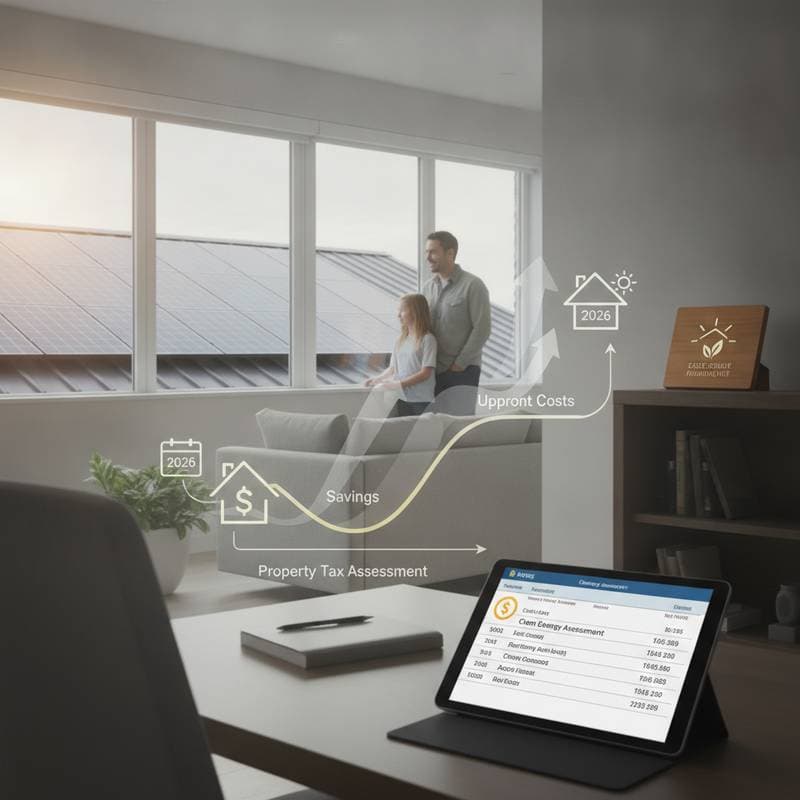
Property Tax Changes Are Reshaping Solar Payback Math
Property tax assessments are transforming solar economics in 2025 as exemptions wane and values rise. Homeowners and developers confront reduced returns and extended paybacks amid policy changes.
Loading...
Articles tagged with property
Property tax assessments are transforming solar economics in 2025 as exemptions wane and values rise. Homeowners and developers confront reduced returns and extended paybacks amid policy changes.
PACE financing enables property owners to fund solar installations via property taxes, removing upfront costs and matching repayments to energy savings. Transferable assessments, extended terms, and broad eligibility for homes and businesses make PACE a straightforward option for solar adoption, cash flow management, and sustainability objectives amid growing local and state initiatives.
Property tax based financing, known as PACE, revolutionizes solar funding for homeowners and businesses. This approach ties repayments to property taxes, eliminates upfront expenses, expands access to clean energy, and matches payments with long-term savings. With enhanced protections and wider adoption, PACE solidifies its role in sustainable solar growth.
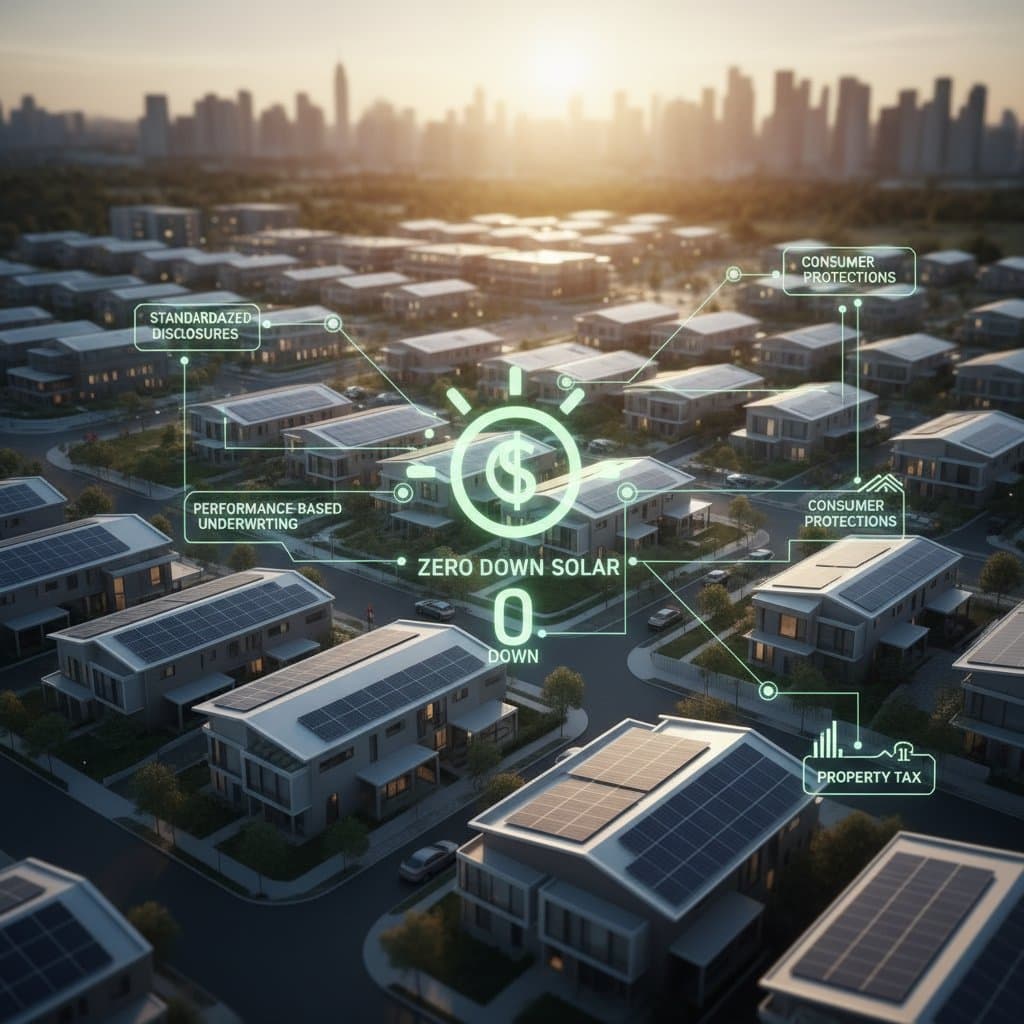
PACE financing revolutionizes solar adoption for homeowners by integrating repayment into property taxes rather than personal credit checks. This approach ensures the loan and its advantages transfer with the property, providing flexibility and security. With increasing popularity, regulatory advancements, consumer protections, and uniform standards will influence the expansion of this property-based clean energy funding across the United States.
Property Assessed Clean Energy (PACE) financing enables property owners to cover solar upgrades via tax assessments, bypassing traditional loans. This property-bound repayment reduces barriers, mitigates risks, and advances sustainable energy investments for homes, businesses, and communities.
Several U.S. states, such as New Mexico, Florida, and Maryland, plan to end or revise solar property tax exemptions in 2025. These changes may alter project financing, increase costs, and affect adoption rates. Developers, homeowners, and investors can use this guide to navigate the shifts and plan effectively in the renewable energy sector.
PACE financing reemerges, letting owners fund solar and efficiency projects through property taxes. Bolstered by better regulations, investor backing, and state expansion, it democratizes access, aids economies, and fortifies clean energy for homes and businesses.
PACE financing transforms solar costs into property tax assessments, enabling immediate installations with no upfront fees. Ideal for homes and businesses, it ensures predictable payments, enhances property values, and drives community-wide sustainability and economic benefits.
Major banks and lenders caution homeowners about Solar PACE loans, which link repayments to property taxes and hold priority over mortgages. These programs raise concerns over foreclosure risks and resale challenges, prompting calls for enhanced oversight to protect consumers while promoting clean energy adoption.
PACE property tax loans facilitate solar adoption by linking repayments to the property rather than the owner. This allows homeowners and businesses to fund installations with little initial outlay, gain instant savings, and enhance asset worth. Understand this financing approach that promotes sustainable energy for all.
PACE financing is transforming solar adoption by eliminating upfront costs and aligning repayment with long-term energy savings. Available for residential and commercial projects, it expands access, boosts property value, and supports installers with larger project scopes. Learn how PACE drives growth, overcomes financing barriers, and unlocks sustainable economic benefits.