
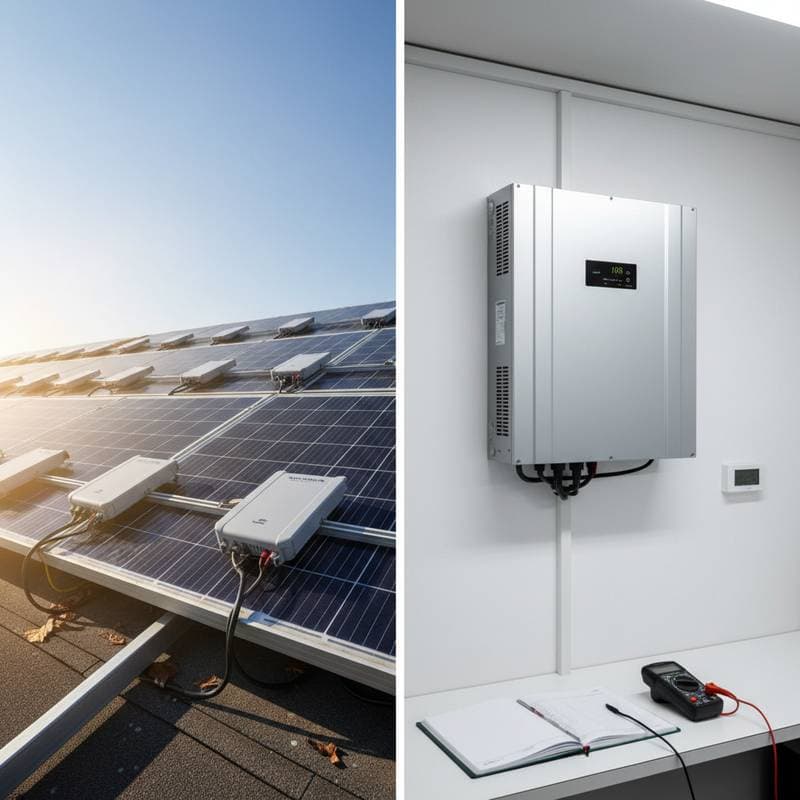
Micro vs. String Inverters: Lifespan Comparison
Installers often favor one inverter type over another, and homeowners must decide between micro inverters and string inverters for their solar setups. Both technologies have advanced significantly, with proponents touting advantages in reliability, efficiency, and durability. Field studies, warranty details, and failure patterns reveal a nuanced picture of longevity that impacts installation costs and ongoing operations for years.
Solar inverters represent the most vital electronic element in photovoltaic systems and the component most susceptible to breakdowns. Analysis of replacement trends, manufacturer updates, and design improvements underscores the importance of selecting based on expected service life. This comparison equips readers with knowledge to align choices with project goals and maintenance plans.
Advantages of Micro Inverters for Durability
Micro inverters consist of compact units mounted under individual solar panels. This setup distributes power processing and avoids centralized vulnerabilities, allowing optimization at the module level. A single unit failure affects only one panel, preserving overall system output in residential or modest commercial installations.
Regarding lifespan, micro inverters encounter balancing influences. They process limited power per unit, reducing operational heat compared to larger counterparts. Manufacturers rate them for outdoor exposure similar to panels. However, rooftop placement subjects them to temperature fluctuations, ultraviolet light, and weather extremes that accelerate component wear, particularly in capacitors and transistors.
Advancements include robust sealing, specialized potting, and enhanced heat management. Superior models incorporate protective coatings and substitute durable film capacitors for traditional types, potentially doubling service intervals. Field reports vary: numerous units operate for 20 years or more, while others fail prematurely from water penetration or thermal damage.
Common Failure Patterns in Inverters
All inverters experience eventual degradation, but the nature of failures dictates repair expenses and system interruptions. Key issues span both micro and string designs:
- Thermal cycling – Expansion and contraction from heat variations weaken solder connections over time.
- Capacitor degradation – Electrolytic types lose electrolyte fluid, causing output inconsistencies.
- Water entry – Humidity or leaks erode internal circuits and promote corrosion.
- Semiconductor wear – Transistors and diodes suffer from electrical surges and overloads.
- Software malfunctions – Control errors or outdated firmware halt operations despite sound hardware.
Micro inverters spread these risks across multiple devices, minimizing broad disruptions but multiplying replacement opportunities. String inverters centralize vulnerabilities in accessible locations, simplifying servicing. Professionals recommend micro inverters for accessible rooftops and string types for ground-based or large-scale arrays where unified maintenance proves efficient.
Role of Monitoring and Upkeep
Contemporary inverters feature advanced diagnostics. Micro inverters provide granular, panel-specific tracking to pinpoint underperformance early, such as fluctuating outputs signaling unit strain. This detail aids technicians in addressing problems swiftly.
String inverters focus monitoring at the array level, with add-ons like power optimizers enhancing resolution at extra expense. Proactive oversight extends service life across configurations by enabling interventions before issues escalate. Regular checks, including vent cleaning, software refreshes, and connection inspections, can extend operational periods significantly.
Consistent practices prevent avoidable breakdowns. Systems with diligent care often exceed rated lifespans through prompt component swaps and environmental adjustments.
Factors Influencing Long-Term Performance
Inverter endurance ties into broader grid evolution and ecological goals. Durable units cut down on waste and manufacturing demands, supporting sustainable practices. Recycling poses difficulties due to composite builds, making lifespan gains essential for industry progress.
Grid support functions, including power factor correction and stability measures, impose ongoing loads on electronics. Designs must incorporate margins for these stresses to avoid accelerated deterioration. Micro inverters handle demands at reduced scales per unit, diffusing heat buildup, though cumulative effects emerge across the array.
String inverters manage higher loads in consolidated forms, requiring robust cooling. The balance favors distributed resilience in micro setups against streamlined efficiency in strings, with choices depending on site specifics.
Strategies to Maximize Inverter Lifespan
Treat durability as an integrated approach rather than isolated specs. System designers and owners can implement these measures to promote extended reliability:
- Optimize installation sites. Position string inverters in shaded, airy spots; ensure micro units avoid stagnant air zones.
- Size components appropriately. Align inverter ratings with panel output to prevent overloads or inefficiencies that hasten wear.
- Select quality materials. Choose models with proven warranties, such as 25-year coverage for micro inverters, and verify component robustness.
- Implement vigilant monitoring. Use built-in tools or third-party systems to track metrics and schedule preemptive maintenance.
- Plan for environmental resilience. Incorporate surge protection and weatherproofing to shield against external threats.
These steps transform potential vulnerabilities into strengths, ensuring solar investments yield reliable returns over decades. By focusing on informed selection and ongoing care, users achieve peak performance while minimizing disruptions and costs.