
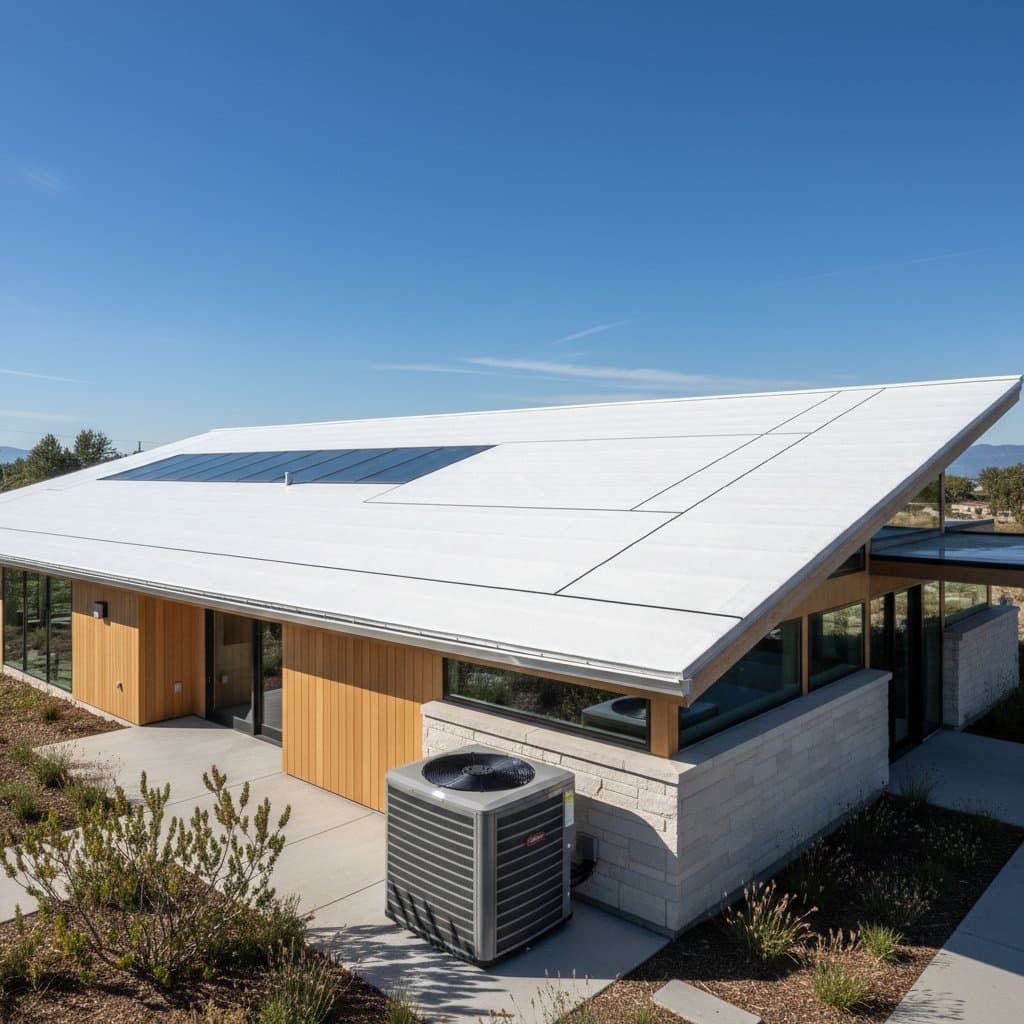
Reflective Cool Roofs Reduce Air Conditioning Costs by 25 Percent Before Solar Savings
Homeowners considering solar energy often concentrate on panels, inverters, and return on investment timelines. However, the roof presents an opportunity to enhance energy performance before any panels appear. A reflective cool roof decreases air conditioning expenses by as much as 25 percent, based on principles of thermal physics observed in numerous residential and commercial installations.
This approach establishes a solid foundation for subsequent solar additions. By addressing heat gain at the source, property owners achieve immediate reductions in energy use. The benefits extend beyond cooling to include improved system efficiency and extended material lifespan.
Principles of Operation for Reflective Roofs
Conventional dark roofs absorb solar radiation and retain heat, leading to elevated surface temperatures. During intense summer heat, an asphalt roof may exceed 150 degrees Fahrenheit, transferring warmth into the interior. In contrast, cool roofs employ reflective coatings or light-colored membranes to bounce back a significant portion of sunlight, maintaining lower surface temperatures and reducing heat infiltration.
This mechanism directly impacts heating, ventilation, and air conditioning systems. With less heat entering the building, the system operates for shorter durations, resulting in measurable electricity savings. Field data from installations in regions like California and Texas demonstrate reductions in cooling needs by 10 to 20 percent, particularly when combined with adequate insulation. Property owners can verify these effects through utility bill comparisons before and after application.
To select an appropriate cool roof, evaluate local climate conditions and roof type. For sloped roofs, liquid-applied coatings offer versatility, while flat roofs benefit from single-ply membranes. Professional assessments ensure compatibility and optimal performance.
Strategic Importance Prior to Solar Adoption
Solar installations aim to counterbalance elevated energy expenses, yet an inefficient building envelope diminishes their potential. Heat loss through the roof forces solar systems to generate excess power to compensate. Implementing a cool roof first lowers the baseline energy consumption, allowing for a smaller solar array to achieve energy independence.
Case studies indicate that upgrades to reflective materials enable system size reductions of 10 to 15 percent. This adjustment translates to decreased initial expenses and accelerated financial recovery. Moreover, it promotes comprehensive sustainability by enhancing efficiency alongside renewable generation, rather than masking structural shortcomings with additional panels.
Homeowners should prioritize a roof audit as the initial step in solar planning. Consult certified energy auditors to quantify current heat gain and project savings. This proactive measure aligns short-term comfort improvements with long-term renewable goals.
Advancements in Reflective Coating Technology
Developments in coating chemistry have elevated the durability and effectiveness of cool roof solutions. Contemporary acrylic, silicone, and polyurethane compounds resist ultraviolet degradation and sustain high reflectivity over extended periods. Superior products attain solar reflectance ratings exceeding 0.70, redirecting over 70 percent of solar energy away from the structure.
These materials integrate seamlessly with various roof substrates, facilitating economical retrofits. Application involves surface preparation, coating layers, and curing times tailored to weather conditions. For existing roofs, partial recoating targets high-exposure areas to maximize impact without comprehensive overhaul.
Beyond energy conservation, coatings mitigate thermal expansion and contraction, reducing wear on underlying materials. Building managers frequently observe extended roof service life, with payback achieved through combined utility and repair cost reductions. Select coatings certified by organizations like the Cool Roof Rating Council for verified performance metrics.
Synergistic Integration of Cool Roofs and Solar Systems
Reflective roofs complement photovoltaic installations by moderating ambient temperatures. Lower roof heat diminishes stress on mounting components and electrical connections, enhancing system dependability. Photovoltaic modules perform optimally in cooler environments, with each degree of temperature decrease preserving output levels during heat-intensive periods.
Effective integration requires collaboration between roofing specialists and solar installers from project inception. Compatibility checks confirm that coatings do not interfere with racking adhesion or panel alignment. Specialized primers or fasteners may prove necessary for certain combinations, ensuring secure and weather-resistant setups.
Practical steps include scheduling roof preparation concurrent with solar design. Test small sections for adhesion if using novel materials. This coordinated effort yields dual benefits: immediate cooling savings and sustained solar efficiency over the system's lifespan.
Establishing Energy Efficiency from the Roof Downward
Optimal solar strategies commence with roof optimization as a core component. Reflective cool roofs deliver up to 25 percent savings on air conditioning prior to solar contributions, forming a robust base for enduring energy management. Applicable to residences and commercial properties alike, this method transforms the roof into a proactive energy resource.
Integrate these elements to construct a resilient, cost-effective system. Regular maintenance, such as annual inspections and recoating as needed, sustains performance. Property owners gain enhanced indoor comfort, reduced operational expenses, and a pathway to comprehensive sustainability without undue reliance on generation alone.