
10-Year Data Reveals Solar Panel Lifespan Truth
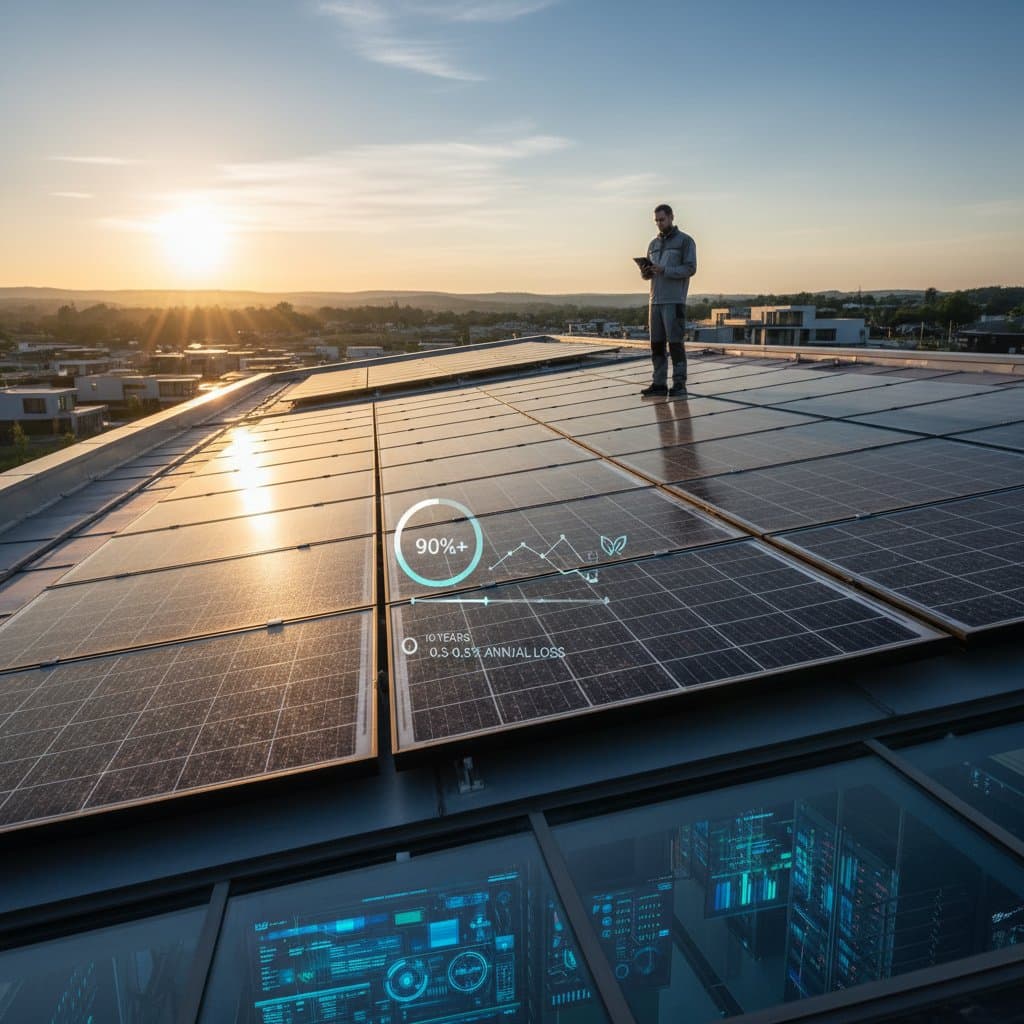
More than a decade of field data from U.S. solar installations shows that modern photovoltaic modules degrade slower than previously estimated. Annual performance losses average between 0.3 and 0.5 percent. These findings, compiled from utility-scale and distributed generation systems across multiple climate zones, challenge long-standing assumptions about panel replacement cycles and long-term energy yield.
Independent testing laboratories and asset management firms have analyzed gigawatts of installed capacity. They compare initial factory flash-test results with operational data from monitoring systems. Conclusions indicate that most modules produce more than 90 percent of their original rated output after ten years of operation, well above the performance guarantees in standard product warranties.
Data Sources and Analytical Methods
Results draw from datasets maintained by reliability groups such as PV Evolution Labs and independent engineering firms that specialize in asset performance verification. Analysts reviewed production logs from more than 1,500 sites across states including California, Texas, and North Carolina. These facilities span a wide range of technologies, from monocrystalline silicon panels to thin-film modules.
Degradation rate calculations rely on normalized performance ratios adjusted for irradiance, temperature, and soiling. Statistical modeling accounts for inverter downtime, shading events, and sensor inaccuracies. According to Ryan Porter, senior director of analytics at Solar Performance Partners, “Consistent long-term data collection has allowed us to isolate true module aging from operational variability, giving owners a much clearer picture of asset health.”
Technology and Material Factors
Manufacturing improvements over the past decade contribute to these lower degradation rates. Anti-reflective coatings, higher-quality encapsulants, and better cell interconnect materials reduce moisture ingress and potential-induced degradation. Backsheet formulations and glass-glass module designs improve resistance to ultraviolet light and thermal cycling.
Thin-film technologies, particularly cadmium telluride and copper indium gallium selenide, show comparable or even better stability in certain climates. Field installations in arid regions demonstrate less than 0.3 percent annual degradation. Humid coastal environments continue to present higher risks of delamination and corrosion.
Business Implications for Asset Owners
This performance data carries major implications for project developers, investors, and EPC contractors. Lower degradation translates into higher net present value for solar assets and extended payback periods. Many long-term financial models assumed annual losses near 0.8 percent; revising those assumptions could improve lifetime yield projections by more than 5 percent over two decades.
Asset managers use this data to renegotiate operations and maintenance contracts. Predictive maintenance schedules now rely on empirical degradation curves instead of conservative warranty limits. “We are seeing owners shift from reactive replacement strategies to performance-based maintenance planning,” said Alicia Tran, vice president of operations at ClearSky Renewables. “Knowing that modules are aging more gracefully changes both the financial and technical approach to asset management.”
Regional Variation and Environmental Stress
Degradation rates vary by region due to differences in temperature, humidity, and irradiance. Hot climates accelerate chemical reactions within encapsulant materials. Freeze-thaw cycles in northern states stress solder joints and frames.
Soiling from dust or agricultural activity can mimic degradation if not properly cleaned or modeled in performance data. Projects using bifacial modules, trackers, and high-efficiency n-type cells display distinct degradation patterns. These technologies often face new failure modes, such as rear-side encapsulant yellowing or tracker misalignment, that require updated diagnostic methods.
Field service companies invest increasingly in drone-based infrared imaging and electroluminescence testing to detect such issues early. Owners can implement quarterly cleaning protocols in dusty areas to maintain accurate performance tracking. Regular site inspections help identify environmental stressors before they impact output.
Policy and Warranty Considerations
This data may influence future warranty structures and policy frameworks supporting long-term solar deployment. Manufacturers could extend performance guarantees or adjust power output thresholds to reflect improved reliability. Federal and state incentive programs that depend on production-based payments might reassess crediting methods to reflect actual performance rather than conservative estimates.
Some insurers and financiers already reference independent degradation studies in their underwriting models. Lower perceived risk can reduce financing costs for utility-scale projects. This improves competitiveness against fossil generation and other renewables.
Developers should review current warranties against these findings to negotiate better terms during procurement. Policymakers can use the data to refine incentives, ensuring they align with real-world durability for broader adoption.
Applying Insights to Optimize Solar Investments
For system owners and operators, the key takeaway is that solar panels prove more durable than early projections suggested. Better materials, improved quality control, and refined installation techniques extend the useful life of assets beyond traditional expectations. With degradation rates continuing to decline as technology advances, long-term energy production forecasts become more accurate and optimistic.
Regular performance audits, combined with advanced monitoring analytics, remain essential to validate these trends across different technologies and environments. Owners can start by installing real-time monitoring systems to track degradation firsthand. As the industry accumulates more data, real-world evidence will keep reshaping assumptions about solar panel longevity and the economics of clean energy generation.