
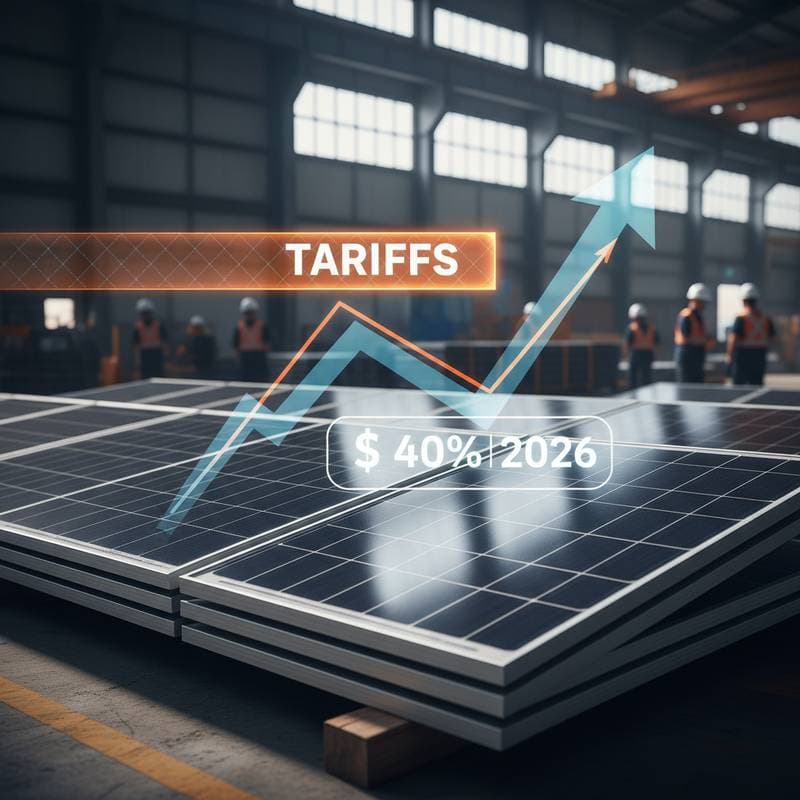
U.S. Solar Tariffs to Drive Panel Prices Up 40% by 2026
Trade policies in the U.S. solar sector often deliver unexpected shifts. Recent import restrictions highlight this reality, with projections indicating panel prices may rise by as much as 40% by 2026. This estimate arises from extended tariffs, anti-circumvention decisions, and evolving origin rules.
Layered Tariff Measures Intensify
Solar tariffs form a complex array of regulations. Section 201 safeguards target crystalline silicon modules to support U.S. producers against low-cost Asian imports. Anti-dumping and countervailing duties apply to Chinese cells and modules, now extending to Southeast Asian assemblies using Chinese components.
Suppliers incorporate risk premiums into pricing amid this landscape. Some adjust invoices for anticipated duties, while others reduce U.S. shipments pending clearer rules. The Commerce Department's enforcement efforts heighten market unpredictability.
Past tariff phases revealed that uncertainty disrupts contracts more than rates themselves. Engineering, procurement, and construction firms delay commitments when costs fluctuate sharply. Current dynamics mirror this, amplified by surging utility-scale demand against constrained domestic supply.
Supply Chain Vulnerabilities Resurface
The U.S. solar supply chain depends heavily on imports. Module assembly has expanded domestically, but cell production lags. Imported cells subject to tariffs limit benefits from local assembly.
Manufacturers pursue new cell facilities, though these require years and face sourcing hurdles. Quotes for monofacial and bifacial panels already escalate. Previous bifacial exemptions showed how policy tweaks can inflate costs rapidly across projects.
Spot prices have risen since recent announcements. Buyers pay extra to front-load deliveries or secure domestic long-term contracts at elevated rates. These moves signal widespread preparation for cost increases.
Factors Behind the 40% Projection
Multiple elements underpin the 40% price forecast. Consider these key contributors:
-
Tariff Impacts: Effective rates hit 20-30% including duties and compliance expenses, varying by origin.
-
Shipping Expenses: Elevated global freight rates, driven by shortages and fuel costs, intensify with supply rerouting.
-
U.S. Production Costs: Domestic modules incur premiums from labor, materials, and high demand.
-
Input Price Swings: Volatility in polysilicon, glass, and aluminum allows suppliers to add tariff-linked surcharges.
Combined, these push utility-scale panel costs 40% higher from current levels. Residential segments may see somewhat lesser rises, yet enough to reshape viability.
Strategies for Project Developers
Developers adapt proactively. Many hasten timelines to acquire pre-tariff stock. Others pivot to thin-film options exempt from select duties, aiding U.S. thin-film makers with robust operations.
Diversification emerges as a core tactic. Major players source from India, Turkey, and the Americas to mitigate risks. Smaller entities rely on distributors for interim supplies.
Interest grows in offtake deals integrating modules and financing. Some arrangements emphasize domestic content for incentive eligibility. Success demands rigorous tracking and transparency.
Boost to Domestic Production
Tariffs spur U.S. manufacturing commitments. Announcements of gigawatt-scale facilities across states often include incentives. Delivery at volume and timelines remains the challenge.
Historical patterns caution against over-optimism; many initiatives stalled when imports cheapened. Sustained policies and demand could bolster longevity. Buyers prioritize incentives or reliability to justify premiums; otherwise, imports persist via workarounds.
Balancing Tariffs and Incentives
Tariffs interact intricately with incentives. Higher prices enhance tax credit value for domestic output. Yet elevated costs may curb installations, limiting incentive access.
This dynamic has recurred: protections foster manufacturing but hinder deployment. Installers, employing more workers than factories, highlight project delays. Manufacturers advocate endurance during ramp-ups.
Market Outlook for 2026
By 2026, expect a divided market. Domestic firms secure better margins yet fall short of full demand. Importers manage certifications, audits, and reviews.
Developers encounter slimmer margins, prompting advances in design, storage, and funding. A 40% price uptick may temper installations without halting growth. Utility projects require cost revisions; residential sales face buyer caution absent robust incentives.
Securing Solar Investments Amid Policy Shifts
To thrive, assess tariff exposures early in planning. Evaluate supplier origins and compliance records. Explore incentive-aligned domestic sourcing for long-term stability. These steps position projects to withstand volatility while advancing clean energy goals.