
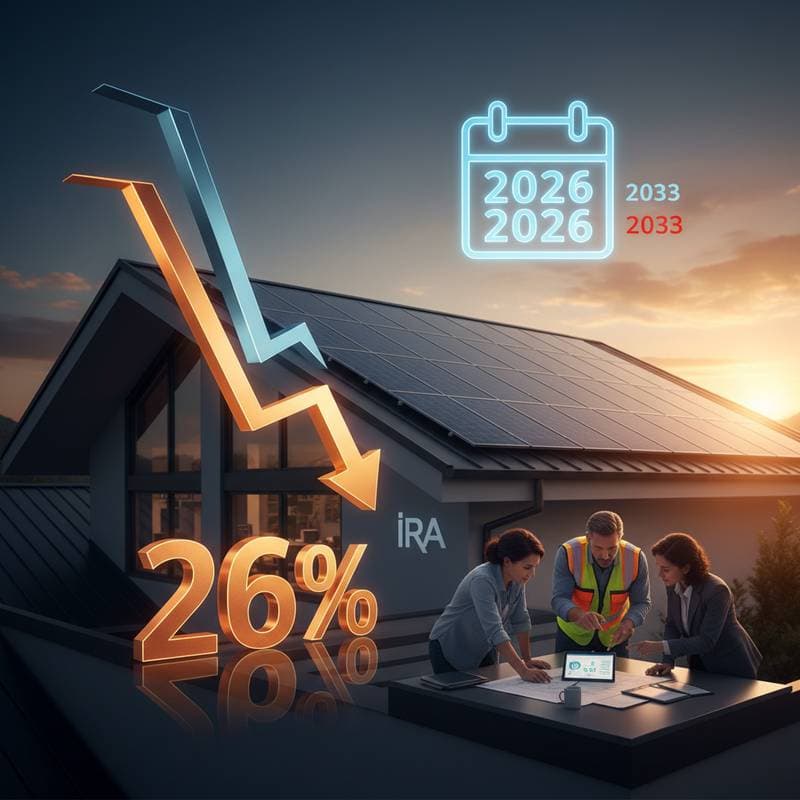
Secure 30% Solar Tax Credit Before It Drops to 26% in 2033
Federal incentives drive solar energy adoption for homes and businesses alike. The investment tax credit, known as the ITC, has fueled market growth by offsetting installation costs. Currently at 30%, this credit will decrease incrementally to 26% by 2033. Homeowners, installers, and developers must evaluate timelines now to claim the higher rate and enhance project returns.
Key Elements of the Solar Investment Tax Credit
The ITC lets eligible taxpayers subtract a portion of solar system costs from their federal tax liability. It covers panels, inverters, mounting hardware, wiring, batteries, and installation labor for both residential and commercial setups. This policy lowers barriers to entry, making solar more accessible nationwide.
Right now, systems qualify for a 30% deduction. Future reductions follow a phased schedule tied to national clean energy goals. Each drop affects new installations, prompting shifts in planning and budgeting to preserve financial advantages.
Why Timing Defines Your Credit Rate
Project eligibility hinges on when construction starts. To secure the 30% rate, initiate work before the first reduction date. The IRS considers construction begun through substantial physical progress or the five percent safe harbor, where eligible costs reach at least five percent of the total budget.
Utility-scale and commercial ventures often face long lead times for approvals and supply chains. Review contracts and orders carefully to establish qualifying start dates under IRS rules. For homeowners, consult installers early to align installations with current credit levels and avoid future shortfalls.
Effects on Homeowners and Businesses
A shift to 26% extends payback timelines modestly but noticeably. Residential systems might lose $500 to $2,000 in savings, based on average costs of $20,000 to $40,000. Installers can highlight these figures to guide clients toward prompt decisions, emphasizing sustained energy bill reductions.
Larger commercial projects amplify the impact, potentially trimming returns by thousands. Developers may fast-track permitting or renegotiate terms to qualify under the higher tier. Others will recalibrate models, incorporating efficiency gains or alternative funding to sustain viability.
Boosting Credits Through Inflation Reduction Act Provisions
The Inflation Reduction Act layers add-ons to the base ITC for projects meeting specific standards. Domestic content requirements, low-income designations, or energy community locations can add 10% or more. Thus, a 26% base might yield 36% total for compliant setups, offsetting the decline.
Pairing solar with storage unlocks full ITC coverage for batteries too. This integration enhances self-consumption, reduces peak demand charges, and bolsters reliability during outages. Homeowners gain from extended credits, while developers improve overall system appeal to investors.
Steps to Position Projects for Maximum Incentives
Industry participants should assess portfolios and strategies immediately. Consider these actions:
- Audit ongoing and planned projects against IRS construction start criteria.
- Gather evidence for the five percent safe harbor, such as invoices for key components.
- Inform clients and stakeholders about credit impacts on costs and ROI calculations.
- Identify IRA bonus eligibility, like sourcing U.S.-made panels or targeting qualifying sites.
- Streamline permitting and supplier timelines to prevent slippage into lower-rate periods.
Build Stronger Solar Strategies Today
The ITC phase-down to 26% by 2033 reflects evolving policy landscapes, yet robust support persists. Proactive measures ensure projects thrive amid changes. By aligning efforts with current opportunities, stakeholders secure lasting advantages in solar development and adoption.