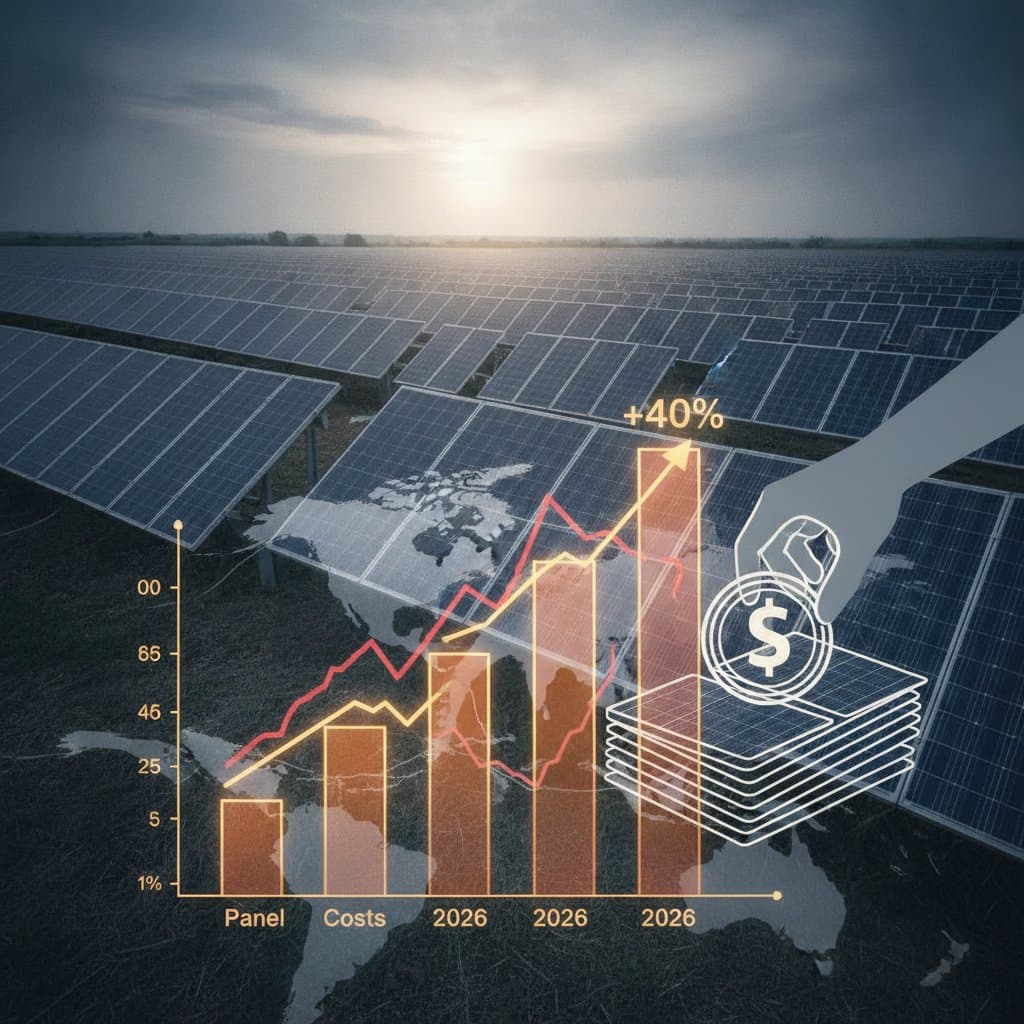
2026 Solar Tariffs May Add 40% to Panel Costs
Proposed 2026 tariffs on imported solar panels could raise prices up to 40 percent. Developers, installers, and consumers face higher costs amid limited domestic capacity.
Loading...
Articles tagged with solar-tariffs
Proposed 2026 tariffs on imported solar panels could raise prices up to 40 percent. Developers, installers, and consumers face higher costs amid limited domestic capacity.
Higher 2026 tariffs on imported solar equipment will raise costs for developers and installers. Proactive procurement, supplier diversification, and efficiency improvements offer practical ways to stay competitive.
An 18% increase in solar panel prices, spurred by upcoming tariffs, alters project economics across the U.S. This change boosts domestic manufacturing while challenging developer budgets and timelines, prompting a reevaluation of sourcing, technology, and financing approaches to navigate immediate pressures and build a resilient solar future.
Impending federal tariffs on solar imports could elevate U.S. solar system prices by 18 percent in 2026, influencing sourcing, financing, and deployment approaches throughout the sector. Policymakers highlight benefits for domestic manufacturing, yet developers prepare for elevated expenses, supply chain adjustments, and potential project delays. These measures prompt critical examination of whether protectionist policies will effectively advance the nation's clean energy objectives.
Expectations surrounding 2026 solar tariffs are elevating module prices and altering procurement approaches. Developers accelerate buys, pursue local suppliers, and adjust project finances. Although intended to support American manufacturing, these tariffs introduce supply shortages, funding strains, and compliance hurdles that may alter the solar sector's path.
Next month's 18% spike in solar panel prices from reinstated tariffs pressures the U.S. industry, from developers to installers. As imports face higher duties, domestic production gains traction. Key moves include rushing orders, revising contracts, and exploring local suppliers to navigate the changes.
New solar import tariffs effective next month will elevate U.S. photovoltaic module prices by 18 percent. This change prompts developers to secure deals quickly, manufacturers to expand operations, and the industry to navigate volatility while advancing clean energy goals.
The impending 30% tariff on imported solar panels in 2026 disrupts U.S. solar economics, elevating project costs and challenging market stability. Policymakers aim to bolster domestic manufacturing, yet developers confront slimmer margins, postponed initiatives, and supply chain disruptions that may alter the nation's clean energy expansion.
Beginning in 2026, new U.S. tariffs on imported solar panels could drive costs up by 40%, altering project timelines and supply chains. While developers grapple with elevated expenses, the policy bolsters domestic production, fostering innovation and long-term energy resilience.
Solar module prices in the U.S. rose 18% this spring after 2026 tariff announcements, disrupting timelines and budgets. Developers accelerate buys while U.S. makers ramp up. Explore trade policy effects, supply changes, and efficiency strategies reshaping solar economics.
U.S. solar panel prices stand to increase by up to 40% by 2026 due to layered tariffs, stricter trade enforcement, and supply limitations. Developers scramble to lock in supplies, manufacturers expand capacity, and policymakers navigate the balance between domestic protection and clean energy expansion.
New import tariffs on crystalline silicon photovoltaic modules will elevate U.S. solar prices by 18% next month. This policy seeks to support domestic production yet introduces elevated costs, potential delays, and market volatility. Installers, developers, and consumers must navigate this shift to sustain industry progress.
Solar panel prices rise amid preparations for 2026 tariffs. Developers stockpile inventory, straining supplies and elevating costs. While domestic production grows, it falls short of needs. Key tactics include strategic buying, supplier variety, and timing to safeguard profits.
With 2026 solar tariffs on the horizon, U.S. panel prices respond to policy risks. Developers encounter variable costs, supply challenges, and financing hurdles. Tariffs seek to support local production, yet success depends on flexible sourcing, clear pricing, and proactive planning in a policy-influenced global solar sector.
New U.S. solar tariffs effective in 2026 will push module prices up 18 percent, increasing 100 MW project costs by $6-8 million and prompting shifts in procurement and domestic production efforts.
Starting in 2026, new U.S. tariffs are projected to raise solar prices by 18%, reshaping supply chains and project economics. Developers, manufacturers, and investors face both challenges and opportunities as domestic production scales up. The policy could redefine America’s solar landscape—if the industry adapts swiftly enough to rising costs.
Effective 2026, an 18% tariff on imported solar panels will elevate U.S. solar project costs, compelling developers to front-load purchases. This policy seeks to bolster domestic production but risks installation slowdowns, financing disruptions, and broader industry adjustments to sustain expansion.
New U.S. tariffs propel solar panel prices up 40%, disrupting installers, developers, and affordability. This volatility challenges clean energy progress, yet domestic manufacturing and adaptive tactics offer pathways forward.
Rising U.S. solar tariffs over 30% are transforming project economics, compressing installer margins, and prompting a rush toward domestic components. This analysis covers mounting system pressures, policy interactions, and essential steps for maintaining transparency and competitiveness in the evolving solar market.
Upcoming 2026 solar tariffs will elevate project costs, alter equipment sourcing, and raise installation prices. As U.S. module rates increase and domestic production scales, developers, installers, and homeowners encounter volatility. Grasping price effects and strategic purchasing will prove essential during market shifts.