
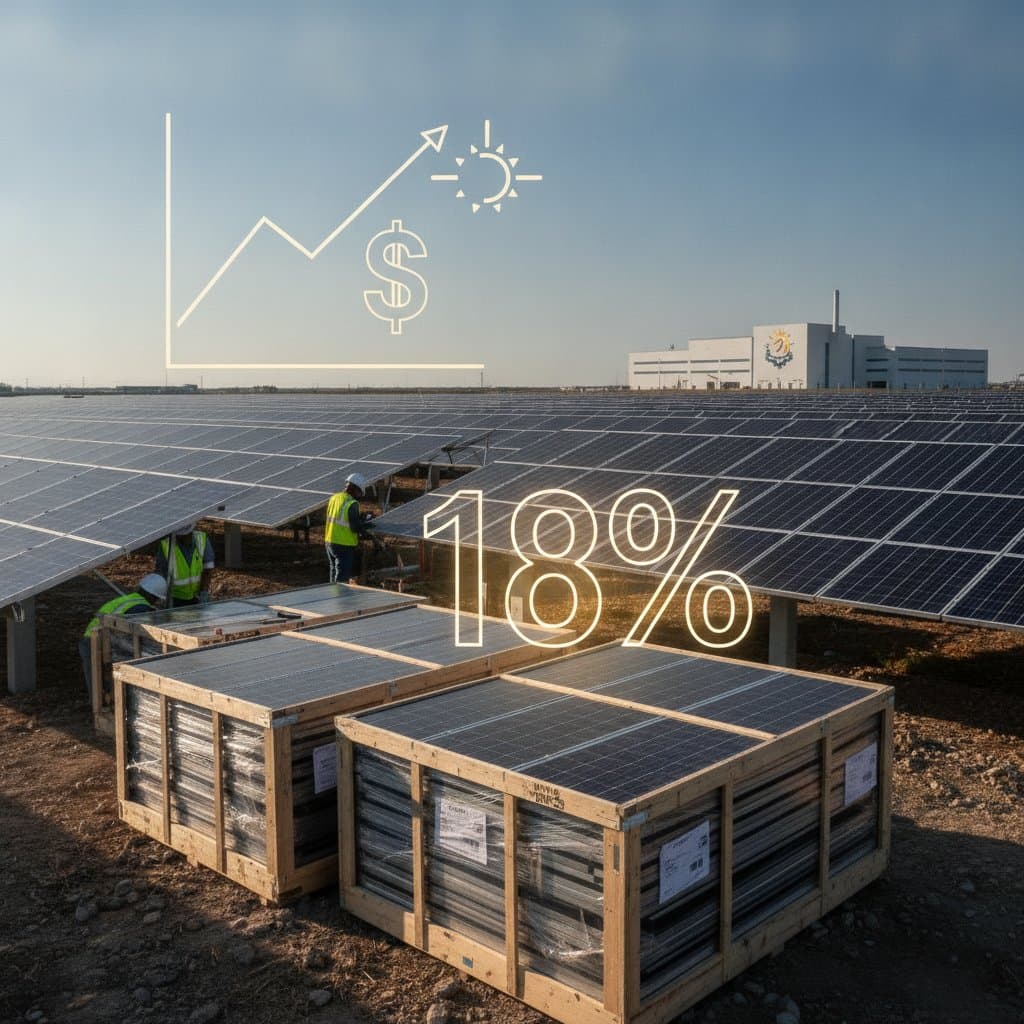
2026 Tariffs to Raise Solar Panel Prices 18 Percent This Spring
Solar developers and contractors across the United States are preparing for a sharp cost increase. New import tariffs will raise solar panel prices by about 18 percent this spring. The updated trade policy applies to crystalline silicon photovoltaic modules imported from Southeast Asia and parts of East Asia.
Industry sources confirm that the tariff adjustment covers both new shipments and panels already in transit. The measure aims to protect domestic manufacturers. It will likely tighten margins for installers and delay some utility-scale projects that rely on imported modules.
Immediate Market Reaction
Distributors report a surge in advance orders as developers secure inventory before the price adjustment. Several national wholesalers note that module availability has tightened. Some suppliers now limit new purchase agreements or raise deposit requirements.
Analysts expect the 18 percent increase to push average module pricing above levels seen in prior supply disruptions. Higher costs will affect project budgets from engineering procurement through construction schedules.
Installers working under fixed-price contracts face particular pressure. Many agreements were signed months before the tariff announcement. Renegotiating existing deals proves difficult for public or utility-scale projects with rigid bid structures.
Supply Chain Adjustments
Manufacturers evaluate production shifts to countries not directly affected by the tariff changes. Several Southeast Asian producers explore assembly lines in other regions to preserve U.S. market access.
Domestic producers should benefit in the short term. Analysts caution that U.S. capacity expansion remains limited. Even with new factories under construction, domestic supply cannot yet meet national demand for residential and utility-scale systems.
Industry groups urge policymakers to pair tariff measures with expanded incentives for U.S. manufacturing. Without additional support, price inflation could outweigh benefits from domestic job creation.
Impact on Project Development
The new tariffs introduce uncertainty during complex project cycles. Sourcing decisions, financing arrangements, and construction schedules depend on predictable equipment pricing. An 18 percent cost increase could alter internal rates of return or delay financial close for projects on tight margins.
Community solar and distributed generation projects remain particularly vulnerable. These installations often rely on smaller-scale financing and have less flexibility to absorb higher module prices. Some developers may reduce system capacity or postpone construction.
Utility-scale developers reassess procurement strategies. Many consider diversified sourcing agreements that combine domestic panels with imported modules.
Policy and Industry Response
Trade policy advocates argue that tariff expansion counters unfair competition and protects emerging domestic manufacturing investments. They cite recent progress in U.S. module production capacity.
Opponents, including several solar trade associations, warn that tariffs will slow national solar deployment targets. Higher costs could reduce installation volumes across residential, commercial, and utility segments.
A spokesperson for a leading solar advocacy group stated support for domestic manufacturing growth. The group believes tariffs should pair with direct incentives and long-term procurement plans. The organization urges federal agencies to clarify implementation details quickly.
Financing and Contractual Implications
Financial institutions monitor how developers adjust to the new pricing environment. Increased equipment costs could affect debt coverage ratios and investor confidence. Some lenders request updated cost estimates and revised energy yield models.
Power purchase agreements signed before the tariff announcement create additional concerns. Developers locked into fixed-rate contracts may struggle to maintain profitability.
Domestic Manufacturing Prospects
The tariff shift could accelerate investment in U.S.-based module production lines. Several manufacturers have announced plans to scale up facilities. Industry analysts note that even with expansions, U.S. production will take time to meet national installation targets.
If domestic capacity grows steadily, pricing may stabilize in future years. Until then, developers will likely face continued volatility in procurement costs.
Regional and Segment-Level Effects
The tariff increase will not affect all regions equally. States with strong policy support for renewables may see steady installation activity. Markets where project economics are more sensitive to equipment pricing could experience slowdowns.
Commercial installers adjust quotes to reflect tariff exposure. Some report customers accelerating purchase decisions to lock in current pricing. Residential installers may face greater challenges as higher module costs translate into higher system prices for homeowners.
Strategic Steps for Procurement
Installers and developers can take several steps to manage the coming price increase.
- Review procurement timelines early. Projects scheduled for construction in the coming months should confirm delivery schedules and secure inventory.
- Reassess contract terms. Fixed-price contracts may need cost adjustment clauses or contingency allowances.
- Diversify supply sources. Working with multiple suppliers across regions reduces exposure to tariff-specific costs.
- Communicate with financiers and clients. Transparent updates on cost changes help maintain trust.
- Monitor regulatory updates. Staying informed helps organizations adapt procurement strategies quickly.
Building Resilience in Solar Supply Chains
The 18 percent tariff increase highlights the value of strategic planning in solar procurement. Developers and installers who adapt quickly will maintain project momentum and protect margins. The shift may encourage stronger collaboration between developers, manufacturers, and policymakers. Coordinated investment in domestic production, workforce training, and material sourcing will build a more resilient supply chain.