
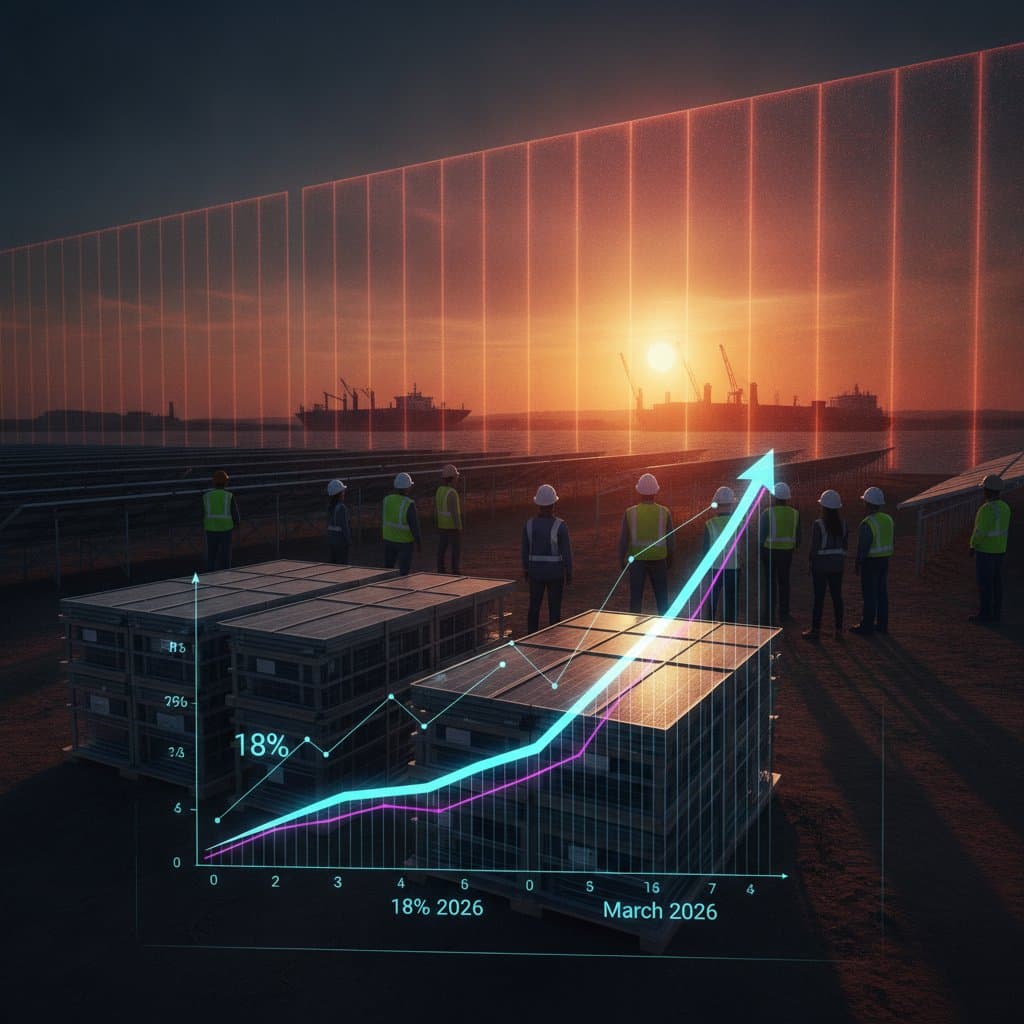
Solar Tariffs Trigger 18 Percent Module Price Increase
Solar developers and installers across the United States are preparing for higher costs as new import tariffs take effect next month. The duties will raise photovoltaic module prices by an estimated 18 percent and will influence procurement strategies, project timelines, and financing models for utility scale and distributed projects.
Industry analysts attribute the increase to expanded duties on crystalline silicon modules and cells imported primarily from Asia. The policy aims to support domestic manufacturing yet is expected to create short term supply constraints.
Price Changes and Market Response
Research from Clean Energy Associates shows that average landed prices for imported modules now range between 23 and 28 cents per watt. After tariffs apply, those prices are projected to reach 27 to 33 cents per watt. This shift represents one of the largest monthly increases recorded in recent years.
Developers are finalizing contracts ahead of the tariff date, noted Maria Gonzalez, Vice President of Supply Chain at SolarBuild EPC. Many projects operating on narrow margins will require renegotiation or delay.
The Solar Energy Industries Association estimates that the price rise could affect more than 12 GW of planned capacity. Smaller commercial and residential installers will also encounter higher distributor pricing.
Tariff Scope and Supply Effects
The duties cover modules and cells from Vietnam, Malaysia, Thailand, and Cambodia. These nations supply more than 70 percent of United States imports. Rates vary by country of origin and exemption status, with most mainstream suppliers facing the full percentage applied to customs value.
Module availability will tighten immediately, explained Paul Renner, Senior Analyst at Renewable Insights Group. Developers reliant on Southeast Asian supply must reassess options while domestic output scales.
Domestic Production Expansion
Manufacturers such as First Solar and Qcells America have announced increased output at existing United States facilities. First Solar noted that the policy reinforces the value of domestic content. Current domestic production covers less than one third of annual installations, so new capacity will require time to ease shortages.
Project and Financing Adjustments
Utility scale developers are revising budgets and reopening contracts for imported modules. An 18 percent price increase can eliminate already slim margins, said Kevin Liu, Director of Project Finance at SunGrid Partners. Investors may pause commitments until pricing stabilizes.
Higher equipment costs also affect insurance, tax equity calculations, and power purchase agreement terms. Lenders are monitoring shifts in project models, according to Laura Chen, Managing Director at GreenCap Energy Finance. Some investors are redirecting capital toward projects that qualify for domestic content incentives.
Residential and Commercial Sector Impacts
Residential installers expect distributor price adjustments to reach customers quickly. Jordan Matthews, CEO of BrightSun Solar, advises signing contracts before new pricing fully propagates. Average residential system costs are projected to rise 6 to 8 percent in the near term.
Commercial and industrial projects will see comparable percentage increases, though larger installations may offset some costs through scale.
Regional and Policy Considerations
States with high installation volumes such as California, Texas, and Florida will absorb the largest absolute cost increases. Markets with strong renewable portfolio standards are more likely to proceed despite higher prices.
Trade associations have requested clearer exemption procedures to reduce compliance uncertainty during procurement planning.
Steps to Manage Higher Costs
- Secure module orders before tariffs begin or identify domestic suppliers with stable pricing.
- Adjust construction schedules to match revised delivery and financing timelines.
- Evaluate racking, inverter, and wiring options that reduce installation time and material use.
- Maintain direct communication with vendors to track availability and cost changes.
- Update lenders and investors on revised cost structures to preserve project viability.
Design and Installation Adaptations
Installers are examining mounting hardware and balance of system components for efficiency gains. Ground mount projects may adopt helical piles to shorten labor time. Roof mounted arrays may shift toward lightweight racking that requires fewer penetrations.
These adjustments help preserve margins when module prices rise, observed Mike ODonnell, Chief Engineer at SolarStruct Systems.
Market Outlook
Analysts project modest slowing of capacity growth followed by steady recovery as supply chains diversify. Long term demand remains supported by declining balance of system costs, corporate sustainability targets, and state renewable requirements. The market is expected to recalibrate within several months.