
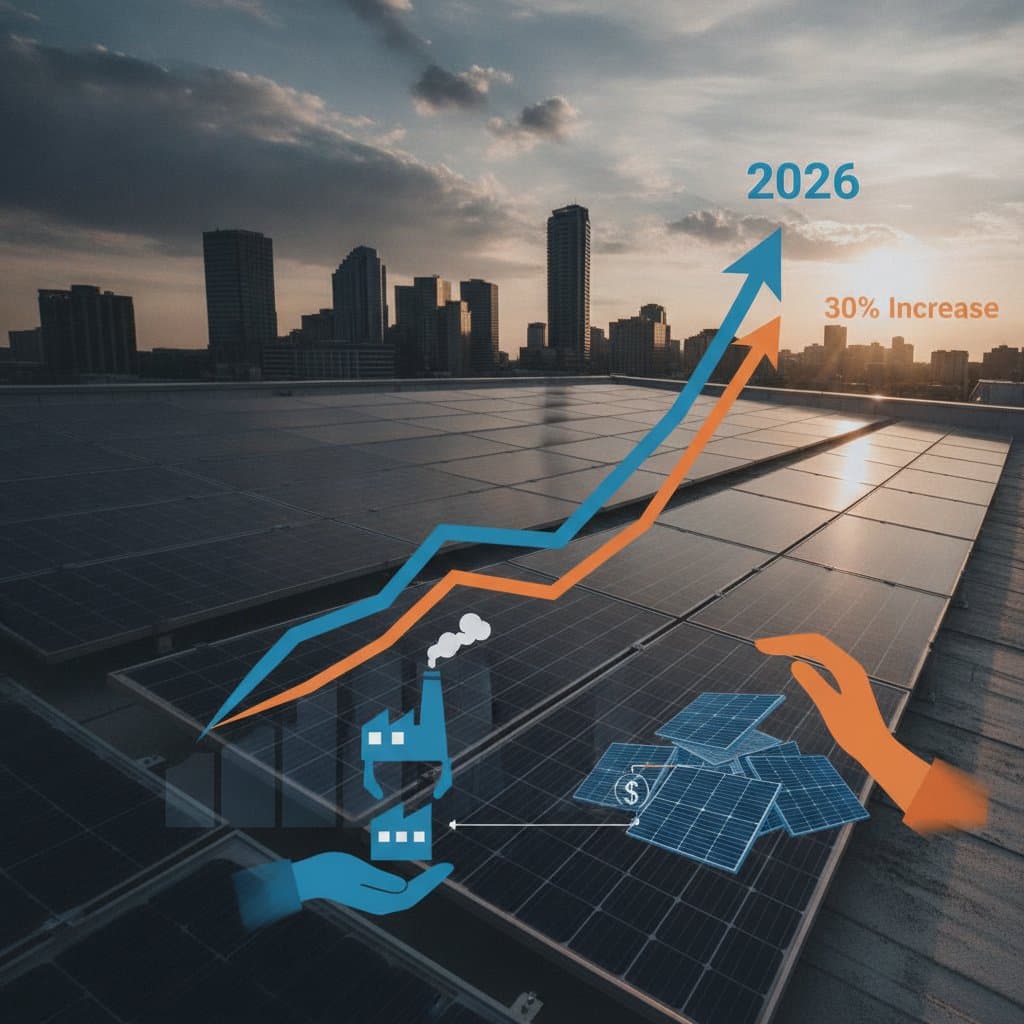
Solar Tariffs Raise 2026 Panel Prices by 30 Percent
New trade tariffs on imported solar panels are expected to raise module prices by nearly 30 percent by 2026. Multiple industry forecasts support this projection. The policy forms part of a broader trade enforcement strategy and targets crystalline silicon products from several major manufacturing regions.
Federal Tariff Expansion Details
Federal trade authorities confirmed plans to expand existing tariffs on imported photovoltaic modules and cells. The measure targets producers in markets previously exempted under earlier trade actions. This decision follows a review of import volumes, domestic manufacturing capacity, and pricing data.
Industry analysts project average module pricing to rise by as much as one third once the tariffs take full effect. This increase would push system costs higher for utility scale and distributed solar projects alike.
Stakeholder Responses Across the Sector
The Solar Energy Industries Association stated that the policy could delay several gigawatts of planned capacity additions. Manufacturers with domestic operations expressed cautious optimism because higher import prices could improve the competitiveness of United States made products.
One domestic module producer noted that the tariffs might create the stable pricing environment needed for long term manufacturing investment. Developers countered that short term disruption could outweigh benefits if supply chain constraints persist.
Installers and distributors expressed concern about cash flow pressures from more expensive inventory. Many companies now explore forward contracts or early purchases before the tariffs take full effect.
Procurement and Supply Adjustments
Procurement teams revise sourcing strategies in response. Some developers negotiate longer term supply agreements with domestic producers. Others diversify imports through countries that hold partial exemptions.
Engineering, procurement, and construction firms evaluate how new pricing could influence project bids. Several companies plan to revise cost models to reflect higher module expenses.
Larger developers with established supplier relationships retain some flexibility. Smaller firms face tighter margins. Financial backers reassess project viability under new cost scenarios, especially in community solar and distributed generation markets.
Domestic Production Growth Opportunities
The tariff policy coincides with new federal incentives designed to boost domestic clean energy manufacturing. Several companies have announced plans to expand module and cell production capacity within the United States.
Industry observers suggest that trade protection combined with production incentives could accelerate investment decisions. Early stage projects include both vertically integrated manufacturing facilities and specialized component plants.
Analysts caution that ramping up domestic capacity will take time. Supply of key materials such as polysilicon, glass, and encapsulants remains globally concentrated. Domestic production may continue to rely on imported inputs subject to separate tariffs.
Anticipated Price and Cost Effects
Market research firms estimate that module prices could rise by roughly 30 percent compared with pre tariff levels. This change equals an increase of about 8 to 10 cents per watt depending on product type and supply source.
Utility scale projects could see system costs rise by millions of dollars on large installations. Residential and commercial installers would also encounter higher equipment costs while labor and permitting expenses stay unchanged.
Contract and Financing Adaptations
Project financiers monitor tariff developments closely. Many financing agreements include cost adjustment clauses that could activate after major policy changes. Developers review contract language to ensure flexibility when procurement costs exceed initial estimates.
Power purchase agreements signed before the tariff announcement may require renegotiation if cost increases threaten project viability. Lenders factor in potential delays in module deliveries as suppliers adapt to new trade compliance requirements.
Key Adaptation Approaches
Industry participants focus on three primary areas to manage the transition.
- Supply diversification through expanded sourcing networks in countries with lower tariff exposure.
- Domestic partnerships that secure long term supply at predictable prices.
- Technology exploration of alternative module options less dependent on imported inputs.
Software tools help track procurement costs and optimize logistics. Companies integrate supply chain intelligence platforms that deliver real time pricing data and tariff updates.
Long Term Market Direction
Analysts expect solar deployment to continue growing over the long term despite short term uncertainty. Demand fundamentals remain strong due to falling storage costs, supportive state policies, and corporate sustainability commitments.
Tariffs may temporarily slow installation rates yet stimulate investment in domestic manufacturing capacity. New facilities could improve supply stability and reduce price volatility in future cycles.
Next Steps for Solar Companies
Project planners should reassess procurement timelines and pricing assumptions well ahead of 2026. Early contracting with reliable suppliers helps secure competitive rates before tariffs fully influence market pricing.
Domestic producers have an opportunity to expand capacity and demonstrate quality at scale. Companies that meet demand and maintain competitive delivery schedules may capture a larger market share once import prices climb.