
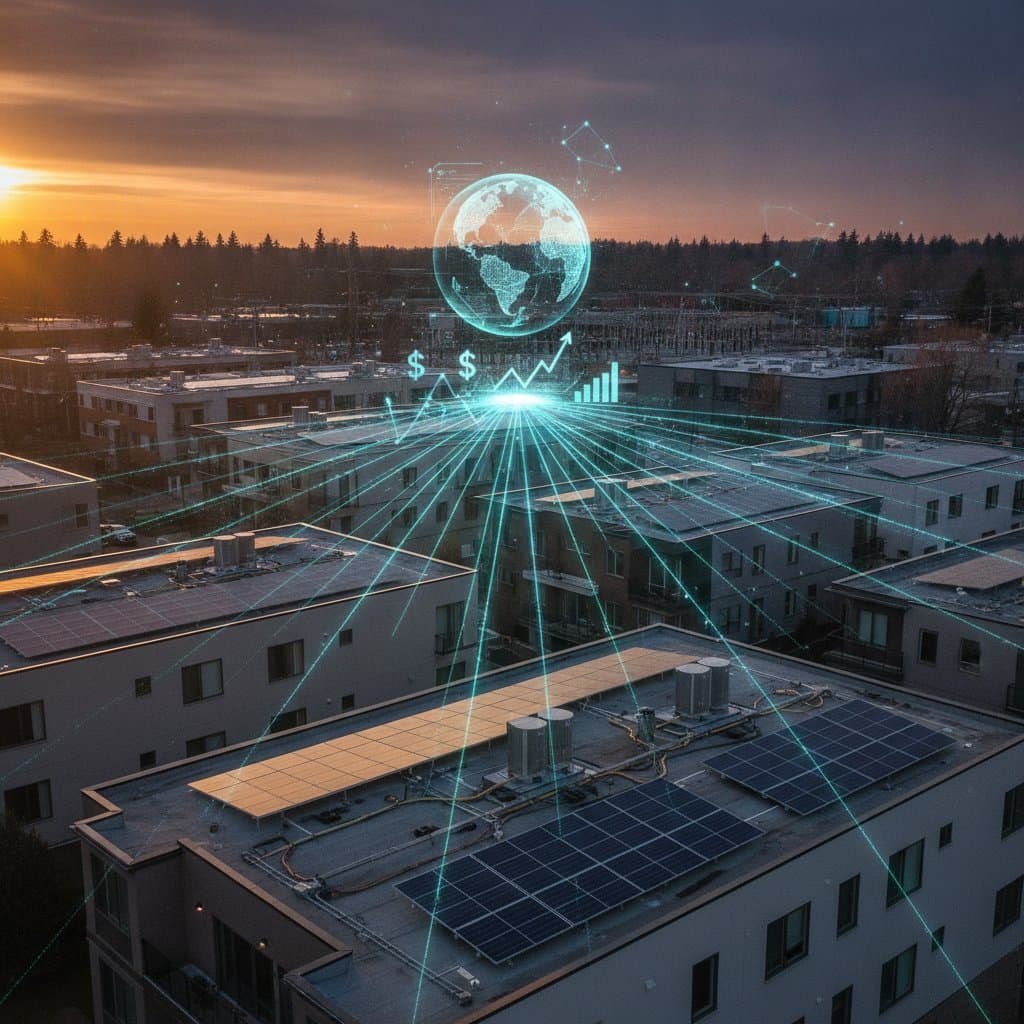
Profit from Solar Through Virtual Power Plants
Homeowners and businesses across the United States have installed more than 160 GW of solar capacity. Much of the energy from these systems goes unused instead of generating income. Virtual Power Plants aggregate rooftop solar, batteries, and other devices into coordinated networks. Owners earn revenue by selling excess power while supporting grid stability.
How Virtual Power Plants Operate
A Virtual Power Plant links distributed resources through a cloud platform. The system tracks generation, storage levels, and demand in real time. Operators forecast conditions and dispatch power from participant batteries or solar arrays when grid needs arise. Participants receive payments through monthly credits or performance payouts.
Compensation structures vary by program and region. Some pay fixed fees for capacity access. Others share revenue from wholesale market sales. The approach requires a grid tied solar array, smart inverter, compatible battery, and internet connected gateway.
Financial Returns and Participation Channels
Owners gain income from several sources. Demand response events reward reduced consumption during peaks. Energy sales into wholesale markets provide additional payouts. Capacity payments compensate for available reserves. Utilities may offer incentives for improved local reliability.
Analysis indicates participants can boost annual solar returns by 10 to 20 percent in established markets. No new hardware beyond standard smart equipment is typically needed. Installers verify that wiring and metering satisfy interconnection standards before enrollment.
Regional Programs and Market Growth
Activity differs by area. California programs from companies such as Sunrun and Tesla supply capacity during high demand periods. Northeast utilities in Massachusetts and Vermont partner with homeowners to integrate resources into regional markets. Texas operators discharge batteries during price spikes to deliver strong participant returns.
Midwest and Southeast utilities are testing initial pilots. Broader rollout depends on consistent communication standards and clear payment rules. Federal Order 2222 enables aggregated resources to compete directly in wholesale markets.
Business Models and Technology Needs
Operators use three primary models. Direct compensation pays a fixed fee for storage access. Performance based payments tie rewards to actual dispatch events. Market participation shares profits from energy sales. Some contracts bundle equipment financing with ongoing participation.
Platforms rely on secure protocols such as OpenADR for device interoperability. Machine learning supports forecasts while deterministic controls ensure reliability. Cybersecurity measures protect participant data and maintain grid compliance.
Current Challenges and Path Forward
Older systems often lack required communication hardware. Retrofitting adds cost and time. Privacy protections and clear consent processes help maintain customer trust. Limited consumer awareness remains a barrier that installers can address during project discussions.
Widespread deployment lowers system costs by reducing peak purchases and infrastructure needs. It also cuts emissions by displacing fossil fueled peaker plants. Battery prices continue to decline and smart inverter retrofits expand eligibility.
Steps to Join a Program
Confirm equipment compatibility using operator lists of approved inverters and batteries. Work with an installer to configure network settings and complete utility registration. Review contract terms for payment structure and dispatch obligations. Participation converts existing solar assets into ongoing revenue without additional construction.