
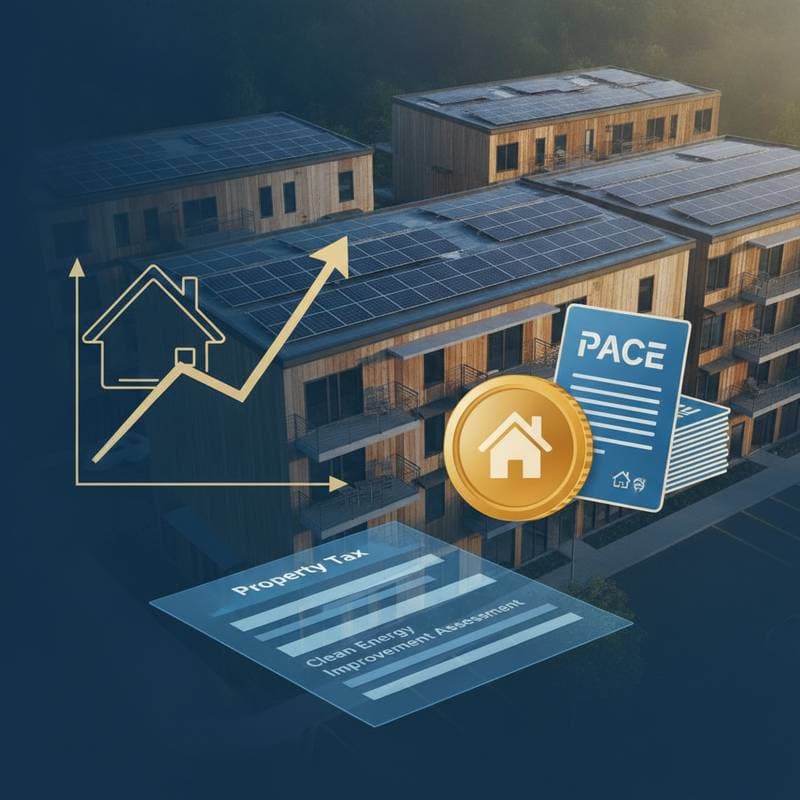
Zero-Down Solar Through Property Tax Assessments
Property Assessed Clean Energy (PACE) financing enables homeowners and businesses to install solar systems without any upfront payment. Repayment occurs through an assessment added to the property tax bill rather than a conventional loan. This structure removes the primary financial obstacle for many property owners seeking renewable energy upgrades.
Local programs across multiple states now support rooftop solar, battery storage, and related efficiency measures. Owners gain immediate reductions in utility costs while the installed equipment increases overall property value.
How the Financing Process Operates
Local governments establish PACE districts that partner with approved lenders and administrators. Property owners apply for funding, and approved costs are repaid as a voluntary line item on the annual tax bill. Terms typically span ten to twenty years to match equipment lifespan and keep annual amounts predictable.
The assessment attaches to the property itself. When ownership transfers, the remaining balance passes to the buyer provided both parties consent during the sale. This feature distinguishes PACE from personal loans that must be settled at closing.
Eligible expenses include panels, inverters, mounting hardware, batteries, labor, and necessary roof work. One application covers the complete project, eliminating the need to coordinate multiple funding sources.
Qualification and Payment Structure
Approval centers on property equity and tax payment history instead of personal credit scores. This approach broadens access for moderate-income owners and small commercial operators who might not qualify under traditional lending criteria.
Monthly-equivalent payments often align with or fall below the energy savingssystem. In high-rate utility areas, the offset can be especially pronounced, allowing owners to realize net positive cash flow from the first year.
Residential and Commercial Uses
Homeowners use PACE to add solar without creating a separate monthly loan obligation. Commercial owners apply the same mechanism to larger arrays on warehouses, offices, and retail centers. The tax-based structure sometimes permits pass-through of costs under existing lease terms, aligning landlord and tenant interests.
Core Advantages
- Extended repayment schedules matched to system life
- No personal debt recorded on credit reports
- Assessment transfers with property sale
- Compatibility with federal tax credits and utility rebates
- Immediate bill reductions that frequently exceed annual assessments
Protections and Program Standards
States require contractor screening, clear cost disclosures, and performance estimates before funding release. Many programs mandate energy audits to verify projected savings. These steps reduce risks of overpricing or unsuitable installations.
Combining Incentives
Owners can apply PACE funds to cover total project costs while still claiming available tax credits or rebates. Received incentives may reduce the assessment balance directly, accelerating overall payback.
Important Considerations
Existing mortgage holders should confirm lender policies, because some require notification before a PACE lien is recorded. Interest rates and fees differ by program, so owners benefit from comparing multiple administrators. During resale, transparent discussion of the assessment prevents surprises for buyers.
Current Market Expansion
Solar contractors increasingly present PACE as a standard option alongside loans and leases. The model reduces project cancellations caused by financing hurdles and supports larger commercial retrofits that combine solar with HVAC and lighting upgrades.
Starting the Process
Property owners can verify local program availability through county websites or approved administrator portals. Online calculators provide instant estimates of system size, total cost, annual assessment, and expected utility savings. This information supports an informed decision before any commitment.