
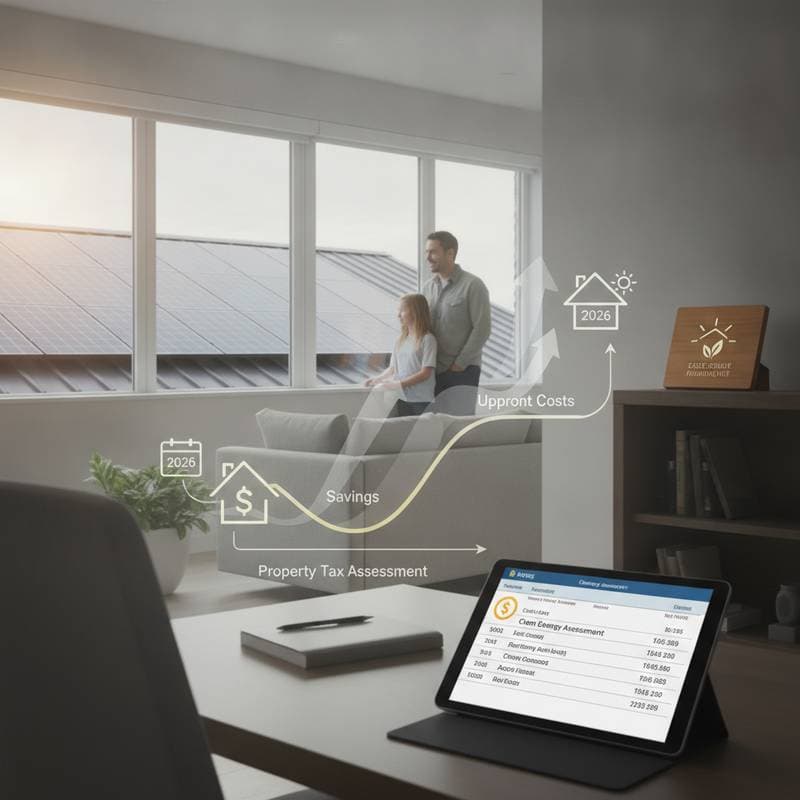
PACE Financing: Fund Solar With Property Tax Payments
The promise of solar energy often collides with a familiar obstacle: upfront cost. Homeowners and businesses recognize the long term savings potential. Yet the price of panels, inverters, and installation can delay even the most enthusiastic buyer.
Property Assessed Clean Energy programs, known as PACE, offer a way to fund solar and other energy improvements through property tax assessments rather than traditional loans. The model continues to gain traction as local governments and private lenders refine program structures.
How PACE Financing Works
A local or state government authorizes a program that allows property owners to borrow money for clean energy upgrades. Repayment attaches to the property tax bill as an assessment. Costs spread over ten, fifteen, or twenty years.
Because the obligation ties to the property rather than the individual, it transfers to a new owner if the property sells. This structure sets PACE apart from conventional solar loans or home equity lines of credit. Financing relies primarily on property value and equity instead of personal credit scores.
In practice, the homeowner works with an approved contractor who submits the project proposal to the PACE administrator. Once approved, the administrator arranges funding, pays the contractor, and records the assessment with the local tax authority. The property owner then repays the cost through regular property tax installments.
Advantages for Solar Customers
PACE removes the upfront cost barrier. Homeowners can install panels immediately and repay through manageable tax installments. Several specific benefits merit consideration.
- Long term fixed financing. Assessments often carry fixed interest rates and extended repayment terms that support predictable cash flow for residential and commercial properties.
- Transferable repayment obligation. A new owner inherits both the solar system and the remaining assessment. This feature can simplify property sales compared with loans that require payoff at closing.
- Potential tax advantages. Repayment structured as a property tax assessment may receive different treatment under local rules. Consultation with a tax professional remains essential because rules vary by jurisdiction.
- Alignment with energy savings. In many cases, solar cost reductions offset a substantial portion of the annual PACE payment. Exact balance depends on system size and utility rates.
Where PACE Programs Operate
PACE programs receive authorization at the state level and operate locally, frequently through public private partnerships. Some states maintain comprehensive programs for both residential and commercial properties. Others restrict participation to commercial or nonprofit entities.
Availability depends on local enabling legislation that determines whether counties or municipalities may attach assessments to property tax bills. Jurisdictions partner with private financing companies or maintain direct public control through municipal bond structures.
Addressing Concerns and Misunderstandings
Early residential programs encountered criticism from mortgage lenders concerned about assessment priority during foreclosures or refinancing. Federal housing agencies responded with participation restrictions in certain markets.
Many programs introduced consumer protections, standardized disclosures, and stronger underwriting guidelines. Modern programs include clear terms, homeowner education requirements, and pre funding verification of project costs. These measures have stabilized the market.
Commercial PACE as a Growth Engine
Commercial Property Assessed Clean Energy, often called C PACE, enables building owners to upgrade HVAC systems, improve insulation, or install solar arrays on office complexes and industrial facilities. The approach aligns with the long term nature of commercial real estate investments.
Owners spread payments over decades while immediately reducing operating costs. The property tax mechanism supplies a secure repayment structure backed by the property itself.
Integrating PACE With Other Incentives
One strategic use of PACE involves combining it with federal or state solar incentives. Homeowners can stack PACE financing with tax credits or utility rebates. Borrowed funds cover installation while incentives reduce net expense.
For commercial properties, the combination of PACE and depreciation benefits can create compelling returns. Administrators coordinate with contractors and accountants to maintain compliance with applicable regulations.
Selecting the Right Program
Confirm program availability in your area before proceeding. The program must be authorized by local government before assessments can appear on property tax rolls. Compare approved administrators and review their terms carefully.
Examine interest rates, fees, and prepayment options. Reputable programs supply clear documentation on how the assessment will appear on the tax bill. Contractors experienced with PACE funded projects help guide homeowners through the process.
Exploring PACE Options in Your Area
PACE financing connects property owners with practical pathways to solar adoption. It supports upgrades that lower both operating costs and emissions over time.