
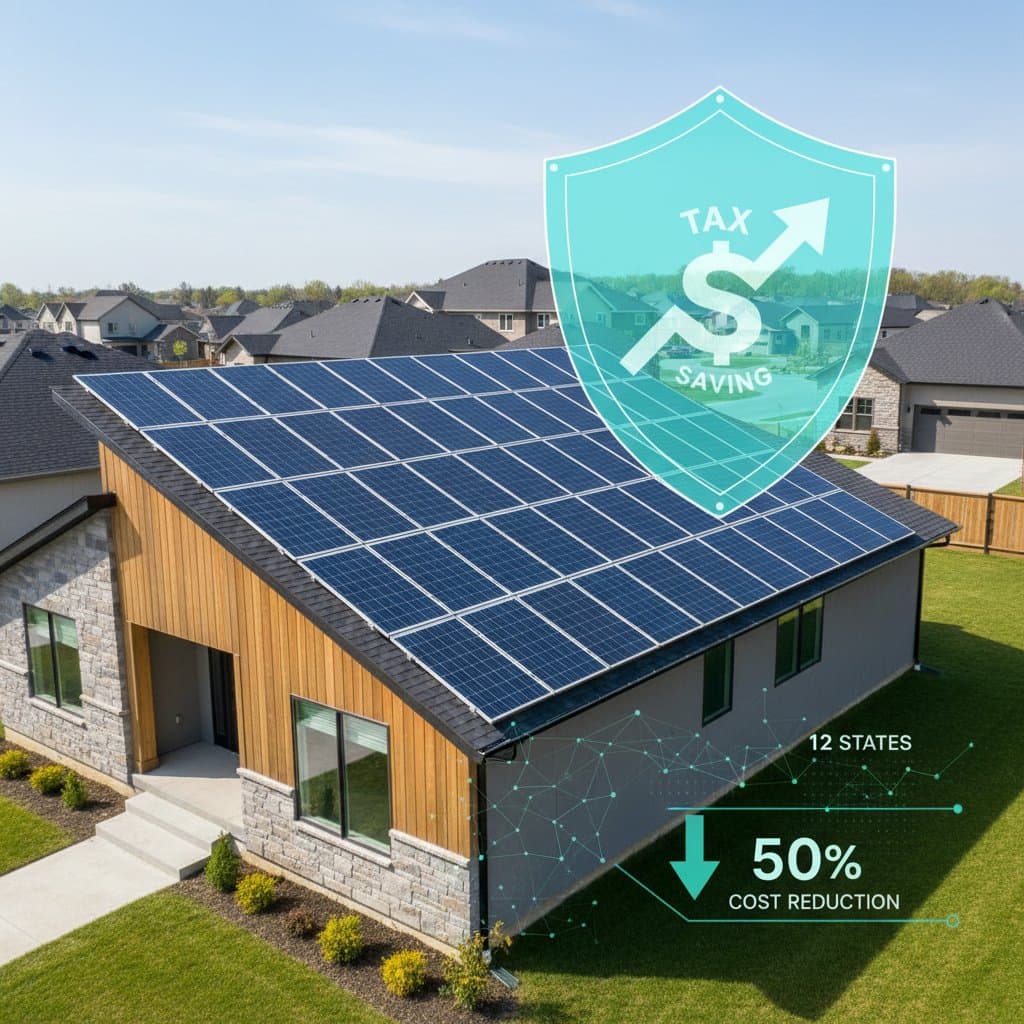
12 States Advance Solar Tax Exemptions: Secure Savings Today
Solar property tax exemptions rank among the most overlooked yet impactful incentives in clean energy. These policies enable homeowners and businesses to shorten payback periods from over a decade to roughly half that duration. In recent months, twelve U.S. states have broadened or refined their exemptions for solar systems, opening doors for adopters and installers in varied regions.
With over a decade of reporting on solar incentives and taxation, the author observes that property tax exemptions deliver straightforward financial advantages. They eliminate a key obstacle by excluding the added value of solar installations from property assessments. This approach converts an upfront investment into a stable, enduring asset.
Core Principles of Solar Tax Exemptions
These exemptions detach the value of solar systems from a property's taxable base. Typically, property improvements raise assessed values and thus annual taxes. A standard five-kilowatt residential solar array might boost home value by thousands of dollars, based on local energy rates and demand, potentially adding hundreds in yearly taxes without relief.
Exemptions address this by acknowledging solar's societal gains, including lighter grid strain, job generation, and emissions cuts. Lawmakers in multiple states contend that taxing such systems stifles renewable adoption. Consequently, they embed targeted exemptions into state tax statutes.
Exemptions vary by type. Full exemptions exclude all added solar value from taxation. Partial exemptions tax only a portion of that value. Duration-based exemptions shield systems for a fixed period before taxation resumes.
Recent Policy Advances in Twelve States
This round of updates encompasses fresh exemptions and adjustments to prior ones. Illinois, New York, and Arizona, for instance, now cover solar paired with energy storage. Florida and Texas have widened coverage from homes to commercial and industrial sites.
Midwestern areas, including counties in Minnesota and Michigan, have shifted from local discretion to uniform statewide rules. Such standardization allows installers and lenders to forecast returns precisely, resolving prior ambiguities on taxable system configurations.
In the West, Nevada and Oregon have adapted exemptions for community solar projects. These arrays, often on leased land serving distant users, involve intricate ownership. Regulators now confirm that community systems receive equivalent exemptions to individual setups, easing developer concerns.
Benefits for Homeowners and Businesses
Homeowners gain stable annual taxes despite rising property values from solar additions. In high-tax areas, lifetime savings can reach thousands of dollars. Businesses see amplified effects, as commercial projects involve larger scales.
Large-scale solar installations carry multimillion-dollar values. Absent exemptions, tax hikes could diminish returns significantly. Stable taxation aids financing and helps achieve desired investment yields.
These policies also foster broader economic upsides. Solar setups create installation jobs, ease grid peaks, and steady energy expenses. States weigh these community gains against forgone tax revenue, often finding the balance favorable.
Drivers of the Policy Evolution
Advocacy from solar associations, energy agencies, and installers fueled these changes over years. Initial opposition stemmed from local governments' dependence on property taxes for essentials like education and roads.
Shifting views highlight solar's net positives, including employment and energy efficiency. Several states now mandate assessors to track exempted systems annually. This data enables ongoing policy refinement.
Past analyses of comparable incentives reveal neutral or positive fiscal impacts when accounting for economic ripple effects, such as increased local spending from jobs.
Guidance for Solar Installers
Installers in these states can leverage exemptions as key sales elements. Explaining the financial upside, backed by official state or county documents, builds client confidence.
Monitor exemption terms closely, as some endure indefinitely while others need renewal. Provide clients with current policy overviews and clarify exemption durations to avoid surprises.
Projects modeled on assumed permanent exemptions risk issues if policies lapse mid-term. Transparent discussions safeguard reputations and client relationships.
Implications for the Solar Marketplace
These developments indicate maturing support structures. Early incentives emphasized rebates and net metering; now, focus turns to eliminating indirect costs like taxes.
Such measures require no direct public funds yet yield clear gains. Lenders value exempted properties for their reduced costs, enhancing resale appeal and loan viability. For commercial deals, reliable taxes simplify contracts like power purchases.
Investors favor this certainty, as it enables accurate return projections free from tax volatility. Enhanced stability spurs project funding, job growth, supply chain activity, and grid resilience.
Addressing Frequent Misunderstandings
Many assume exemptions make entire properties tax-free, but they target only solar-added value; base assessments stay unchanged.
Others think installations trigger automatic exemptions. In most states, owners must submit forms to assessors or tax bodies. Overlooking this leads to avoidable tax bills.
Installers and financiers can assist with navigation. Distribute concise guides on forms and deadlines to prevent client issues.
Steps to Capitalize on Exemptions
These states demonstrate effective policy in driving growth and renewables. Prospective solar users should review local rules promptly.
Homeowners, reach out to county assessors or state energy offices for eligibility details. Businesses with expansive plans, engage renewable-savvy tax experts. Installers, highlight these advantages to inform and attract clients.