
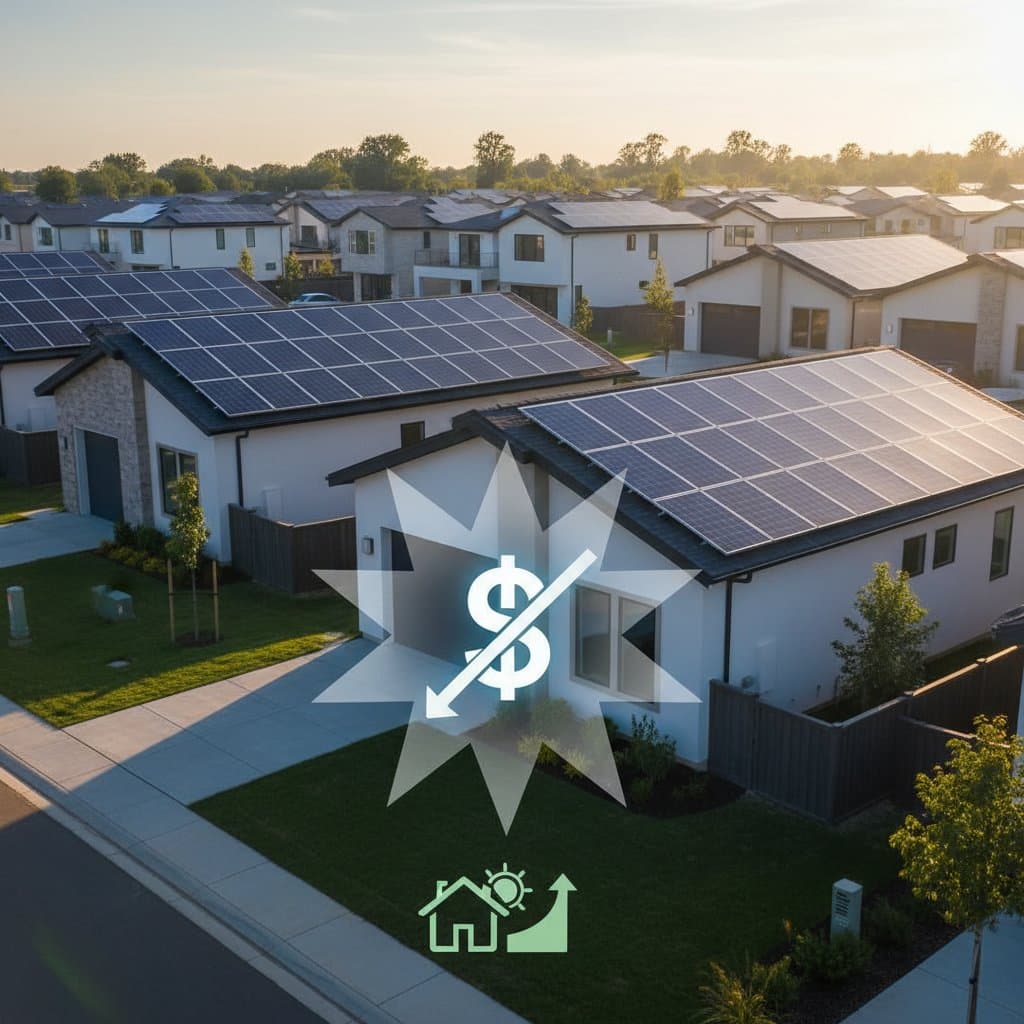
12 States Introduce Solar Property Tax Exemptions in 2026
Twelve states will implement property tax exemptions for residential and commercial solar installations starting in 2026. These measures aim to lower the costs of adopting renewable energy and promote investment in distributed generation. The policies build on existing state incentives, demonstrating increasing support for clean energy at the local level.
States Joining the Solar Exemption List
The states adopting these exemptions are Arkansas, Delaware, Iowa, Kentucky, Maine, Missouri, Montana, Nebraska, North Carolina, South Dakota, Vermont, and West Virginia. In each location, the exemptions will exclude the value of solar systems from property tax assessments. This adjustment prevents higher taxes for property owners who invest in solar energy.
Homeowners and businesses benefit directly from these changes. For instance, a typical residential solar array valued at $20,000 might otherwise increase annual property taxes by $200 to $400, depending on local rates. With the exemption, owners retain those savings over the system's lifespan, often 25 years or more.
Mechanics of Solar Property Tax Exemptions
These exemptions operate by disregarding the added value of solar installations during property assessments. Assessors evaluate land and buildings as before, but solar panels, inverters, and related equipment do not factor into the taxable total. This preserves the property's original tax baseline.
States implement the policy with variations. Full exemptions apply in most cases, though some impose caps on exempted value or restrict eligibility to systems below a certain size. Residential owners typically qualify automatically upon installation, while commercial projects may need to submit proof of system specifications and certified installation.
To claim the benefit, property owners should consult local tax authorities early. Gather documentation such as installation certificates and interconnection agreements from utilities. This preparation ensures smooth integration with annual tax filings.
Motivations for State-Level Adoption
State legislatures pursue these exemptions to foster renewable energy expansion without straining public budgets. Unlike rebates or credits that require direct funding, exemptions simply forgo potential revenue from increased property values. This approach appeals to policymakers in diverse economic environments.
Neighboring states' successes influence adoption. Lawmakers observe accelerated solar growth and job creation in exemption states, providing evidence for similar legislation. The result strengthens regional solar markets and supports broader goals of energy independence.
Variations Across the New States
Implementation details differ to suit local priorities. Arkansas and Kentucky extend coverage to both photovoltaic and thermal solar systems, broadening eligibility. Delaware and Maine target residential setups under 10 kilowatts, prioritizing household energy independence.
Missouri and Nebraska include exemptions for agricultural and industrial sites, aiding rural electrification. North Carolina and Vermont accommodate commercial installations, provided they meet local zoning standards. Montana and South Dakota encompass other renewables like wind and geothermal in their frameworks.
West Virginia offers a phased exemption, fully effective for the first five years before tapering. Property owners in these states should review specific statutes for timelines and application processes. Early planning aligns installations with policy effective dates.
Effects on Local Communities and Installers
Solar industry professionals anticipate heightened demand following these announcements. Residential inquiries may rise as tax savings become a clear incentive alongside federal credits. Installers plan outreach campaigns to educate potential customers on combined benefits.
Local governments benefit from streamlined administration. Exemptions integrate into existing tax systems, requiring only updated assessor guidelines. Training programs will equip officials to value solar assets accurately without inflating assessments.
For developers, the policies enhance project viability. Lenders view the fixed tax structure favorably, improving loan terms. A sample calculation: a 5-kilowatt residential system might achieve payback in seven years with exemptions, compared to nine without.
Navigating Implementation Processes
State agencies will collaborate with county assessors to roll out the changes. Property owners must provide evidence of solar system details, including capacity and commissioning date. Some states link exemptions to utility interconnection records for efficiency.
Annual renewals may apply in select areas, prompting owners to resubmit verification. Tax departments prepare guides and webinars to assist filers. Owners facing questions should contact state energy offices for tailored advice.
Implications for the National Solar Landscape
These exemptions expand access to solar across diverse regions. They complement declining panel costs and federal incentives, driving distributed energy proliferation. Grid operators gain from reduced peak demand as more properties generate power onsite.
Analysts predict ripple effects on undecided states. Data from these implementations will quantify installation growth and revenue impacts, guiding future policies. The momentum underscores solar's role in sustainable energy transitions.
Capitalizing on Exemptions for Solar Investments
Property owners ready to install solar should evaluate these exemptions alongside other savings. Consult certified installers to model total returns, factoring in tax relief. Developers targeting commercial sites can leverage the policies for scalable projects.
Monitor state updates for precise eligibility rules. By aligning installations with 2026 timelines, stakeholders position themselves for maximum financial and environmental gains. These measures advance equitable clean energy access nationwide.