
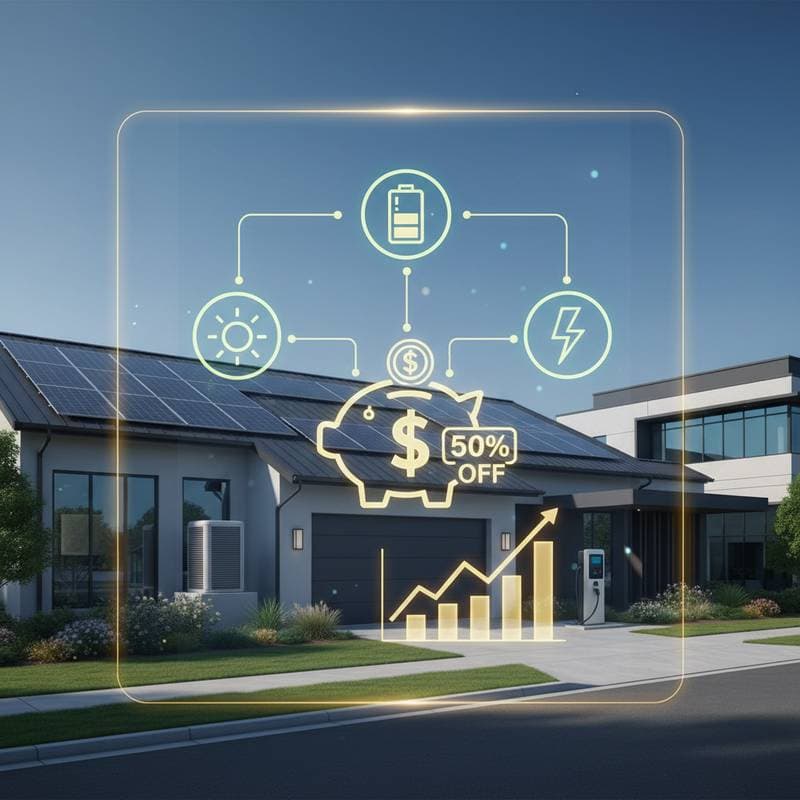
Maximize IRA Credit Stacking for 50 Percent Savings on Solar and Efficiency
The transition to clean energy extends beyond environmental goals. It serves as a strategic financial opportunity. Homeowners and businesses that apply Inflation Reduction Act credits effectively can reduce costs for solar, storage, and efficiency projects by 50 percent or more. Many view these incentives in isolation, yet combining them unlocks substantial benefits. This integrated approach reshapes project financing and accelerates sustainable upgrades.
Understanding Credit Stacking
Credit stacking involves layering multiple federal tax incentives across various components of a clean energy initiative. A typical combination pairs the Investment Tax Credit for solar systems with credits for energy efficiency and home electrification. Each incentive addresses a specific element, yet their combined application amplifies overall savings.
Consider a residential project that includes solar panels alongside heat pump installation and insulation enhancements. The Investment Tax Credit offsets solar costs, while separate provisions cover efficiency measures. This layering yields an effective discount exceeding 50 percent on the total investment. The Inflation Reduction Act intentionally supports such combinations to promote comprehensive energy improvements.
Role of the Investment Tax Credit
The Investment Tax Credit forms the foundation of solar incentives in the United States. It offers a credit based on the full cost of solar installations, encompassing panels, inverters, racking, and labor. This credit applies to both residential and commercial installations, extending to battery storage when paired with solar systems.
Recent enhancements introduce bonus credits that elevate the base rate. Projects qualify for increases by incorporating domestic manufacturing, locating in energy communities, or adhering to wage and apprenticeship standards. These adders can elevate the credit to 50 percent or beyond. Developers now evaluate multiple configurations to optimize returns, while homeowners benefit from expert tax advice to secure maximum value.
Efficiency and Electrification Incentives
Solar installations lower electricity expenses, but efficiency measures reduce overall demand. The Inflation Reduction Act addresses this interplay through targeted credits for building improvements. Key programs include the Energy Efficient Home Improvement Credit for insulation and windows, the Residential Clean Energy Credit for heat pumps, the HOMES Program for whole-house retrofits, and the High-Efficiency Electric Home Rebate for income-eligible electric upgrades.
These incentives function separately yet apply to the same property. A homeowner might install solar panels, upgrade to a heat pump, and improve attic insulation in one project. The solar qualifies for the Investment Tax Credit, while efficiency elements access distinct rebates. This strategy not only cuts upfront costs but also enhances home performance through reduced waste and integrated systems.
Applications for Commercial and Community Projects
Residential applications dominate discussions, but commercial and community projects gain even more from stacking. Businesses layer the Investment Tax Credit with incentives for efficient lighting, HVAC systems, and building envelopes. Accelerated depreciation further strengthens financial outcomes.
Community solar initiatives integrate low-income bonuses, domestic content adders, and labor compliance to maximize credits. Such projects, often in qualified tracts, combine with state incentives for viable financing. Developers now prioritize these elements from the outset, shifting focus from basic credits to value-maximizing combinations.
Policy Design and Equity Focus
The Inflation Reduction Act promotes stacking to foster holistic energy strategies. Past programs targeted single technologies, but the current framework incentivizes interconnected solutions. Solar generation pairs effectively with efficiency and electrification, yielding greater carbon reductions per incentive dollar.
This design advances equity by directing bonuses to underserved areas, domestic production, and skilled labor. Stackable credits broaden access, benefiting homeowners, contractors, and communities alike.
Addressing Common Misconceptions
Confusion persists around stacking mechanics. Some believe credits cap total benefits or prohibit overlaps. In reality, each applies to its eligible costs, such as solar equipment versus insulation, without double-counting.
Income limits affect certain rebates but not the Investment Tax Credit. High-income participants can claim solar benefits alongside qualifying efficiency programs. Professional guidance from installers or consultants clarifies eligibility and streamlines applications.
Insights from Incentive Evolution
Solar policy has progressed through phases of simple rebates and generation-focused credits. The Inflation Reduction Act introduces sophistication by rewarding integration and outcomes. This mirrors utility sector shifts toward performance-based models.
Implementation challenges remain, including local program rollout and compliance documentation. Mastery of stacking positions participants for sustained growth in clean energy adoption.
Steps to Implement Stacking
Effective stacking demands preparation and precision. Begin with a professional energy audit to pinpoint high-impact efficiency opportunities that complement solar.
Select contractors versed in solar and efficiency incentives to ensure accurate credit applications. Engage a tax advisor to navigate IRS requirements and confirm eligibility.
Time installations to meet program conditions, and maintain comprehensive records of costs, certifications, and compliance. These practices enable homeowners and businesses to achieve efficient, cost-effective clean energy systems.
Unlocking Integrated Energy Benefits
The Inflation Reduction Act incentivizes unified approaches to solar, storage, and efficiency. Participants who coordinate these elements secure superior financial and environmental results. This strategy positions properties for long-term resilience and savings.