
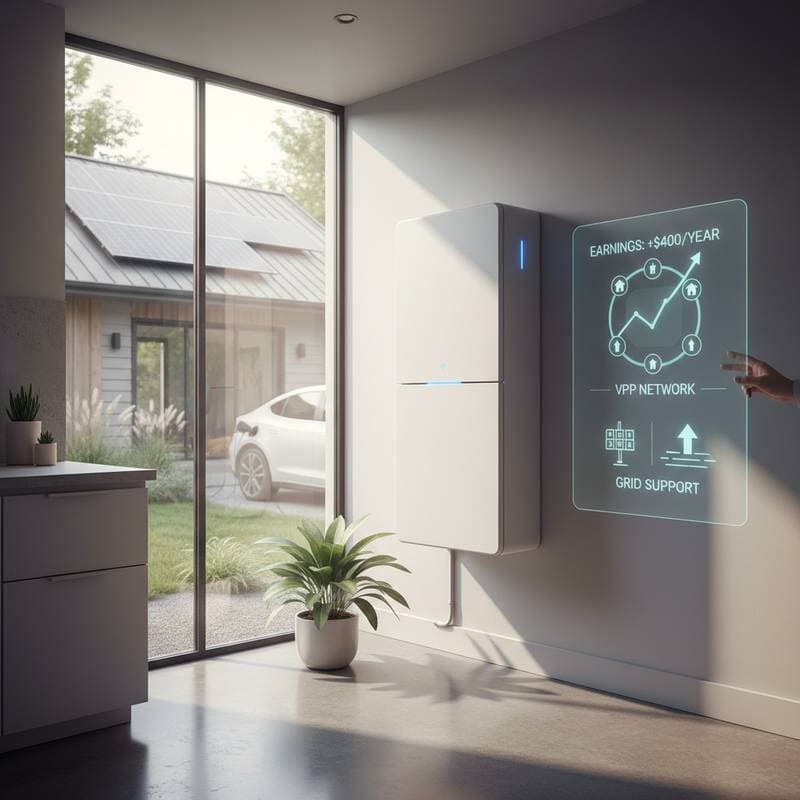
Earn $400 a Year Renting Your Battery to Virtual Power Plants
The rise of distributed energy resources has created a new kind of electricity marketplace. Home batteries, once viewed as backup tools for emergencies, are now part of a growing network of virtual power plants. By renting out your battery to these programs, you could earn around four hundred dollars each year while helping stabilize the grid.
What a Virtual Power Plant Really Does
A virtual power plant, or VPP, is a coordinated network of individual energy systems such as rooftop solar arrays, home batteries, and even smart appliances. Software aggregates these resources and dispatches them like a single large power station. When grid demand surges, the VPP discharges stored energy from thousands of homes to support supply. When demand falls, it recharges those systems.
This model turns home batteries into flexible grid assets. Instead of sitting idle most of the time, your battery can respond to utility signals, export power when prices spike, and recharge when energy is cheap or abundant. The result is greater grid reliability and a more efficient use of renewable generation.
How Homeowners Earn Money
Participation is usually simple. You enroll your battery through your installer or energy provider, agree to certain operational limits, and let the aggregator control when the battery charges or discharges. Payments depend on how much capacity the VPP can call upon, how often it runs events, and the local value of grid services.
In several pilot programs, average payouts land close to four hundred dollars per year for a typical residential battery. That number varies by region and utility structure, but the pattern is clear. Owners are being compensated for providing services that utilities once bought from fossil-fueled plants. You are essentially paid for availability, not for giving up your stored power entirely.
What Makes It Work
For a VPP to operate effectively, it must balance thousands of devices with precision. Aggregators use advanced forecasting to predict grid stress and solar output. They combine that with weather data and real-time pricing to decide when to dispatch energy.
Modern batteries are already equipped with communication hardware, making participation technically seamless. Some systems even allow you to set preferences, such as maintaining a minimum backup reserve. The best programs are transparent about how and when your battery will be used, providing detailed performance data through mobile apps or online dashboards.
The Broader Market Shift
VPPs have evolved from small experiments into serious grid resources. Utilities are learning that a thousand five-kilowatt batteries can deliver the same performance as a small peaker plant, without the fuel cost or emissions. Regulators are responding by formalizing participation rules and payment structures.
For homeowners, this is an unexpected dividend from investing in storage. Battery prices have fallen steadily, but the economics still depend on stacking benefits. Time-of-use optimization, backup power, and participation in VPPs together can make ownership more financially appealing.
Evaluating Participation Options
Renting your battery to a virtual power plant is not just about the cash, though the earnings help offset equipment costs. It is also about joining a smarter, more cooperative energy system. Each battery that participates contributes to fewer blackouts, smoother renewable integration, and reduced reliance on conventional generation.
Before joining a program, read the contract carefully. Understand dispatch frequency, compensation terms, and any limits on your control. If the program fits your energy goals, it can be a reliable side income stream that supports a cleaner grid. As these networks expand, the idea of a passive battery sitting unused will start to feel outdated. Active participation is proving to be both practical and profitable.