
NEM 3.0 Changes: Potential Impacts on Solar Credits Across States
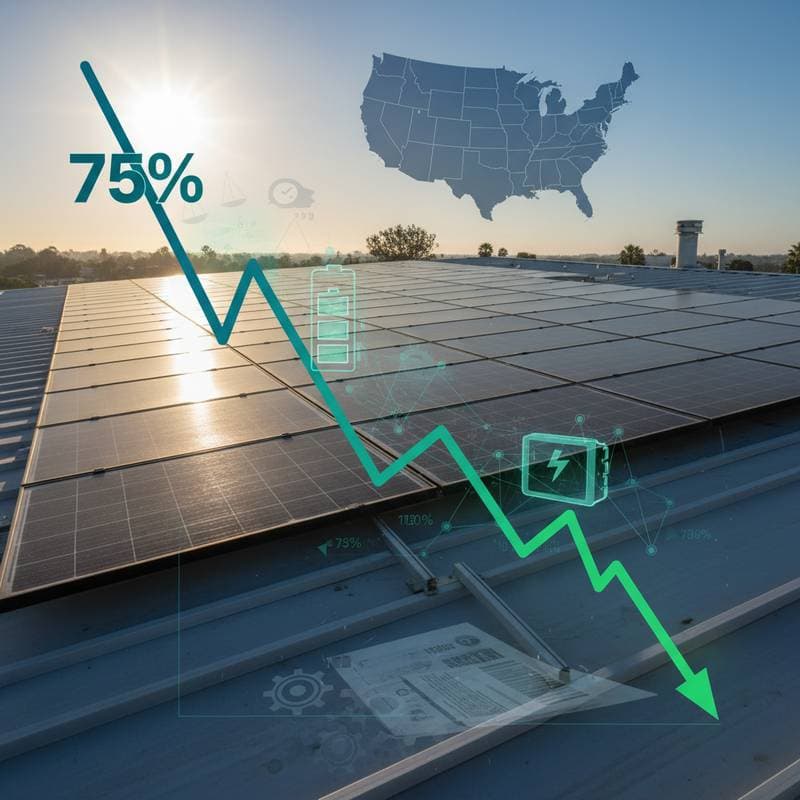
California's Net Energy Metering 3.0 policy, referred to as NEM 3.0, decreases compensation for exported solar power by up to 75 percent for residential owners, based on state regulatory documents. This adjustment prompts regulators in various states to examine parallel modifications, which heighten uncertainty in the national solar sector regarding the viability of distributed energy systems.
Prior net metering policies provided credits at or close to retail electricity rates for energy fed back to the grid from residential and commercial installations. NEM 3.0 ties export values to hourly wholesale electricity prices, which significantly lowers compensation during times of high solar production. Experts in the industry indicate that such a model, if implemented widely, alters the financial calculations for rooftop solar projects.
Key States Monitoring California's Approach
Officials in Arizona, Nevada, and Florida actively review net metering policies inspired by NEM 3.0. These initiatives incorporate time-of-use export rates that diminish credit amounts when solar generation peaks. The Solar Energy Industries Association notes a decline of over 40 percent in installation requests in California since the policy's rollout.
"States evaluate methods to equitably compensate solar producers while advancing grid upgrades," states Abigail Ross Hopper, president and CEO of the Solar Energy Industries Association. "The primary difficulty involves preventing any policy shift from halting distributed energy development altogether."
Utility regulators maintain that full retail-rate credits transfer grid upkeep expenses to customers without solar systems. In contrast, consumer protection groups caution that substantial credit cuts may deter investments and employment opportunities within regional solar industries.
Economic Effects on Installers and Property Owners
Reduced credit rates lengthen return-on-investment timelines for installers and engineering, procurement, and construction firms, while complicating financing arrangements dependent on stable export income. Wood Mackenzie data reveals that the typical residential payback period in California extended from about six years to over ten years post-implementation.
Financing providers in the solar sector promote pairing systems with battery storage to address these challenges. Homeowners store surplus energy for personal use, avoiding exports at lower rates. Sunrun, based in San Francisco, reports that battery adoption rates for new installations have increased more than twofold following the policy change.
"Customers seek greater energy autonomy and consistent billing," explains Mary Powell, CEO of Sunrun. "Storage solutions enable them to maximize system benefits despite diminished export compensation."
Project developers observe that this policy evolution hastens adoption of combined solar and storage setups in homes and modest commercial settings. The shift also affects sourcing decisions, with installers favoring intelligent inverters and software for load shifting to enhance on-site energy utilization.
Emerging Policy Directions and Sector Adaptations
Multiple state assemblies consider updated net metering structures akin to California's hourly export valuation. In New York, authorities assess a "Value Stack" approach that determines compensation hourly, factoring in site location, market prices, and grid needs. Hawaii completed a shift to a comparable framework after phasing out its retail net metering option.
Trade organizations advocate for phased implementations to mitigate disruptions. The California Solar and Storage Association recommends that other states implement gradual reductions in compensation to foster ongoing market steadiness.
"Abrupt drops in export worth lead to immediate demand reductions," observes Bernadette Del Chiaro, executive director of the California Solar and Storage Association. "Such instability affects consumers and the installation teams reliant on steady project volumes."
Wider Market Consequences
NEM 3.0's influence reaches commercial and industrial sectors, where businesses reevaluate the feasibility of on-site power generation. Diminished export incentives discourage oversized installations, prompting engineering firms to focus designs on aligning output with immediate consumption needs.
Solar panel producers and mounting system vendors foresee variations in regional orders. Trends toward compact setups may decrease overall panel deliveries but boost requirements for storage technologies. Rystad Energy forecasts a steady uptick in battery deployments in regions embracing NEM 3.0-like policies.
The U.S. Energy Information Administration indicates that distributed solar represents approximately one-third of capacity in certain areas. Broad credit adjustments could disrupt this proportion, particularly as utilities introduce variable pricing that further lowers midday export values.
Strategies for Navigating Policy Shifts
Installers refine operations by introducing comprehensive energy solutions that integrate rooftop solar, batteries, and scheduling tools for peak efficiency. These packages help customers optimize savings and reliability amid evolving regulations.
Policymakers must craft rate systems that account for infrastructure costs without impeding clean energy adoption. Advocates push for clear pricing mechanisms, incentives tied to performance, and reimbursements for grid support services that highlight distributed solar's contributions.
As additional states deliberate NEM 3.0-inspired updates, forthcoming policy choices will dictate the trajectory of the U.S. rooftop solar industry, either sustaining growth or inviting extended slowdowns. Homeowners and businesses benefit from proactive planning, such as exploring storage options early to secure long-term energy resilience.