
Navigating Time-of-Use Rates as a Solar Owner
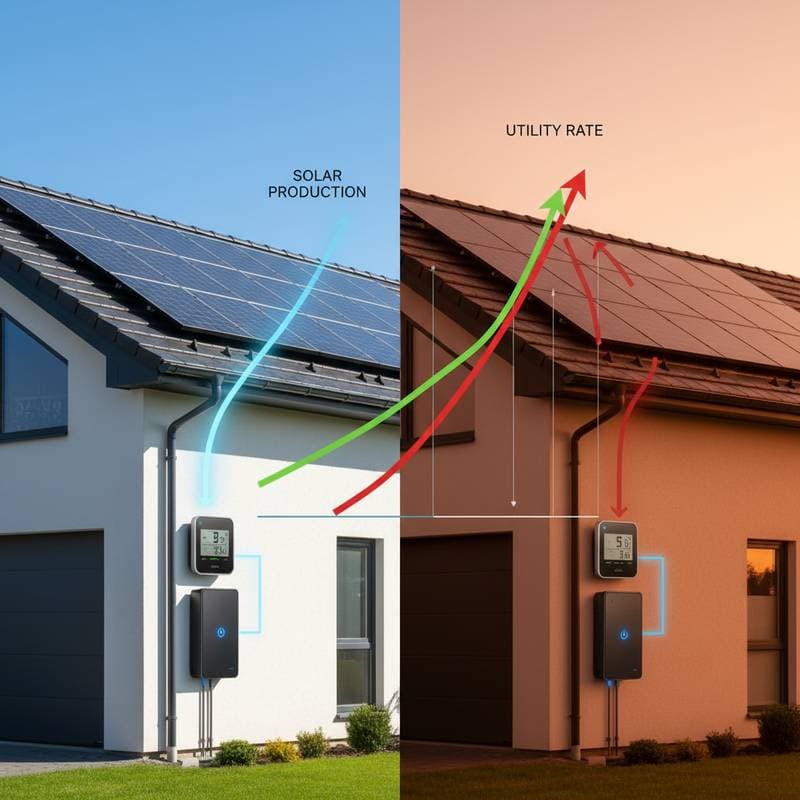
Utilities nationwide revise rate structures, expanding time-of-use (TOU) programs that target solar customers. These updates alter energy consumption patterns and diminish returns from solar installations. Peak pricing aligns with low solar output periods, such as late afternoons and evenings, which erodes financial advantages for homeowners and small businesses.
Solar owners face a new reality where strategic planning becomes essential. The following sections outline TOU mechanics, impacts, and practical responses to maintain value from solar systems.
Understanding Time-of-Use Rate Structures
TOU rates segment the day into distinct pricing intervals based on demand levels. Electricity rates remain lower during off-peak times, typically midday or overnight, and rise during peak hours of high usage. For solar users, peak periods often commence after sunset, when photovoltaic generation ceases.
This timing creates a disconnect between cheap production and costly consumption. Utilities justify TOU by aligning prices with actual supply expenses and promoting demand shifting. Solar customers must reassess system efficiency and adopt targeted usage adjustments to counteract these effects.
The Impact on Solar System Value
Under legacy net metering, excess solar energy received full retail-rate credits regardless of export time. TOU frameworks credit exports at prevailing rates during generation, often off-peak values, while imports during peaks incur premium charges. This disparity between production peaks and consumption peaks lowers net financial gains.
Many regions now mandate TOU for new solar connections, and existing customers transition during billing overhauls. Owners without storage confront recalculated economics, as evening reliance on grid power offsets daytime surpluses. Proactive evaluation of these shifts proves vital for long-term viability.
Leveraging Battery Storage for TOU Optimization
Battery systems emerge as a key countermeasure to TOU challenges. They capture surplus daytime solar output for deployment during high-rate evenings, boosting self-sufficiency and curbing grid dependency. Advanced setups discharge strategically to align with peak pricing, preserving savings.
Certain utilities incentivize battery participation in grid stabilization, offering rebates for peak support. Integrated solar-plus-storage configurations charge during low-cost windows, power homes at peak times, and provide outage resilience. This integration redefines energy dynamics and safeguards investment returns amid rate evolution.
Utility Motivations Behind Rate Reforms
Utilities adapt tariffs to address solar proliferation's effects on revenue and infrastructure demands. Self-generation reduces sales, yet grid maintenance costs persist, prompting TOU to equitably distribute expenses. These rates foster efficient resource allocation by incentivizing behavioral changes.
From the customer viewpoint, TOU may appear punitive toward renewable adoption. Utilities view it as essential for stability and cost allocation. Ongoing regulatory dialogues balance these interests, influencing policy across states.
Evolving Net Metering in a TOU Landscape
TOU integration complicates net metering valuations, as export credits vary by time and grid conditions. Some jurisdictions adopt TOU-aligned export tariffs, while others tie compensation to real-time benefits. This leads to diverse regional frameworks.
Solar professionals must analyze local rules for precise projections. Clients benefit from transparent projections of TOU effects on savings and repayment schedules. Informed decisions enhance project outcomes.
Practical Steps to Control Costs with TOU
Solar users can implement targeted tactics to navigate TOU effectively. These measures focus on alignment between generation, storage, and usage. Below are proven approaches:
- Shift high-energy loads: Schedule appliances like washers or chargers for off-peak intervals to avoid peak surcharges.
- Integrate battery solutions: Store excess solar for evening discharge, minimizing grid purchases at elevated rates.
- Monitor consumption trends: Use apps or devices to pinpoint and adjust peak-time habits for bill optimization.
- Assess rate options: Compare utility plans annually to select those maximizing solar credits.
Awareness prevents surprises; utilities and providers should clarify changes upfront. This preparation empowers users to sustain economic advantages.
Solar Industry Adaptations and Owner Guidance
Providers innovate with TOU simulation tools during consultations. Proposals incorporate usage profiles to forecast performance under specific rates. Online utility calculators further illustrate billing scenarios based on habits.
Regulatory emphasis on disclosure aids decision-making for solar, storage, and efficiency upgrades. Industry-utility partnerships build confidence through education. As TOU expands, these efforts ensure sustained adoption.
Building Resilient Solar Economics
TOU frameworks demand adaptive energy practices from solar adopters. They underscore the importance of timing in consumption and the role of storage in value preservation. Homeowners and businesses thrive by prioritizing flexible, informed strategies.
Early adaptation secures robust returns and autonomy. Neglect of these dynamics risks diminished benefits and extended recovery times. Embracing TOU signals a broader transition toward intelligent, value-driven electricity use.