
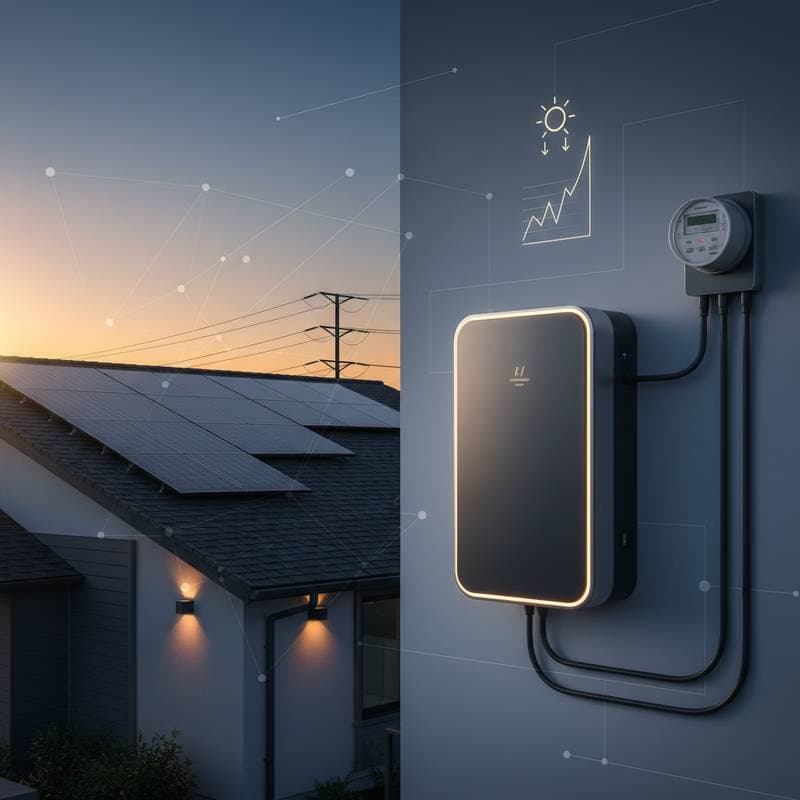
Utilities Challenging Solar Owners with Time-of-Use Rates
Time-of-use (TOU) rate structures spark significant debate in the U.S. solar industry. Electricity prices fluctuate by hour under these plans, rising during high-demand periods and falling during low-demand times. Utilities promote TOU as a way to mirror actual grid expenses, yet solar users contend that it diminishes the worth of their rooftop production. Several major investor-owned utilities nationwide implement TOU designs that, alongside updated net metering rules, render residential and commercial solar less economically viable.
California's Push Toward Evening Peak Pricing
California provides a prominent example of TOU rates undermining solar returns. Pacific Gas and Electric (PG&E), Southern California Edison (SCE), and San Diego Gas & Electric (SDG&E) require new solar customers to join TOU plans. Peak hours generally span late afternoon into early evening, well after solar panels reach maximum output. This disconnect lowers the effective value of energy sent back to the grid.
PG&E's residential TOU schedule features on-peak rates over 50 percent higher than off-peak ones. SDG&E shows an even greater gap, where summer peak pricing can reach twice the off-peak level for certain customers. "The economics of solar depend heavily on when generation and consumption overlap," said Bernadette Del Chiaro, executive director of the California Solar and Storage Association. "When utilities shift peak pricing into the evening, the return on investment for rooftop systems drops sharply."
The state's transition to net billing rules amplifies this issue. Exports now earn credits at hourly avoided-cost rates instead of full retail prices. Wood Mackenzie analysts project that these TOU and net billing adjustments extend average residential solar payback by several years from prior standards.
Arizona and Nevada: Overlapping Peaks and Demand Pressures
Arizona utilities employ TOU frameworks that constrain rooftop solar advantages. Arizona Public Service (APS) sets peaks from mid-afternoon to early evening, creating a spread exceeding 10 cents per kilowatt-hour between on- and off-peak times. APS argues this encourages usage shifts to ease grid strain. Solar proponents highlight how it devalues midday exports.
Tucson Electric Power (TEP) uses a similar TOU setup, supplemented by optional demand rates that charge based on the highest 15-minute usage each month. "Demand rates can be even more punitive than TOU for solar homes without batteries," said Mike Allen, president of a Tucson-based installation firm. "A single air-conditioning cycle at the wrong time can wipe out most of the month's energy savings."
Nevada's NV Energy applies a residential TOU plan with pronounced late-afternoon peaks. The state reinstated net metering following previous reductions, but TOU differences continue to lessen export benefits during demand spikes. Homeowners increasingly turn to batteries to redirect solar energy into expensive evening slots.
Southeast Utilities: Layered Tariffs with Hidden Impacts
Southeast investor-owned utilities roll out TOU rates as part of grid upgrades. Florida Power & Light (FPL) and Duke Energy Florida offer voluntary TOU participation, but the designs still erode solar worth. FPL's peaks cover mid-afternoon to early evening, aligning only partly with solar generation windows. Duke incorporates seasonal adjustments that add complexity to savings forecasts.
Georgia Power's Smart Usage plan merges TOU with demand charges, billing for the peak 30-minute load each month. "It changes the entire payback model," said energy consultant Richard Batten of Atlanta. "Customers who expect consistent monthly savings find the variability difficult to manage."
Regulators in the Southeast grant utilities broad rate-setting authority. Advocates call for third-party analyses to confirm that TOU differentials truly match grid costs, rather than just curbing solar growth.
Midwest and Mountain West: TOU for Grid Alignment
Colorado's Xcel Energy mandates TOU for all residential accounts to boost efficiency and support renewables. Peaks hit late afternoon through early evening as solar production wanes. Xcel claims this matches usage to renewable patterns, though installers note waning interest in solar without storage add-ons.
Utah's Rocky Mountain Power deploys TOU with afternoon-to-evening peaks and a modest rate gap compared to coastal states. Exports still fetch lower compensation. Contractors report that buyers now view batteries as a core component of solar setups.
In Michigan, DTE Energy and Consumers Energy adopt TOU that elevates daytime rates while discounting nights. Utilities frame this as modernization, but developers perceive it as a barrier in regions with longer paybacks from subdued sunlight and modest retail prices.
Batteries: Reclaiming Solar Economics
Battery storage counters TOU drawbacks in these areas. Owners capture midday solar excess and release it during evening peaks to minimize high-cost grid draws. National Renewable Energy Laboratory researchers calculate that a 10 kWh battery restores 20 to 40 percent of TOU-eroded value, varying by tariff.
Inverter and energy management makers develop smart controls that dispatch batteries automatically per pricing cues. These systems simplify optimization, eliminating the need for daily adjustments. Initial expenses persist as a hurdle, yet incentives and falling costs make them more accessible.
Adapting to TOU: Steps for Solar Owners
To navigate TOU challenges, start by reviewing your utility's rate options and modeling impacts on your usage patterns. Consider pairing solar with batteries early in planning to align generation with peak times. Track policy updates through state energy boards, as rate designs evolve. These actions help sustain solar's financial appeal amid shifting utility strategies.