
Essential New UL Rules for Safe DIY Solar Kits
U.S. safety certification body UL has introduced new requirements for plug-and-play solar kits. These changes affect how small-scale systems can be sold, installed, and operated by consumers. The updated standards emphasize grounding, connector integrity, and inverter safety to prevent electric shock and fire hazards in residential and balcony solar setups. Manufacturers, importers, and DIY retailers must verify compliance with these revised UL listings before marketing systems as ready-to-use packages.
The changes coincide with rising popularity of plug-and-play solar kits among homeowners. These kits offer affordable, off-the-shelf energy options. Analysts estimate that small modular systems under 1 kW represent a growing share of residential solar installations, especially in areas with high permitting barriers for larger rooftop arrays.
What the New UL Standards Require
The updated UL requirements focus on three critical areas: connection safety, inverter compliance, and system labeling.
1. Connection Safety:
All plug-in systems must use locking connectors that meet UL 6703 or equivalent standards. These connectors resist accidental disconnection and maintain weatherproof performance. Previously, many DIY kits used standard AC plugs, which concerned inspectors. The new rule prohibits ordinary household plugs for direct grid tie-in and requires a hardwired or proprietary locking interface approved for grid interconnection.
2. Inverter Compliance:
The inverter serves as the most technically sensitive component in any solar kit. Updated rules specify that inverters in plug-and-play systems must carry UL 1741 certification and include automatic grid-disconnect functionality. If the grid loses power, the inverter shuts down immediately to prevent backfeeding. This rule extends professional grid-tied system requirements to consumer-assembled units.
3. System Labeling and Instructions:
Manufacturers must include detailed installation and safety labeling on the product housing. Labels specify rated output in watts, voltage limits, grounding requirements, and warnings about incompatible devices. Instruction manuals describe step-by-step assembly with diagrams for proper placement and clearances.
UL spokesperson Maria Jenkins stated the updates aim to bring consumer-level solar products up to the same safety expectations as professionally installed systems. Jenkins noted that the standard remains technology-neutral and applies equally to microinverter-based kits, DC-coupled systems, and hybrid plug-in configurations.
Why the Revisions Matter for the Market
The plug-and-play solar category has expanded rapidly, driven by falling module prices and consumer interest in energy independence. However, safety oversight has not kept pace with innovation. Several state electrical boards have expressed concern that unlisted or incorrectly configured systems could pose hazards when connected to household circuits.
An internal study by the Solar Energy Manufacturers Alliance found that nearly 30 percent of plug-in kits sold online last quarter lacked a UL-listed inverter. Some relied on generic AC adapters without isolation protection. The new rules establish a clear compliance baseline to address these issues.
Industry analysts indicate that uniform requirements could level the playing field among manufacturers. Eric Meyers, senior analyst at Clean Power Research, explained that standardized certification removes ambiguity. It allows consumers to compare products based on performance and cost rather than varying interpretations of safety codes.
Challenges for DIY Retailers and Importers
Smaller importers and online marketplaces face a steep adjustment period. Many depend on overseas suppliers producing low-cost components without North American certification. To sell in the U.S., these firms must obtain UL documentation and submit sample units for testing.
Retailers may need to revise product descriptions and packaging. Phrases such as plug into any outlet or no electrician required could mislead buyers if connectors no longer meet compliance criteria. The Consumer Product Safety Commission plans to monitor marketing claims related to electrical safety certifications.
For domestic manufacturers, the shift offers a mixed outlook. Compliance costs may rise, but certified products can build consumer trust and support higher margins. Installers and local inspectors may view UL-listed plug-and-play kits more favorably, simplifying permitting in restrictive jurisdictions.
Technical Implications for Installers and Homeowners
The revised UL framework underscores the need for grounding and overcurrent protection. Every compliant kit must include an integrated ground-fault circuit interrupter or residual current device to reduce shock risk. Systems rated above 600 W require accessible disconnects that isolate both AC and DC sides during maintenance.
These requirements align with those for conventional rooftop installations but scale them for smaller plug-in systems. For DIY users, even small modules can generate hazardous voltages. Proper grounding, verified inverters, and certified connectors become mandatory for safe operation.
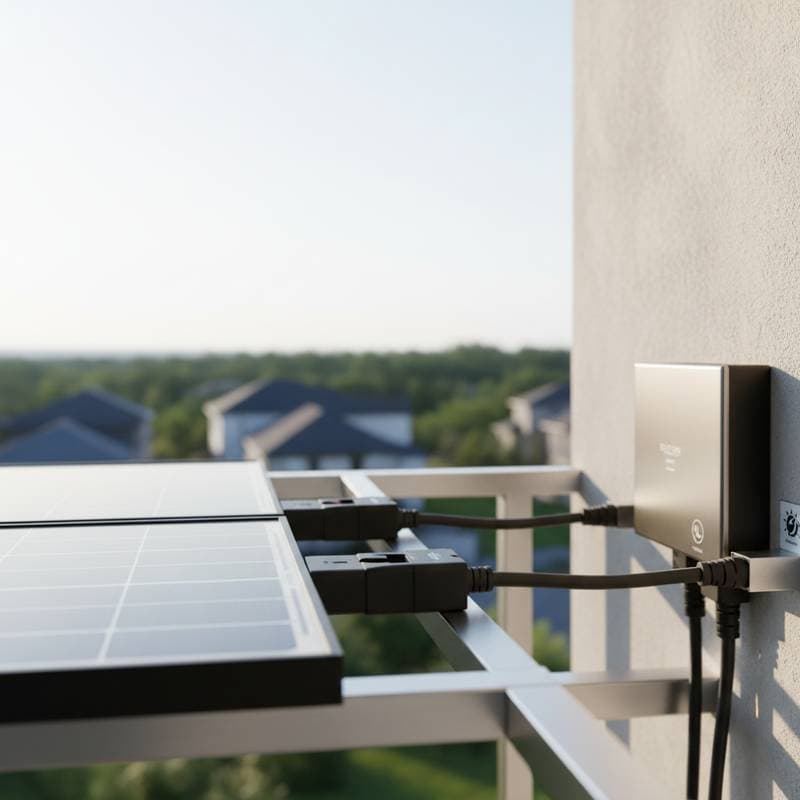
Balcony solar systems, common in dense urban areas, receive additional scrutiny. New labeling rules require manufacturers to specify mounting loads and wind ratings for brackets and railings. Installers must confirm that balcony structures support the system weight and that cables resist abrasion.
Industry Response and Early Adoption
Several U.S. manufacturers have announced compliance updates. California-based BrightPlug Solar confirmed its 800 W plug-in kit now features a locking NEMA connector and UL 1741-listed inverter. CEO Laura Chen stated, We anticipated these changes and redesigned our interface to meet the new criteria. Safety is a selling point, not a constraint.
Other companies proceed more cautiously. Some importers assess whether to continue plug-in kits or pivot to portable, off-grid models outside grid-interactive certification. Analysts predict a temporary supply slowdown as manufacturers retool designs and submit documentation.
Steps to Ensure Safe DIY Solar Adoption
The updated UL standards mark a milestone for the DIY solar segment. They establish that consumer-ready systems must meet electrical safety baselines comparable to professional installations.
Homeowners should seek visible UL markings on inverters and connectors, review installation instructions thoroughly, and avoid connecting non-certified components to household circuits. Certified equipment provides the safest route to energy independence. These measures foster responsible growth and sustain public confidence in solar reliability across the U.S.