
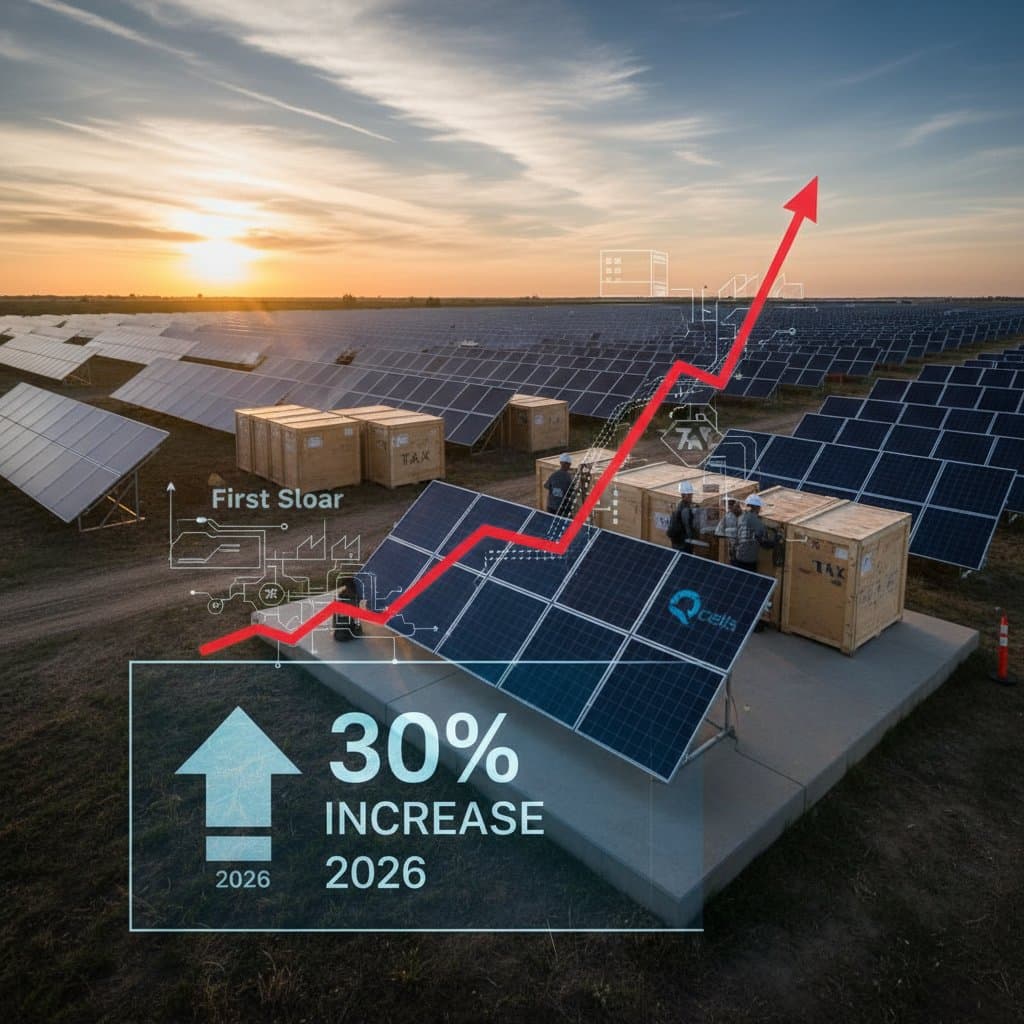
U.S. Solar Panel Prices Set to Rise 30% with 2026 Tariffs on the Horizon
The U.S. solar industry prepares for a significant shift as tariffs scheduled for 2026 threaten to increase imported panel prices by 30%. Experts predict this change will affect project timelines, challenge supply networks, and prompt new approaches to procurement for installations ranging from home systems to large-scale solar farms.
Wood Mackenzie forecasts that these tariffs could add 8 to 10 cents per watt to module import expenses. Such an increase would elevate costs for panels from Asia to their highest point in almost ten years. Developers dependent on crystalline silicon modules, which make up over 70% of current U.S. imports, will experience the strongest effects.
Key Elements of the Tariff Policy and Its Trade Effects
This tariff initiative focuses on solar cells and modules from major Asian production centers. It restores duties previously suspended through trade waivers and broadens scope to cover cells incorporated into modules in other nations. Officials from the U.S. Trade Representative explain that the goal is to enhance local production and lessen dependence on overseas sources.
Analysts view this policy as having mixed outcomes. It offers financial backing to growing American producers. However, it also threatens to inflate expenses for installers and contractors operating on slim profit margins. "A 30% jump in panel costs will severely impact project viability," noted Carrie Donaldson, senior analyst at Clean Energy Associates. "Developers might renegotiate power purchase agreements or postpone builds to absorb the hit."
How Domestic Producers Are Responding
Major U.S. companies have revealed intentions to grow their local output following the tariff news. First Solar, based in Tempe, Arizona, runs thin-film module plants across several states. Its cadmium telluride panels avoid the new import duties on cells, and the firm anticipates heightened interest in its American-made options.
Qcells America, located in Georgia, plans to ramp up cell and module manufacturing at its all-in-one facility. Leaders there highlight how tariffs favor complete in-house production, minimizing risks from foreign parts. "These policies encourage commitment to the entire solar production process," stated Justin Lee, CEO of Qcells North America. "They build assurance for growth in both raw material handling and final assembly."
Challenges persist for smaller operations that depend on imported cells. These facilities must accelerate shifts to local sourcing to control rising expenses. Forecasters suggest mergers among these secondary players as competition intensifies.
Impacts on Installation Processes and Schedules
Engineering, procurement, and construction companies now factor tariff-driven price changes into their financial plans. For utility-scale projects, expenses might climb by $80,000 to $100,000 per megawatt, varying with panel specifications and agreements. Residential providers could see system costs rise above $1,000, which may dampen uptake in budget-conscious areas.
"Beyond direct expenses, tariffs will alter how projects unfold," explained Mark Reilly, operations director at New Energy Installers, a nationwide EPC provider. "Uncertain module deliveries mean revising installation sequences, ordering periods, and workforce planning."
Suppliers of mounting hardware watch for secondary influences. Elevated panel costs may drive preferences for robust racks and trackers to extend equipment durability and efficiency. Midwest firms specializing in steel racking anticipate increased domestic demand, as clients seek American materials to meet federal incentive requirements for local content.
Financial Projections and Market Trends
In the short term, financiers anticipate upward pressure on prices, especially for initiatives in planning or initial building stages. Power purchase agreement rates may increase 3 to 5 percent to offset elevated upfront investments. Banks could demand revised expense analyses to address supply uncertainties.
Looking further ahead, stakeholders identify potential for expanded U.S. production if firms achieve efficient scaling. The Inflation Reduction Act's manufacturing tax credits lay groundwork for such investments. Tariffs provide additional safeguards, although critics caution that overlapping regulations might skew market dynamics and curb cross-border partnerships.
"America requires strong homegrown capacity alongside adaptable global sourcing," observed Ethan Morales, energy policy researcher at the Solar Futures Institute. "Excessive or overly inclusive tariffs risk impeding the renewable rollout they intend to foster."
Strategies for Supply Chain Resilience
To counter tariff vulnerabilities, developers pursue varied procurement paths. Some form alliances with U.S. producers for assured module supplies. Others spread purchases across regions to offset duty exposures. Construction firms refine stock control methods to sustain operations amid changes.
Trade organizations seek detailed guidance from government bodies on waiver qualifications, especially for advanced modules in commercial and industrial applications. Groups for installers and project owners press for open evaluations of how tariffs align with national energy targets.
Building a Stable Future in Solar Deployment
The industry's adaptation to 2026 tariffs will influence costs, investments, and practices long-term. Firms that prioritize local production, broad sourcing, and coordinated logistics stand best to sustain expansion amid elevated prices.
This era poses tests and turning points for solar stakeholders. Successful scaling by domestic leaders could forge a tougher supply foundation. Failure to do so might curb installation rates at a critical time for grid modernization. Collaboration among builders, planners, and makers will prove essential to harmonize expenses, access, and regulatory demands.