
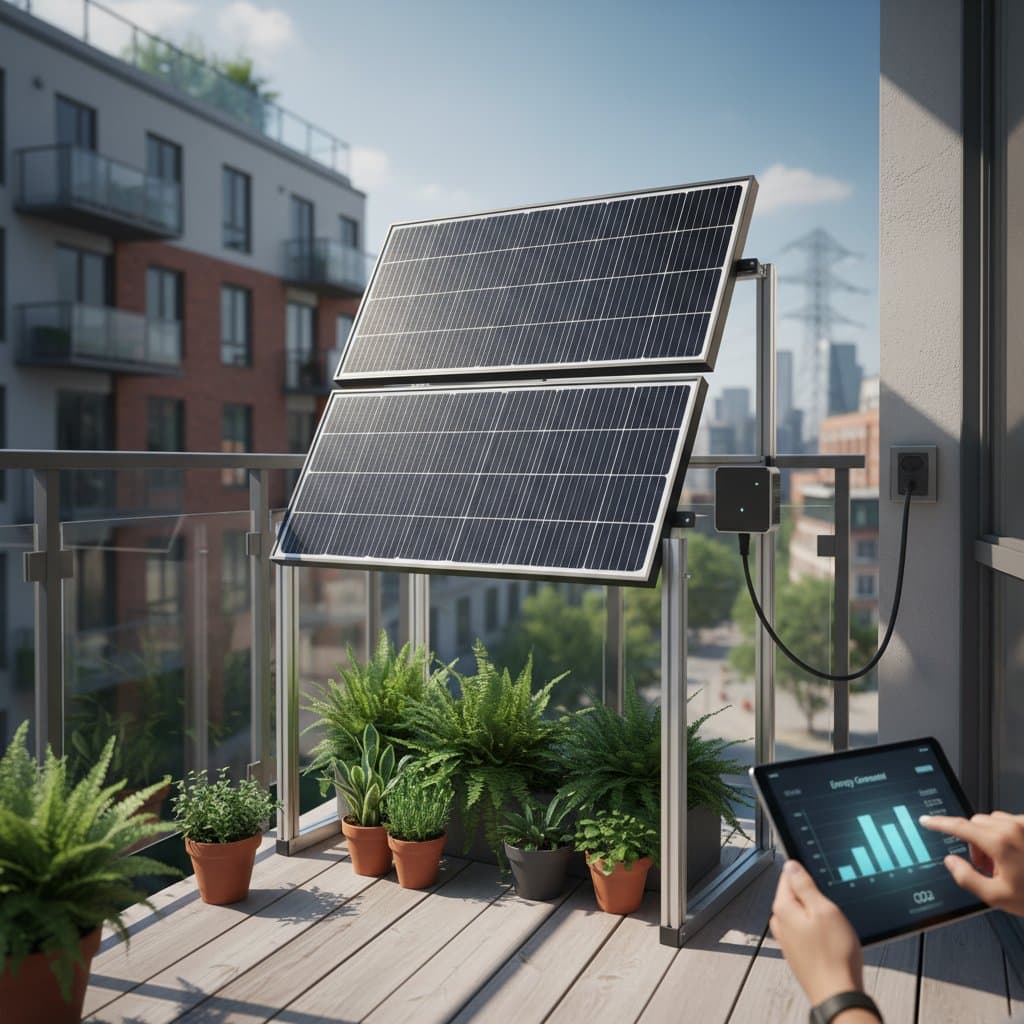
Plug-and-Play Solar Kits: Legal in Your State?
Plug-and-play solar kits, also known as balcony solar systems or plug-in solar panels, offer a simple solution for generating electricity. Users purchase a compact kit online, secure it on a balcony or patio, connect it to a standard wall outlet, and begin producing power. For renters and those in apartments, these kits provide entry into clean energy without roof access or extensive permits. However, a key concern persists throughout the U.S.: do these systems comply with local laws?
With over a decade of experience covering the solar sector, the author observes plug-and-play solar evolving from experimental setups to a popular option. These kits challenge conventional utility approaches by empowering individuals. The regulatory environment, however, varies significantly, and in certain states, connecting a panel to an outlet may breach electrical standards or utility guidelines.
Why Plug-and-Play Solar Appeals to Users
Plug-and-play solar operates on a basic principle. A small array of one or two photovoltaic panels links to a microinverter that transforms direct current into alternating current. The inverter then attaches to a standard outdoor outlet, allowing the system to offset household energy use by sending power through existing wiring.
Apartment dwellers find this approach particularly valuable. Installation avoids roof modifications, wall alterations, or hiring specialists, and skips lengthy approval processes. Many kits feature portable stands or railing clamps, enabling setup in minutes for anyone with sunlight exposure on a window or patio.
Retailers promote these as straightforward DIY solutions, a reality already achieved in parts of Europe. Nations such as Germany and Austria establish clear guidelines for balcony power plants, permitting limited wattage connections with basic documentation. The United States presents a more complex scenario.
Navigating U.S. Regulations
The National Electrical Code (NEC) provides the core safety framework for electrical work in the U.S. Although the NEC functions as a model code rather than direct legislation, states and localities adopt and enforce it. The code mandates that grid-tied photovoltaic systems, regardless of size, adhere to its rules, including certified components, proper grounding, and safe connections to prevent hazards.
Plug-in kits disrupt this framework. Standard outlets intend to supply power, not receive it. Introducing a power source risks energizing circuits when breakers are disengaged, endangering residents and utility personnel. The NEC neither bans nor endorses plug-in methods explicitly, creating ambiguity.
State and utility policies fill this gap. Certain areas introduce modifications for safe small-scale operations. Others maintain silence, subjecting plug-in systems to full grid-tied requirements. Utilities exercise caution to safeguard voltage levels and meter precision, sometimes resulting in bans.
States Exploring Plug-and-Play Options
Select states advance toward acceptance of plug-and-play solar. Regulators in these locations approve microinverters equipped with safety mechanisms, such as grid-down shutoffs. These meet UL 1741 standards, equivalent to those for rooftop installations. Utilities there permit units up to 800 watts without comprehensive agreements.
In states without specific guidance, plug-in kits follow general grid-tied protocols. This requires professional installation by a licensed electrician and utility paperwork, even for plug-based setups. Reporting reveals inconsistent utility interpretations within states; one may view a kit as an unauthorized generator, another as a minor load offset.
Such variability confuses buyers and hinders advocates who regard these systems as entry points to broader solar use.
Addressing Safety Concerns
Safety forms the primary objection to plug-and-play solar. Inspectors fear misuse by non-experts, such as unsuitable cords, circuit overloads, or missing disconnects. Fire departments question non-fixed mounts and inadequate grounding.
Manufacturers respond with engineered safeguards. Contemporary kits employ UL 1741-certified microinverters compliant with NEC Article 690, incorporating isolation and anti-islanding features. Specialized plugs detect irregularities and halt operation, while some integrate Wi-Fi for monitoring and remote control.
Technology advances outpace rules. Devices once prone to errors now qualify as reliable and code-adherent. Regulators must align policies to reflect these improvements.
Utility Perspectives on Integration
Utilities consider plug-in systems as grid interactions. Excess production reverses flow through meters not always equipped for two-way operation, potentially skewing readings or net calculations. Widespread unmonitored use raises grid balance and billing issues.
The output remains modest; a balcony unit produces 200 to 600 watts, sufficient for devices like laptops or refrigerators. Collectively, these contribute savings without grid threats. Engineers often acknowledge low risks but adhere to policies designed for larger setups.
Dedicated microgeneration rules would resolve constraints, providing clarity for users.
Local Permitting and Inspections
Building departments base decisions on the NEC and state codes, though enforcement varies. Inspectors may classify plug-in systems as appliances akin to generators, or demand permits. Connection type determines scrutiny: hardwired setups require review, while receptacle plugs occupy a unclear space.
In various cities, certified low-wattage systems receive informal approval. Such rulings seldom formalize, leaving guidance inconsistent.
Steps for Potential Buyers
Contact your utility first to inquire about policies for small plug-in photovoltaics. Some request only a notification; others prohibit entirely.
Consult the local building department regarding permit needs for outlet-connected portable kits. Seek written responses and supply product specs for evaluation.
Select certified gear: prioritize UL 1741 microinverters with grounding and auto-shutoff. Use weatherproof connections outdoors, avoiding standard extensions, and manage loads carefully.
Applications for Apartments and Balconies
Balcony solar thrives in urban settings with limited roof options. U.S. startups offer imported kits tailored for renters, featuring drill-free mounts or stable bases.
A 400-watt system offsets daytime usage significantly in sunny spots, reducing bills and fostering renewable engagement. Visibility may necessitate landlord or association consent, and leases or codes could limit changes.
Verify agreements and rules prior to setup.
Advancing Regulatory Clarity for Wider Adoption
The solar sector has integrated innovations like leasing and community projects through policy updates. Plug-and-play solar merits similar treatment as a safe, renter-friendly tool.
Legislators should revise standards with microgeneration thresholds, easing requirements for small outputs. Standardized certifications and outreach can mitigate risks while promoting access.
For individuals, thorough checks reveal viable paths forward. These systems deliver practical energy steps from limited spaces. Evolving rules will enhance opportunities, emphasizing safe participation in sustainable energy.