
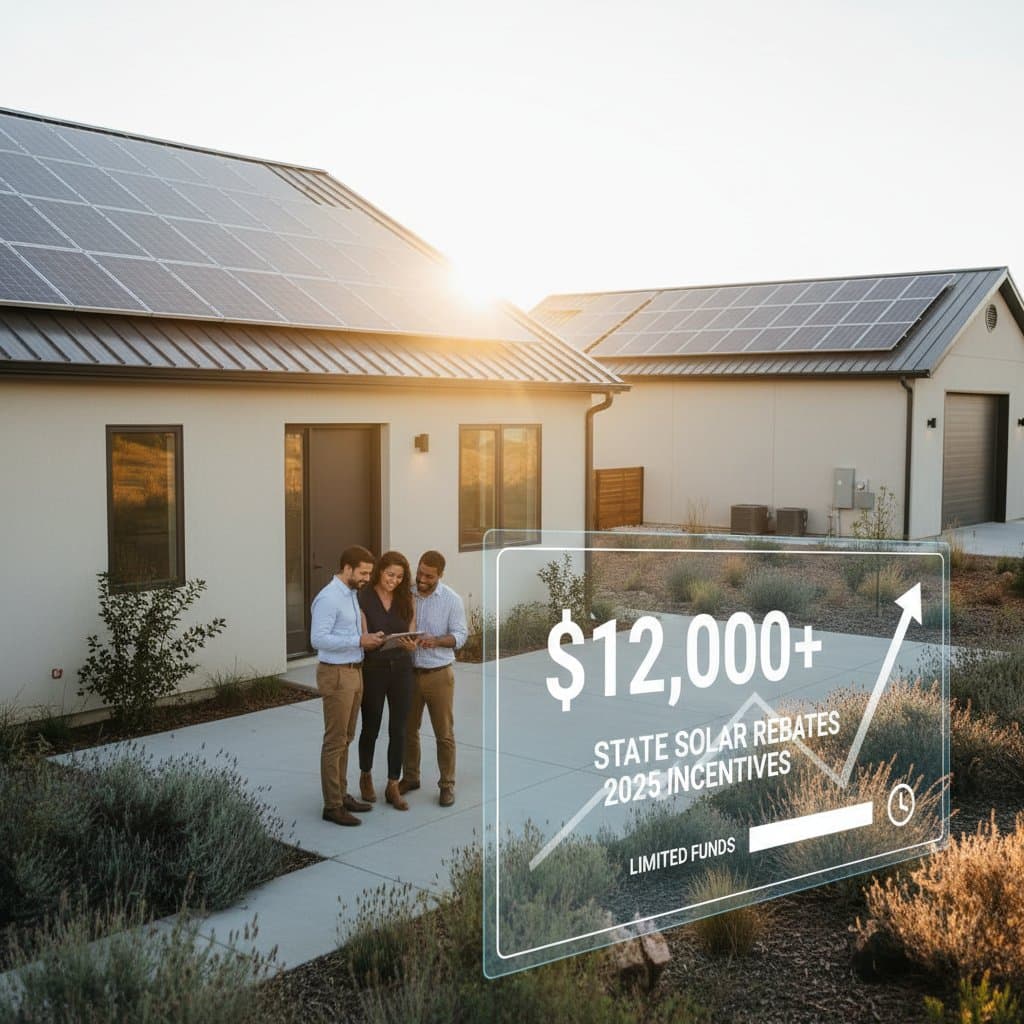
Substantial State Solar Rebates Exceed $12,000 in 2025
State solar rebate programs offer substantial financial assistance to homeowners and businesses that install solar systems in 2025. These incentives frequently exceed $12,000 per project, which reduces upfront expenses and shortens the time required to recover costs. Programs distribute funds on a first-come, first-served basis, so eligible participants should submit applications quickly to claim benefits before the allocations run out.
Numerous initiatives permit the combination of state rebates with federal tax credits, which increases total financial advantages. Certified installers assist in understanding eligibility criteria and optimizing incentive capture. This method aligns projects with state regulations and supports enduring reductions in energy expenses.
Understanding State Solar Incentives
State rebates function as direct monetary supports that advance comprehensive renewable energy objectives. In contrast to federal credits, which adjust taxes following installation, state programs typically provide immediate rebates via utilities or energy agencies. Participants furnish evidence of system adherence, including details on capacity, efficiency, and installation timelines.
Qualification often depends on elements such as geographic location, household income, and project magnitude. Residential installations may receive rebates ranging from $0.50 to $2.00 per watt, varying by state. Commercial applicants access higher sums tailored to operational energy demands and contributions to grid stability.
Programs renew each year, and certain states expand allocations to address growing interest. Homeowners confirm ongoing availability through official state websites or discussions with installers. Such advance planning avoids unexpected challenges during the submission process.
Top States Offering Generous Rebates
California sustains ongoing programs administered by utilities including PG&E and SCE, where incentives for solar systems paired with storage frequently surpass $12,000. Participants qualify by illustrating potential for energy displacement and compliance with net metering policies. Funds stay accessible for installations finished by December 31, with preference given to early applications.
Illinois features performance-based rewards through the Adjustable Block Program, which compensates systems for confirmed energy production over specified periods. Homeowners estimate rebate amounts using digital calculators that incorporate system size in kilowatts and regional pricing. Minnesota pairs this model with upfront rebates reaching $2.75 per watt for home systems, managed by the Department of Commerce.
Massachusetts provides graduated rebates via the SMART program, ranging from $0.70 to $1.25 per watt according to system scale and geographic bonuses. New Yorks NY-Sun effort distributes funds by region, offering up to $1.00 per watt in areas like Long Island and New York City. Both programs mandate pre-approval to secure incentive rates prior to starting work.
Texas utilities such as Austin Energy issue rebates of $2,500 per kilowatt for qualifying setups, emphasizing reductions in peak usage. Florida supports similar efforts through Tampa Electric, with $0.25 per watt plus additional credits for battery integration. Southern states like these prioritize rapid deployments to leverage abundant seasonal sunlight.
Navigating the Application Process
The rebate journey begins with choosing a certified installer who manages preliminary documentation. Applications require system diagrams, expense summaries, and utility connection approvals. State agencies evaluate these materials within 30 to 60 days, verifying alignment with construction standards and output expectations.
After installation, on-site inspections confirm functionality prior to fund disbursement. Payments arrive by check or electronic transfer in two to four months. To minimize setbacks, verify program conditions during the project and preserve records for potential reviews.
Pre-approval holds particular importance in high-demand programs; submit requests before acquiring components to reserve allocations. Installers follow state protocols to compile thorough submissions, which lowers the chance of denial. This organized process facilitates faster approvals and safeguards project finances.
Strategies to Maximize Savings
Combine state rebates with the 30 percent federal investment tax credit to offset approximately 50 percent of expenses for typical installations. Incorporate utility net metering to earn credits on utility bills from surplus energy generation. State-provided online tools allow projections of total benefits by entering local electricity rates and consumption patterns.
Income-eligible families in Oregon access amplified rebates up to $7,500 under Solar Within Reach, aimed at disadvantaged communities. New Mexico offers comparable enhancements through Solar for All, increasing awards by 20 percent for qualifying low-income participants. These provisions foster fairness and hasten solar integration.
Businesses pair rebates with MACRS depreciation to deduct system costs across five years. Expanded projects often secure incentives at $1.00 per watt or higher. Engage tax specialists to weave these elements into broader fiscal strategies.
Monitoring Program Status
State energy offices publish monthly updates on fund balances through specialized websites, detailing leftover budgets and processing durations. Aggregator tools compile information from multiple programs, spotlighting premium options such as Californias bonuses for storage. Review these platforms every two weeks to identify new funding or modifications.
During periods of heightened demand, programs might adjust per-watt amounts to extend availability; file applications amid steady phases. Installers enroll in notification services for instant updates on fund limits or prolongations. This proactive monitoring guarantees entry to the most favorable incentive tiers.
First Solars unified tracker streamlines research, detailing criteria and timelines by state. Users match these against individual circumstances to assess suitability. Consistent evaluations simplify intricate incentive environments into practical roadmaps.
Broader Impacts of Rebate Programs
These programs strengthen regional economies by creating employment in installation, upkeep, and production sectors. States with strong initiatives experience decreased pressure on power grids and diminished emissions, supporting environmental benchmarks. They also spur advancements, such as battery pairings for dependable electricity.
Reliable funding attracts capital to solar networks, fortifying supply lines. Experts observe that steady rebates link to elevated adoption in involved areas. This collaboration of regulation and execution propels shifts toward sustainable power.
Homeowners enjoy increased home values, as solar additions boost resale prices by as much as 4 percent according to research. Businesses acquire advantages in energy autonomy and expense forecasting. In summary, rebates make solar viable for a wider audience.
Steps to Claim Your 2025 Solar Rebate
Examine state energy portals immediately to pinpoint relevant programs and collect necessary paperwork. Collaborate with approved installers for precise cost projections and submission guidance. Arrange meetings to synchronize projects with high-funding intervals.
Integrate incentives thoughtfully to recoup investments in fewer than seven years and slash long-term energy outlays. Pursue current opportunities to become part of the expanding solar community. This initiative yields lasting economic and ecological rewards.