
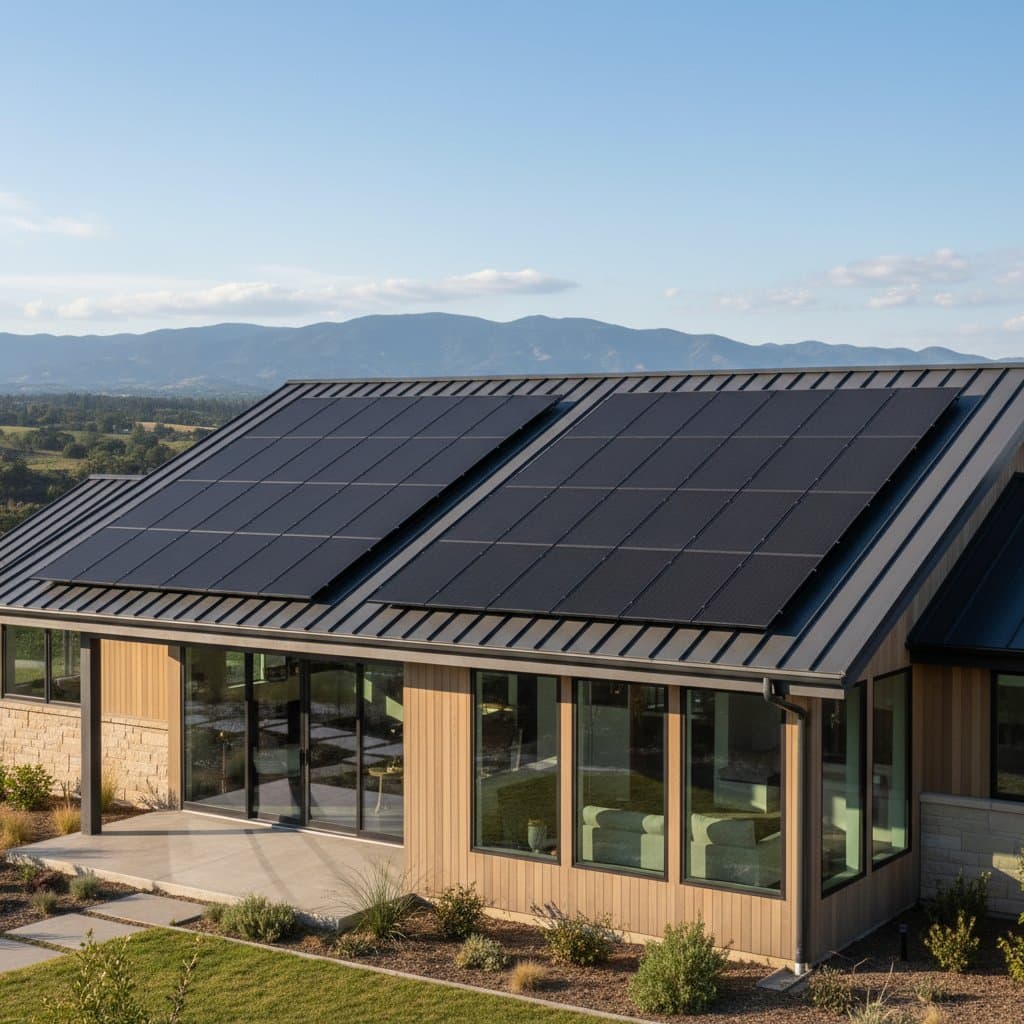
Metal Roofs: The Foundation for Efficient Solar Installations
Metal roofs emerge as the optimal base for solar panel systems due to their inherent durability, robust structure, and extended service life. These qualities align closely with the demands of photovoltaic technology. Property owners and installers benefit from enhanced system reliability and reduced expenses over time.
The Importance of Roof and Solar Compatibility
A roof serves more than as a mounting platform for solar panels; it forms a critical element that influences installation safety, operational efficiency, and power generation. The interaction between roofing material and mounting hardware dictates secure attachment and minimal disruption. Incompatible setups often result in water leaks, added structural strain, or elevated labor expenses.
Metal roofs address these issues effectively. Their consistent profiles and high tensile strength enable secure anchoring of solar modules without roof deck penetration. Installers achieve quicker setups with preserved waterproofing, avoiding the need for additional supports or sealants.
Lifespans That Synchronize for Long-Term Value
Metal roofing stands out for its impressive durability, often spanning 40 to 70 years with proper care. This duration parallels the 25- to 30-year performance warranty of most solar panels. As a result, property owners avoid the expense and complexity of panel removal during roof replacements.
Traditional options like asphalt shingles typically last only 20 to 30 years, outpacing their degradation relative to solar arrays. Undertaking re-roofing beneath installed panels incurs significant costs, potentially exceeding several thousand dollars. Metal roofs eliminate this scenario, providing a stable base that sustains both the structure and energy production across extended periods.
Efficient Mounting Techniques and Labor Savings
Attachment processes on metal roofs prove straightforward and reliable. Standing seam configurations, for instance, accommodate clamp systems that secure to raised seams without surface drilling. This approach maintains roof integrity, upholds manufacturer warranties, and bypasses sealant applications.
Corrugated or ribbed profiles integrate well with custom brackets that conform to surface contours. Such methods cut installation durations by up to 30 percent in many cases. Contractors complete tasks with fewer resources, yielding predictable timelines that benefit residential scale-ups and commercial ventures alike.
Robustness Against Environmental Challenges
The structural integrity of metal roofs ensures stability for solar systems across varied weather conditions. Materials endure substantial snow accumulation, high winds exceeding 110 miles per hour, and temperature fluctuations from -40 to 180 degrees Fahrenheit. This fortitude safeguards panels from shifting or damage, promoting steady output year-round.
Interlocking designs and specialized coatings further bolster performance. Reflective surfaces deflect up to 70 percent of solar heat, mitigating thermal buildup in buildings and panels. Cooler operating temperatures enhance photovoltaic efficiency by 10 to 25 percent, amplifying overall energy yields.
Sustainability and Financial Advantages
Metal roofs advance environmental objectives when integrated with solar setups. Composed largely of recycled steel or aluminum, these materials recycle fully at lifecycle end, minimizing landfill contributions. Their prolonged use curtails replacement frequency, aligning with reduced carbon footprints.
Financially, the duo yields property value increases of 4 to 6 percent in solar-adopting regions. Maintenance demands stay low due to resistance against rust, algae, and hail impacts. Owners realize steady savings on repairs and energy bills, fostering a compelling return on initial outlays.
Practical Planning for Solar Professionals
Contractors find metal roofs conducive to streamlined workflows. Uniform seam spacing facilitates standardized racking layouts, minimizing measurement discrepancies. Hardware kits from leading suppliers, such as S-5! clamps or IronRidge systems, match common profiles like snap-lock or mechanical seams.
Fewer penetration risks translate to reduced insurance premiums and callback incidents. Teams execute installations 20 to 40 percent faster, accommodating more projects annually. This operational edge supports business growth while adhering to codes like UL 2703 for mounting safety.
Aesthetic Versatility in Design Choices
Options in metal roofing span numerous profiles, from sleek standing seams to textured corrugated sheets, in colors ranging from cool grays to earthy tones. These selections harmonize with solar arrays, whose grid patterns blend seamlessly with linear roof lines. The outcome yields cohesive exteriors that elevate curb appeal.
Reflective finishes not only aid functionality but also create modern, integrated looks. Homeowners in visible neighborhoods or commercial districts prioritize such aesthetics, where design influences permitting approvals and resale potential.
Ensuring Ongoing Performance and Minimal Upkeep
Systems on metal roofs demand limited intervention thanks to inherent moisture repulsion and material stability. Non-penetrative mounts prevent leak pathways, while fire-resistant properties add safety layers. Annual checks focus on seam integrity and bracket tightness, often requiring under two hours for full arrays.
Building managers experience uninterrupted operations with rare downtime. This dependability underpins insurance discounts and tenant satisfaction in multi-unit settings, reinforcing the practicality of metal as a solar substrate.
Advancing Integrated Solar-Roof Solutions
Industry evolution favors hybrid approaches that merge roofing and renewables. Metal roofs adapt readily to innovations like flexible thin-film panels or BIPV elements that conform to sloped surfaces. Early adoption of compatible profiles prepares sites for upgrades without major overhauls.
Professionals hone expertise in seam-specific techniques to capitalize on these synergies. For stakeholders, prioritizing metal during initial builds or retrofits secures optimal efficiency and longevity. This forward-thinking strategy maximizes energy independence and asset preservation.