
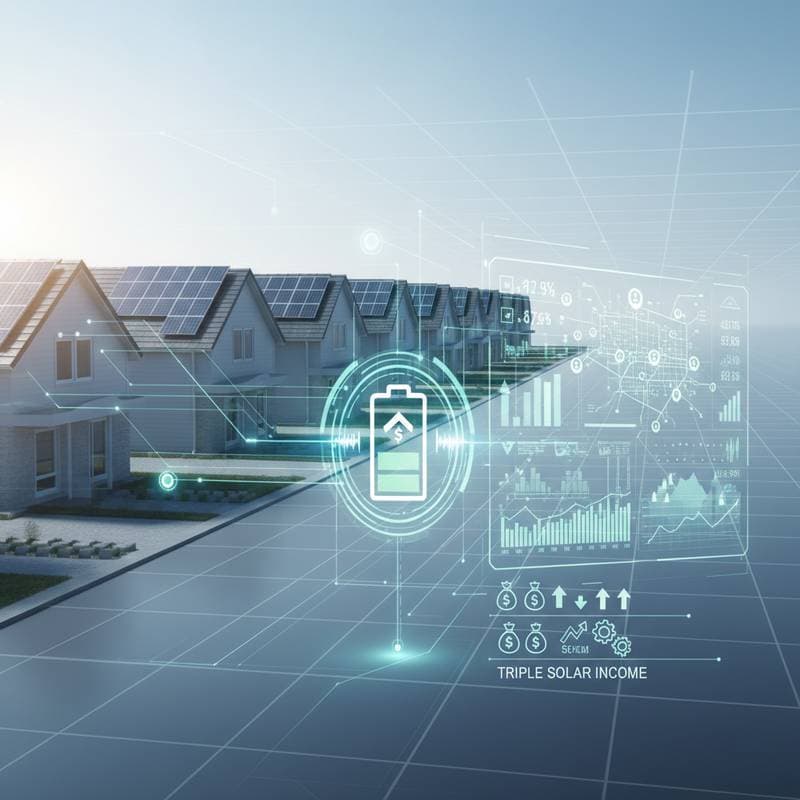
Triple Your Solar Earnings with Virtual Power Plants
Residential solar systems have long served as tools for energy independence. These installations reduce electric bills, offer backup power, and provide control over energy consumption. A emerging model now alters this equation significantly. Virtual Power Plants, known as VPPs, convert individual solar systems into flexible grid assets capable of producing income well beyond basic bill reductions. This development represents one of the most compelling financial advancements for solar owners in recent years.
Understanding Virtual Power Plants
A Virtual Power Plant does not exist as a physical structure. Instead, it functions as a network of distributed energy resources, including rooftop solar panels, batteries, and smart inverters, connected via specialized software. Operators coordinate these assets to deliver energy or grid services in a manner similar to traditional power plants. During periods of grid stress, the VPP releases stored energy or modifies load patterns across numerous homes at once.
This coordination enables homeowners to earn compensation for grid participation. Participants contribute a share of their stored power when utilities require it and receive payment in return. Such involvement shifts a personal solar installation from a cost-saving device into a component of a broader digital energy marketplace.
Financial Benefits of VPP Participation
Income models differ by location and program, yet the core principle remains consistent. VPP operators generate revenue by offering services to the grid and distribute a portion to enrolled customers. Compensation arrives as utility bill credits or direct payments, based on local regulations.
For a standard solar and battery setup, earnings can double or triple compared to net metering alone. This enhancement arises from layering multiple revenue sources. Homeowners continue to benefit from self-consumption savings and excess energy exports. Additional income stems from grid support services. Each layer contributes to overall returns.
Certain programs incorporate time-based strategies, where batteries charge or discharge according to optimal market rates. Participants often see hundreds of dollars added annually through automated management of these cycles.
Core Technologies Enabling VPPs
Central to any VPP lies a control platform that interacts with equipment in real time. Smart inverters, lithium-ion batteries, and advanced meters form key components. The software aggregates available capacity, forecasts grid demands, and deploys resources swiftly. This setup addresses one of the most intricate challenges in contemporary energy management while achieving notable efficiency improvements.
Equipment manufacturers now produce devices optimized for VPP integration. Numerous home batteries include built-in communication protocols for straightforward enrollment. Others integrate directly with utility initiatives, bypassing the need for extra interfaces. Such connectivity supports expansion from small groups of homes to large-scale networks.
Policy and Market Influences
Grid reliability issues combined with shifting electricity prices drive VPP expansion. Utilities face demands to handle peak loads more efficiently. Constructing new fossil fuel plants proves costly and contentious. In contrast, aggregating solar and storage resources offers a quicker, more affordable, and environmentally sound alternative.
Regulators increasingly acknowledge that combined distributed resources match the capabilities of centralized facilities. Market structures adapt to permit VPPs entry into capacity, frequency regulation, and demand response auctions. These shifts enable residential solar owners to access opportunities previously reserved for commercial entities.
Case Studies from VPP Implementations
Early pilots in various areas demonstrate how distributed assets maintain grid stability amid intense conditions. Homeowners report batteries activating during high-price periods and recharging at off-peak times, all without manual intervention. Individually, the process feels effortless; collectively, it averts outages and lowers system-wide expenses.
Effective programs prioritize rewards alongside ease of use. Participants avoid the need for constant oversight. Leading VPPs manage dispatch operations while providing updates on system performance and earnings. Clear communication fosters confidence, encouraging sustained involvement.
Steps to Integrate VPPs into Your Solar Setup
For existing solar owners, enrollment often involves adding a compatible battery and selecting a suitable program. Verify if your inverter or storage system supports connections to utility or third-party VPPs. Review local incentives and compatibility requirements through provider documentation.
Providers like major battery manufacturers offer enrollment guides. Begin by assessing your equipment's communication capabilities. Contact your utility to explore available programs. Once connected, monitor initial earnings to confirm alignment with expectations.
Solar investments originally aim at savings and autonomy. VPPs extend this value by enabling income generation through grid contributions. This evolution turns energy production from a passive endeavor into an active, rewarding role in a resilient energy ecosystem.