
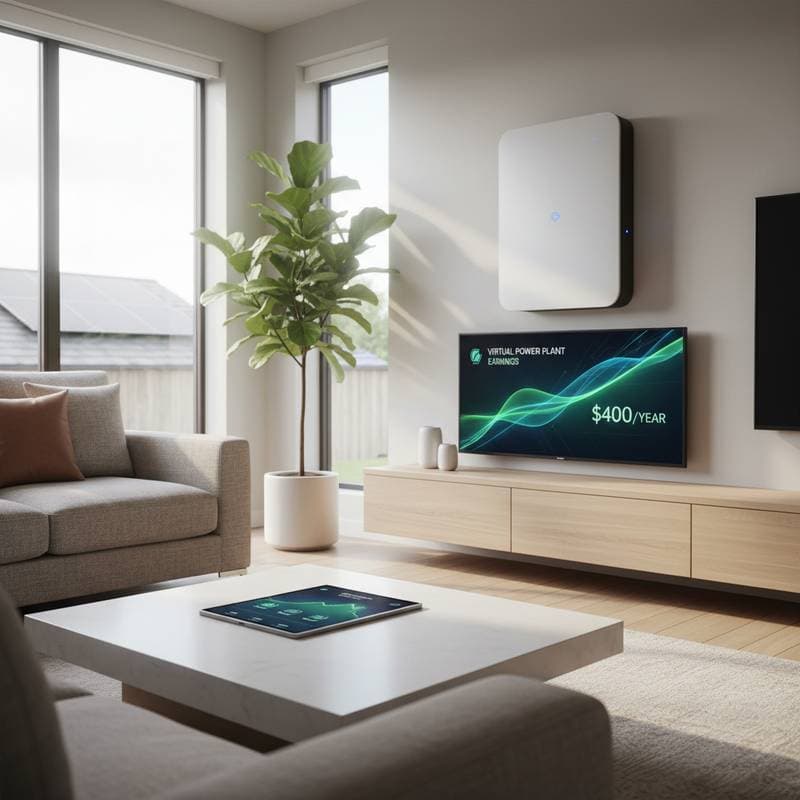
Earn Up to $400 Annually by Renting Your Battery Through a Virtual Power Plant
Homeowners with solar and battery systems can now generate meaningful income from assets they already own. Virtual power plant programs connect residential batteries to the grid and compensate owners for sharing stored energy during periods of high demand. This approach turns a single home battery into a reliable source of annual revenue while supporting broader grid stability.
How These Programs Operate
A virtual power plant aggregates thousands of home batteries, thermostats, and chargers into one coordinated network. When grid operators detect rising demand, the platform directs participating batteries to discharge a limited amount of energy. The process runs automatically through secure software links, so homeowners experience no change in daily power availability.
Each battery keeps a reserve for household use. Operators schedule discharges only a few times per month and always leave sufficient capacity for personal needs. Real-time monitoring ensures the system responds within seconds without manual input from the owner.
Payment Structures and Realistic Earnings
Most programs offer either a fixed annual payment or credits tied to each grid event. Households with typical battery sizes often receive between 300 and 400 dollars per year. Larger batteries or those located in high-demand regions can exceed this range when participation remains consistent.
Earnings depend on four main factors. Battery capacity determines how much energy can be supplied. Program rules set whether compensation arrives monthly or per event. Local grid conditions influence payout levels. Finally, consistent availability increases total returns over time.
Steps to Enroll and Begin Earning
Homeowners start by confirming eligibility through their utility or an approved aggregator. After selecting a compatible program, they sign a participation agreement and allow installation of a secure communication device. The provider then links the battery to the network and confirms that household reserve settings are in place.
Once active, an online dashboard displays upcoming events, earnings history, and performance data. Most agreements limit the number of discharge cycles to protect battery life and include clear terms for opting out if needed.
Grid Benefits and Long-Term Value
Aggregated home batteries reduce reliance on fossil-fuel peaker plants during peak hours. They also improve local reliability during heat waves or sudden supply shortfalls. Utilities gain flexible capacity without constructing new infrastructure, which lowers overall system costs and supports renewable integration.
Participants receive both direct payments and indirect advantages. Reduced strain on the grid can stabilize rates for everyone, while each enrolled battery contributes to measurable emissions reductions in its region.
Addressing Common Concerns
Battery degradation remains a frequent question. Programs address this by capping discharge events and, in some cases, providing additional compensation for measured wear. Data privacy receives similar attention through encrypted connections that share only performance metrics rather than personal usage details.
Contract length varies by provider. Some require one-year terms with easy renewal, while others allow month-to-month participation. Reviewing these details before signing ensures alignment with individual plans.
Next Actions for Current Battery Owners
Owners should contact their utility or check aggregator websites to determine whether a virtual power plant program operates in their area. Verifying battery model compatibility and reviewing sample contract terms takes only a short time. Those who enroll join a growing network that rewards early storage investments while strengthening the clean energy system for all users.