
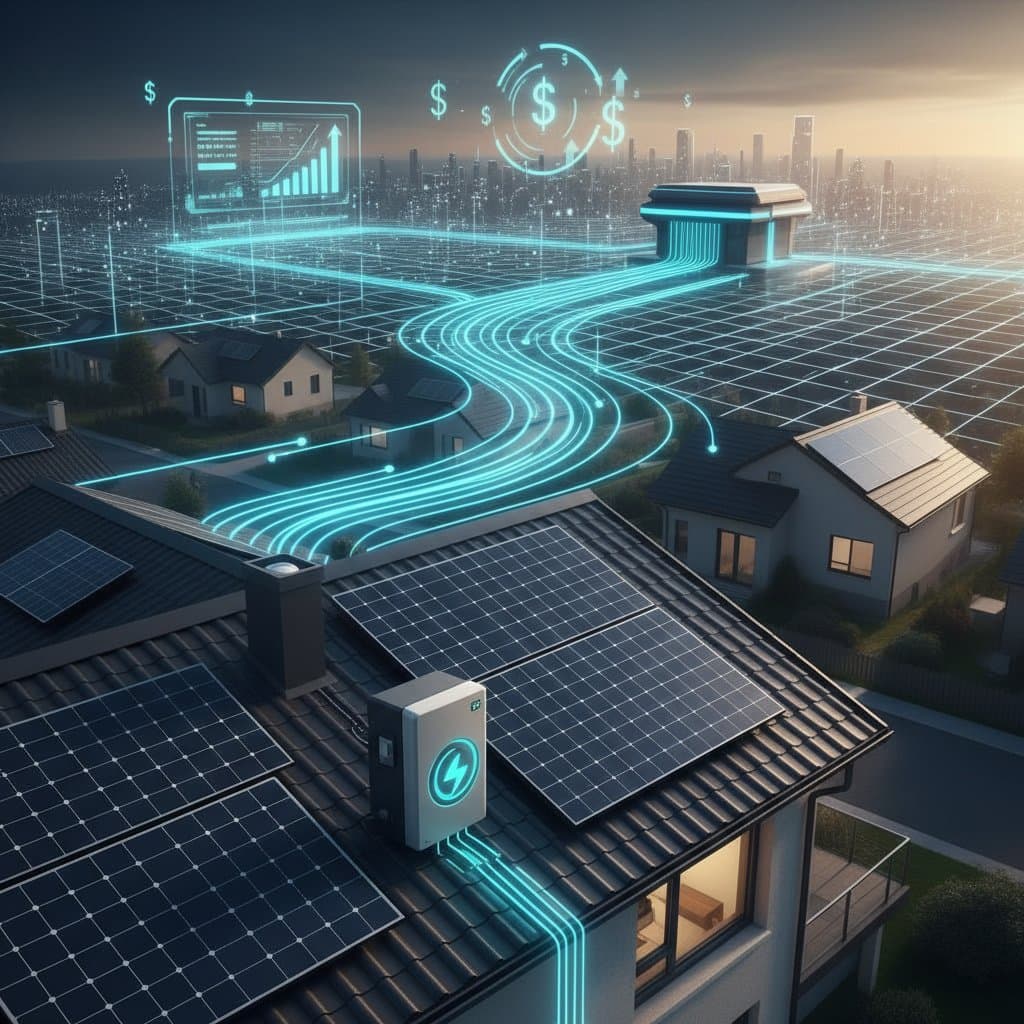
Earn Income from Solar Through Virtual Power Plants in 2026
Virtual power plants, known as VPPs, change the way solar owners engage with the electric grid. Utilities and energy companies across the United States build networks that link distributed solar panels, batteries, and smart inverters to function as unified power sources. These networks manage excess energy, maintain frequency stability, and offer demand response capabilities. Homeowners and businesses gain financial advantages by permitting their systems to aid grid operations, receiving direct payments in return.
Analysts project VPP capacity to surpass several gigawatts in combined resources soon. Federal and state incentives bolster this expansion by compensating distributed energy involvement. VPPs move beyond experimental stages to become essential grid components that pair with large-scale power while creating earnings for participants.
Understanding Virtual Power Plant Operations
A virtual power plant consists of a software-managed network of dispersed energy resources, not a physical site. It incorporates solar panels, battery storage, electric vehicle chargers, and management devices. When combined, these elements act as one power plant, supplying or absorbing electricity on demand.
Advanced algorithms and communication systems drive VPP performance. Cloud platforms link to inverters and management tools, enabling operators to modify output instantly. During low grid frequency, the VPP releases stored energy for balance. In periods of high renewable output, it stores surplus to avoid line overloads.
Mark Dillard, chief technology officer at GridFlex Energy in California, explains, "Coordinating thousands of assets via virtual platforms enhances grid flexibility. Residential solar-plus-storage now serves as dispatchable power rather than mere load reduction." This approach proves vital in solar-rich areas facing midday surplus challenges.
Income Streams from VPP Involvement
Solar owners benefit financially through revenue shares linked to grid support services. Utilities and system operators compensate for frequency regulation, voltage maintenance, and peak reduction. VPP operators collect these funds and allocate them to participants based on contribution levels.
Compensation includes payments for energy dispatched during events and standby fees for available capacity. These add to or substitute net metering in regions with adjusted rates. Residential users might earn hundreds to thousands of dollars yearly, influenced by system scale, storage size, and market rates. Larger commercial setups yield higher returns, particularly in peak demand programs.
Angela Ruiz, vice president of distributed resources at SunNet Energy in Texas, states, "Virtual power plants create fresh revenue for solar assets. Customers monetize battery flexibility in grid events while preserving core savings."
Essential Technical Setup for VPP Enrollment
Participation demands suitable hardware and steady internet. Smart inverters must support remote commands and data transmission. Leading brands like Enphase, SMA, and SolarEdge provide certified models for aggregator integration.
Batteries enable energy dispatch, with lithium-ion types dominating, though trials include flow and hybrid options for longer use. Software adheres to cybersecurity and compatibility rules from operators and regulators.
Installers now incorporate VPP features in new solar-plus-storage projects, adding modules and gateways for easy setup. Existing owners may need firmware upgrades or inverter swaps. Wood Mackenzie reports highlight compatibility as crucial for VPP growth, emphasizing standardized protocols and APIs to cut costs and ensure reliability.
Utility and Market Views on VPPs
Utilities regard VPPs as economical substitutes for new plants or upgrades. Distributed assets react quicker than peaker units and scale gradually, lowering costs and boosting reliability.
In states like Vermont, California, and Arizona, utilities embed VPPs in distribution systems, achieving peak load cuts and better voltage control. Regulators approve tariffs rewarding these services.
Carla Jensen, a senior grid operations manager at a Midwest transmission organization, notes, "Virtual power plants rank as our top efficiency tools. They manage renewable fluctuations without fossil fuel delays."
Market frameworks prioritize quick, accurate responses, spurring investments in controls and monitoring for dependable VPP input.
Opportunities for Aggregators and Installers
VPPs spawn new ventures for aggregators, engineering firms, and software developers. Solar installers expand into management services, bundling VPP access for revenue shares and loyalty.
Software providers vie on platforms handling varied equipment, focusing on scale and security. Some aggregators secure utility deals; others trade flexibility in wholesale markets.
Installers gain from training in protocols, codes, and optimization, boosting demand. Configuring for dynamic roles elevates project worth and satisfaction.
Peter Long of Renewable Market Advisors observes, "Future solar growth stems from asset-linked services, not panel sales alone. VPPs turn static systems into dynamic earners."
Evolving Policies and Regulations
Policies advance to integrate distributed resources into markets. States enable aggregated bids for capacity and services beside conventional plants. Federal standards promote interoperability and data exchange for cross-state ease.
Regulators set fair compensation, transparent pricing, and standard contracts to spur uptake. Protections cover privacy and control issues.
Analysts anticipate swift expansion with aligned rules, hinging on coordination among utilities, operators, and providers.
Steps to Access VPP Financial Rewards
Solar owners and businesses should evaluate system fit first. Modern inverters often support participation with few changes. Batteries amplify earnings, though optional.
Follow these steps:
-
Check Equipment Fit – Ensure inverters and batteries align with control standards.
-
Pick a Reliable Aggregator – Select one with clear revenue models and grid ties.
-
Examine Utility Rules – See how VPPs mesh with net metering or time-based rates.
-
Secure Connectivity – Maintain consistent internet for controls and reports.
-
Track Results – Use aggregator tools to monitor events and verify payments.
Building a Profitable Solar Future
Virtual power plants reshape distributed solar economics, linking isolated systems to national grid efforts.
As networks advance, consumers shift from users to partners, earning from assets in this dynamic energy shift.