
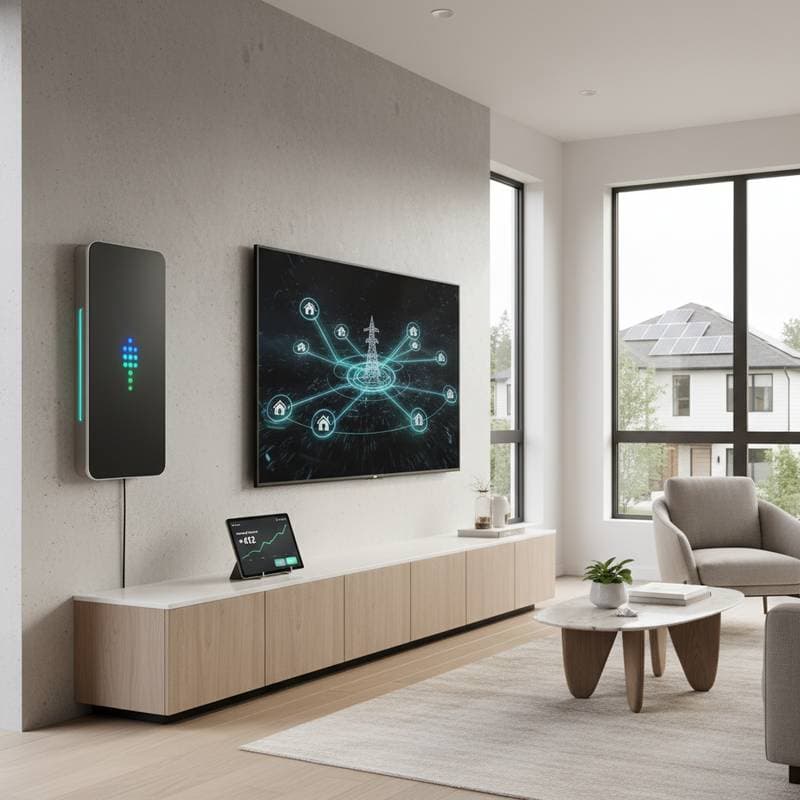
Rent Your Battery for $400 a Year: Turning Storage into Grid Income
Earning a few hundred dollars annually from a home battery may appear modest, yet this opportunity signals a significant shift in the American energy sector. Homeowners who installed storage systems for backup power or self-consumption now discover that these batteries can perform dual roles. They support household needs while contributing to grid stability, creating a reliable income stream through participation in virtual power plants, or VPPs.
The virtual power plant model stands out amid past trends in solar and storage markets. It offers substantial technical capabilities, tangible financial benefits, and increasing regulatory backing. Renting battery capacity to the grid for approximately $400 per year demonstrates a developing market that properly values distributed energy resources for their essential services.
How the Virtual Power Plant Model Works
A virtual power plant consists of a network of dispersed energy assets, including rooftop solar panels, residential batteries, and smart thermostats. Software coordinates these elements with a central platform managed by an aggregator or utility. During grid stress, the system discharges stored energy, curbs demand, or adjusts usage patterns in real time.
Technically, this setup delivers grid services such as frequency regulation, voltage support, and peak demand reduction. These functions parallel those of large-scale gas plants or utility batteries, but distributed across numerous small devices in communities. Such widespread flexibility holds immense value for overall system performance.
A homeowner with a 10 kWh battery receives about $400 yearly in direct compensation. Scaled across thousands of users, this collective capacity rivals tens of megawatts of controllable power. The outcomes include enhanced grid reliability, lower utility expenses during peaks, and incentives for homeowner involvement.
The Business of Renting Battery Capacity
Virtual power plant programs typically employ a shared value approach. Homeowners retain ownership of the battery, while aggregators or utilities control it under defined limits. Participants permit access to a share of stored energy during specific grid events and receive payments or bill credits in exchange.
Certain programs offer a fixed annual payment, like $400, providing simplicity and predictability. This structure resembles leasing a segment of energy infrastructure without ongoing management responsibilities.
Economically, these incentives help recover a notable share of the battery expense over time. For a $10,000 system, $400 yearly equates to a four percent return, excluding additional benefits from solar integration or emergency backup. This arrangement maximizes an asset that remains unused much of the year.
Policy Foundations and Utility Motivation
Early virtual power plant initiatives faced challenges in expansion due to inadequate compensation frameworks for distributed resources. Current developments address this gap. Regional transmission organizations increasingly allow aggregated distributed energy into wholesale markets, while utilities explore cost-effective alternatives to traditional infrastructure.
Utilities pursue these programs for tangible reasons. Grid pressures from extreme weather or demand surges demand costly short-term capacity. Virtual power plants offer rapid response options, supplying power or easing demand in seconds, bypassing the need for new facilities or lines.
Regulators promote such efforts to advance grid dependability and emission reductions. Policies mandating non-wires solutions position distributed storage as a viable resource in modern energy planning.
The Homeowner Perspective
Homeowners in virtual power plant programs cite diverse reasons for joining. Some focus on financial gains, appreciating $400 annually with minimal involvement. Others value the communal impact, such as averting outages or cutting reliance on fossil fuels during high-demand periods.
Practical concerns include ensuring the aggregator respects household priorities. Reputable programs restrict grid access to a defined capacity portion, preserving sufficient reserves for personal use. Enhanced transparency via mobile applications now displays usage details for grid events.
Participation elevates a passive backup device into a dynamic energy contributor. The battery engages routinely to bolster the grid and yield returns, rather than waiting for rare emergencies.
Technology Behind the Coordination
Software forms the core of virtual power plant operations, handling forecasting, aggregation, and dispatch of resources. It incorporates weather patterns, demand projections, and live grid data. Upon receiving a capacity request from operators, the platform calculates safe discharge amounts per battery.
Precision remains vital in this process. Excessive draws from one area risk local voltage issues, while insufficient response forfeits revenue chances. Advanced analytics and control systems ensure balanced execution.
Battery producers now prioritize virtual power plant integration in designs. Built-in protocols facilitate connections with third-party aggregators, promoting compatibility across products and locations to enable broader adoption.
Aggregators and Market Competition
Aggregators range from utility affiliates to standalone firms collaborating with various providers. Success hinges on advanced software and strong user engagement strategies.
Competition extends beyond payouts to include clarity and dependability. Participants prefer programs with detailed usage reports and steady compensation. Those emphasizing communication build larger networks.
Market dynamics spur payment innovations, such as rates linked to energy markets or packages combining enrollment with financing perks. As the sector grows, these elements drive efficiency and appeal.
Economic and Environmental Ripple Effects
Distributed grid services yield widespread benefits surpassing individual earnings. Virtual power plants diminish reliance on costly peaker plants that run sporadically. They also ease transmission bottlenecks and postpone major upgrades, sharing savings with all consumers.
Environmentally, these systems promote greener operations. Peak-time discharges from batteries often replace fossil-based generation. With rising renewables, storage and flexible demand prove essential for maintaining equilibrium.
Homeowners thus engage in a distributed energy framework. This involvement fosters a sturdier, lower-carbon grid through everyday actions.
Steps to Enroll and Maximize Benefits
Eligibility for virtual power plant programs varies by utility and equipment. Begin by verifying if your inverter or battery brand collaborates with aggregators. Leading options like Tesla, Enphase, and Sonnen maintain utility ties, with others following suit in supportive regions.
Prior to signing up, examine operational guidelines. Clarify dispatch frequency, reserved capacity for home use, and payment computations. Established programs offer straightforward contracts and user-friendly tracking tools.
Building a Resilient Energy Future
Virtual power plants represent an emerging force in energy management. Greater participation from distributed resources enhances grid adaptability and strength. For battery owners, this means unlocking value beyond basic protection, contributing to a sustainable system while securing steady rewards.