
Why 50,000 Families Remain on Community Solar Waitlists
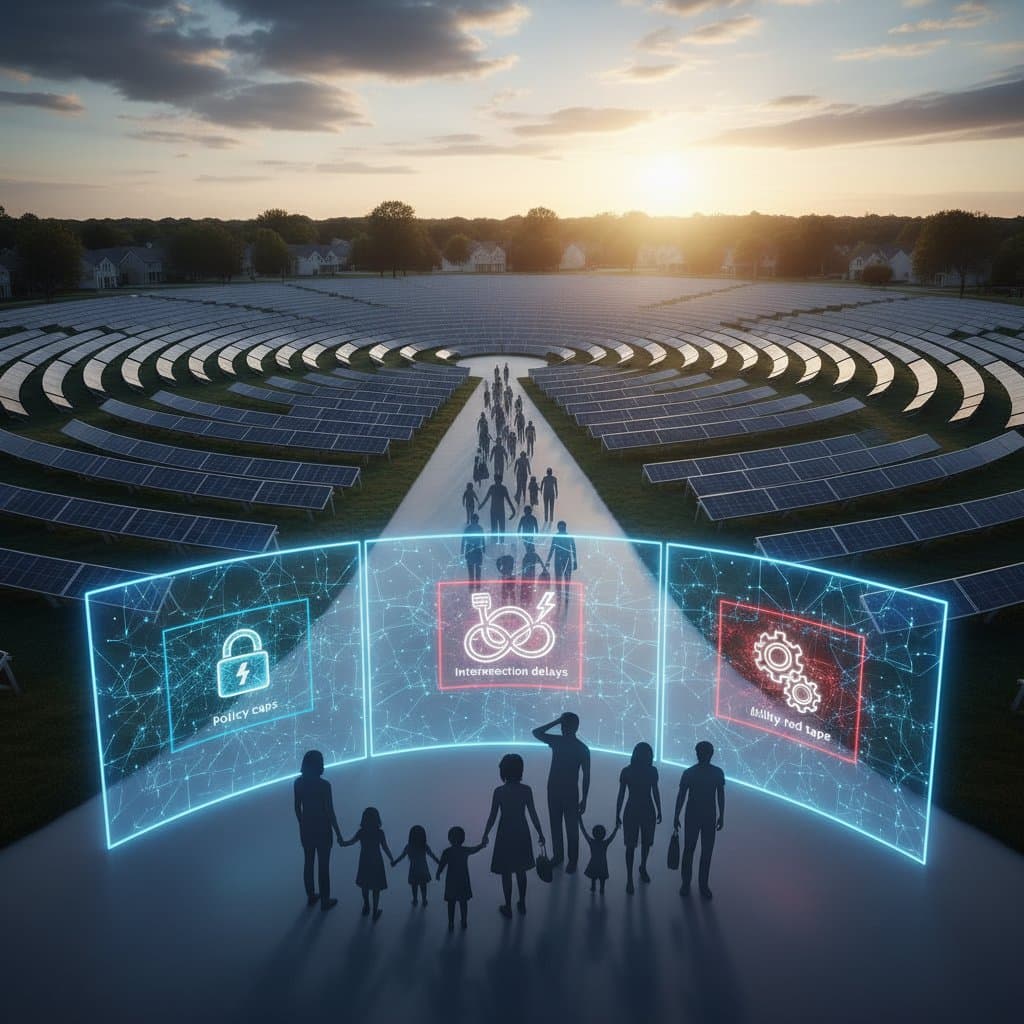
Community solar offers a pathway to clean energy for individuals without suitable rooftops for panels. Renters, those in multi-unit buildings, and homes with shading issues view it as an effective way to reduce utility bills and support local energy production. However, in the United States, approximately 50,000 families currently face waitlists for projects that boast strong customer interest and developer readiness. This delay stems from policy constraints, inconsistent market structures, and prolonged grid connections, which prevent access to solar power that developers have already financed and, in certain instances, constructed.
Core Mechanics of Community Solar
Community solar projects enable multiple participants to purchase or lease shares in a centralized solar array. The generated energy provides bill credits via virtual net metering, directly lowering utility costs. Developers construct these arrays, households subscribe to portions, and credits apply to monthly statements, promoting equitable clean energy without individual installations or upfront costs.
In practice, implementation varies by state through pilot initiatives or subscription limits. Utilities apply diverse crediting methods, and interconnection standards differ significantly. This fragmented approach results in customer demand surpassing available capacity, particularly in densely populated areas with scarce developable land.
Policy Constraints Limiting Expansion
Early community solar programs in states like New York generated enthusiasm with rapid application surges. Developers quickly proposed substantial megawatt capacities. Interconnection queues soon overwhelmed utilities, prompting regulators to enforce limits to safeguard grid stability. This cycle of initial success followed by restrictions recurs in multiple states.
Regulatory approvals govern both project development and subscriber distribution. Many states maintain megawatt caps that fail to match rising demand. Upon reaching these limits, developers halt new enrollments, placing families on waitlists lasting months or years. Some utilities further postpone crediting mechanisms, delaying benefits even for finished projects.
Grid Interconnection Challenges
Interconnection represents a major hurdle in community solar development. Developers submit applications to link projects to the distribution grid, requiring utilities to evaluate effects on voltage, reliability, and infrastructure. These assessments often extend over months, with necessary upgrades driving up expenses dramatically. Small-scale community initiatives, operating on narrow margins, struggle to cover such costs, leading to project abandonment or postponement.
Developers in Midwestern regions have assembled full subscriber rosters only to discover interconnection reviews exceeding one year. Enrolled families, anticipating prompt savings, receive indefinite postponements. Utilities maintain that thorough studies ensure grid integrity, yet extensive backlogs stifle program advancement and equitable energy access.
Financial Screening and Access Barriers
Financial eligibility plays a key role in subscriber selection. Community solar programs conduct credit evaluations to confirm payment reliability for monthly shares. Low-income households, primary intended beneficiaries, frequently do not qualify under these criteria. Although developers allocate capacity for income-eligible participants, verification processes slow filling rates.
This setup creates a stark contradiction: initiatives designed for broader inclusion impose economic hurdles that sideline target audiences. Analysis of shared solar financing reveals that subscriber default rates remain lower than anticipated. Lenders, however, persist with rigorous checks, which prolong onboarding and foster scarcity, extending waitlists despite available project slots.
Utility Procedures and Operational Delays
Utilities maintain a dual stance on community solar. They publicly endorse customer options and renewable objectives. Privately, they perceive third-party solar as a rival to their services. Several utilities advocate for reduced program sizes or centralized administration, introducing extra costs and timelines.
In certain areas, utilities mandate individual subscriber applications, manual credit validations, and ongoing reports that burden developers. One state required mailed confirmations for participation before applying credits, postponing launches by months. Regulatory adjustments eventually addressed this, but initial setbacks eroded program progress, leaving many families in limbo.
Site Acquisition and Local Approvals
Supportive policies alone do not guarantee project viability; securing appropriate land proves challenging. Projects demand proximity to electrical lines, low shading, and community consent. Rural areas occasionally oppose developments over visual impacts or concerns about agricultural disruption. Zoning processes extend over months, with appeals from opponents further impeding timelines.
To mitigate resistance, developers pursue dual-purpose locations like agrivoltaic systems, where panels coexist with crop cultivation. These innovations hold potential but necessitate extra approvals and engineering. Local delays ultimately affect subscribers awaiting activation of their shares.
Proven Benefits Amid Implementation Gaps
Where community solar achieves scale, it delivers tangible advantages. Participants achieve bill reductions, developers stimulate regional economies, and utilities gain resilient distributed power. The framework demonstrates reliability. Inconsistencies in rollout, however, undermine its potential.
Regulators highlight achievements like capacity milestones, yet overlook escalating customer queues. Discussions with policymakers reveal reluctance to adjust caps dynamically in response to demand. Explanations cite needs for grid and billing evaluations. With accumulated experience, this caution appears more deliberate than essential.
Strategies to Accelerate Access
Targeted reforms can reduce waitlists while preserving system safeguards. The following measures address key friction points:
- Increase or eliminate program caps in high-demand states, allowing market forces to guide growth under defined safety guidelines.
- Harmonize interconnection protocols to expedite reviews and minimize financial risks, supported by collaborative data systems.
- Streamline eligibility checks using utility billing records over conventional credit assessments, as validated in existing pilots.
- Implement digital platforms for enrollment management, enabling instant processing over manual methods.
- Facilitate site approvals by expediting zoning for modest solar arrays and integrating agrivoltaic options into agricultural regulations.
These solutions leverage available tools and oversight powers. Progress hinges on commitment to prioritize customer access.
Pathways to Equitable Solar Participation
Addressing these barriers unlocks community solar for waiting families, fostering widespread clean energy adoption. Expanded programs promise lower costs, enhanced grid performance, and inclusive sustainability. By refining policies and processes, states can transform waitlists into active subscriptions, realizing the full impact of shared solar on households and communities.