
Understanding Peak Savings: Solar, Battery, or Both Under TOU Rates?
The United States solar market stands at a critical juncture with the rise of time-of-use (TOU) electricity rates. Utilities nationwide adjust pricing based on grid demand and supply dynamics. This evolution alters the financial benefits of solar panels, battery storage, or their integration. Homeowners and businesses must evaluate which option yields the greatest savings under these structures.
TOU rates aim to mirror the true costs of electricity production and distribution. Higher prices apply during peak demand periods, while lower rates prevail in off-peak times. The system promotes shifting usage to less stressful grid hours. However, widespread solar adoption has prompted utilities to adapt, often to the detriment of traditional solar economics.
The Evolving Value of Solar Generation
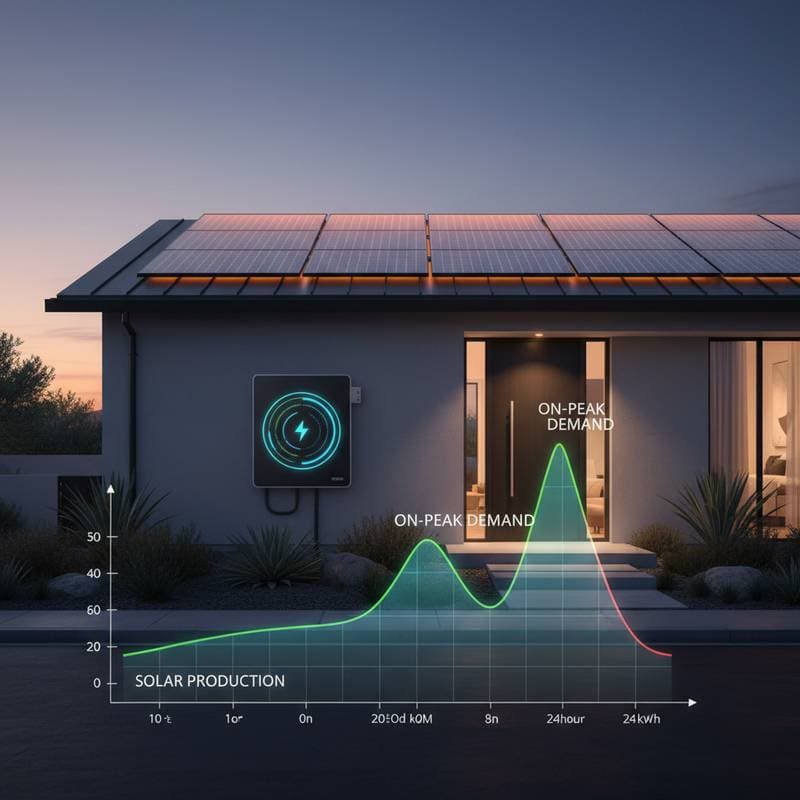
Solar panels produce energy at peak output during midday sunlight hours. Historically, this aligned with utility peak pricing windows. As solar capacity grew, particularly in the Southwest, excess midday generation lowered wholesale prices. Utilities shifted peak periods to late afternoon and evening, classifying solar-heavy hours as off-peak.
This adjustment diminished the value of exported solar energy for many users. Customers who invested in panels for rapid returns now receive lower credits for surplus power. Regulatory discussions highlight this tension: rate changes reflect system realities, yet they challenge prior investment assumptions. The core challenge lies in solar's timing; it excels in daylight but falls short during evening grid stress.
How Batteries Transform TOU Economics
Battery storage redefines the equation by enabling energy time-shifting. Systems capture excess solar production during low-cost midday periods and release it during expensive evening peaks. This capability elevates every kilowatt-hour of solar energy to higher-value usage.
Effective setups incorporate automated management software that tracks TOU schedules and grid conditions. These tools determine optimal charge and discharge times, often yielding over 50 percent reductions in peak charges for optimized homes. Businesses benefit similarly, with batteries mitigating demand charges from high-usage spikes.
Field examples from warehouses and processing plants demonstrate seamless operation. Batteries smooth load profiles automatically, pairing with solar to deliver consistent savings. Under TOU rates, this combination proves not just advantageous but quantifiable in financial terms.
Weighing the Financial Trade-Offs
The decision hinges on whether battery costs align with added savings. Solar-only installations offer the lowest entry point, especially where TOU price gaps remain narrow. In such areas, panels offset daytime consumption effectively without storage needs.
Steep TOU differentials shift priorities. Peak rates two to three times off-peak levels accelerate battery payback through avoided evening purchases. Analyze the price spread as the primary indicator; larger gaps strengthen the storage case.
Industry trends favor hybrid packages that bundle solar, batteries, and controls. Holistic design outperforms retrofits, with software ensuring responsive operation to rate signals. This integrated approach minimizes manual oversight while maximizing returns.
Navigating Policy and Market Shifts
TOU structures expand as utilities update tariffs to signal true costs and curb evening peaks. Regulators promote these rates for grid efficiency, inadvertently boosting battery demand. Early TOU phases treated storage as optional; today, it integrates into most new solar projects.
Certain states offer incentives for peak-reduction storage. Virtual power plant initiatives aggregate home batteries for grid support, compensating participants for emergency discharges. These models elevate batteries beyond backups, creating revenue streams from grid contributions.
Practical Examples in Action
Consider two households facing TOU rates. The first adopts solar panels alone. Daytime production exceeds needs, exporting surplus at off-peak credits. Evening peaks force grid draws at premium rates, leaving significant bill portions uncovered.
The second adds battery storage. Midday solar charges the unit at low rates, powering evening use from reserves. This setup shortens payback despite higher initial investment, recapturing value lost to rate shifts.
Commercial applications follow suit. Sites with steady loads deploy batteries to level demand, dodging TOU peaks and charges. Proper sizing and software tuning drive substantial savings, tailored to operational patterns.
Optimizing Your Energy Strategy for TOU Savings
Solar and battery choices under TOU rates favor integration over isolation. Panels form the renewable base, while storage directs usage to high-value moments. Align systems with local rates and habits for peak performance.
Start by reviewing utility tariffs to identify peak windows and differentials. Size solar for daytime offset, then add batteries where evening costs dominate. Leverage software for automation, turning clean energy into targeted bill reductions. This balanced approach delivers reliable, long-term financial and environmental gains.