
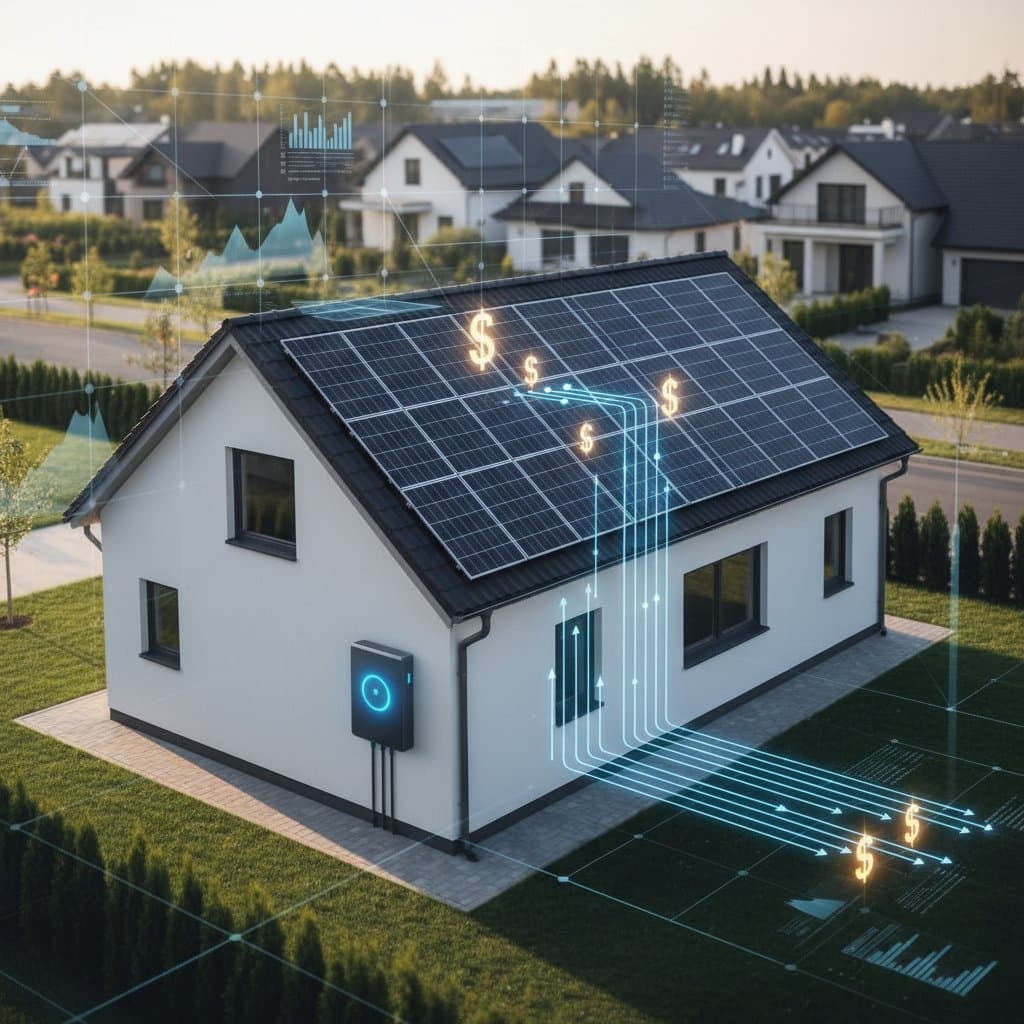
Unlock $400 Annual Earnings from Your Solar Panels
Solar panel owners have traditionally benefited from reduced utility bills as the primary financial advantage. However, an additional revenue opportunity now emerges from these same installations. In various regions, participants in virtual power plant programs leverage their systems to support grid operations and receive compensation.
This participation in grid services yields what amounts to an average of $400 per year. The earnings derive from routine system functions, often involving a paired battery storage unit. The concept proves straightforward, though the underlying technology demonstrates considerable complexity.
Understanding Virtual Power Plants
A virtual power plant aggregates numerous distributed solar and battery installations into a unified resource via specialized software. This network enables coordinated responses to grid demands, simulating the output of a large-scale power facility. During periods of strain, the system draws minimal energy from enrolled units or adjusts consumption patterns.
Utilities benefit from this setup as it provides clean, cost-effective capacity akin to traditional peaking plants, yet with rapid deployment. Homeowners contribute to this collective effort and receive payments for the services rendered. The infrastructure incorporates smart inverters, demand response mechanisms, and energy management platforms that track grid status and automate resource allocation.
Enrollment requires no manual intervention from participants. Individuals opt in, grant data access permissions, and allow the software to manage operations seamlessly.
Sources of Compensation
The $400 average reflects payments for grid services across multiple states, though amounts vary. Utilities value the flexibility offered by distributed resources, which often prove more economical than constructing additional facilities. Compensation structures include capacity payments, event-based fees, or per-kilowatt-hour rates.
Third-party aggregators frequently manage these programs, combining systems from many participants to secure favorable contracts with utilities. For a typical setup, a battery might supply 2 to 4 kilowatt-hours during an event. Across several annual activations, combined with base fees, this totals several hundred dollars.
Reports indicate earnings up to $600 in high-activity areas, while quieter markets yield $150 to $250. Factors influencing payouts encompass regional demand, program terms, and system size.
Steps to Participate
Participation typically integrates with existing battery systems from providers such as Tesla, Sunnova, Sunrun, or Enphase. These companies operate programs in select utility areas. The enrollment process follows these steps:
- Sign up via the installer or battery application.
- Authorize access to system performance data.
- Enable automatic or scheduled involvement in grid events.
- Receive payments as bill credits, direct deposits, or reductions.
Daily operations remain unchanged for most participants. Interventions occur only during grid events, involving limited battery discharge or export adjustments that rarely impact household supply.
Utility Incentives for Distributed Resources
Utilities face challenges in managing peak loads, traditionally addressed through expensive and polluting gas plants. Distributed solar and storage offer a viable alternative, providing quick-response reserves without new construction. Activation occurs in seconds, bolstering reliability and averting outages.
Economically, compensating numerous homeowners proves less costly than large-scale investments. This evolution redefines grid dynamics, integrating consumers as active contributors to stability.
Implications for Energy Markets
These earnings signal a shift toward distributed energy models, where centralized production yields to flexible networks. Homeowners evolve into prosumers, generating and monetizing energy. Enhanced grid resilience reduces outage risks, yielding broader economic benefits.
Utility attitudes have transformed, with distributed resources now seen as assets. Advances in analytics and monitoring facilitate this integration, as demonstrated by expanding pilot successes.
Participant Experiences
Homeowners in active programs report consistent returns. An Arizona participant earned $387 over one year through automated events, describing the process as effortless. A New England resident received $35 per summer event, accumulating nearly $400.
Aggregators like Swell Energy, Sunrun, and Voltus confirm these averages among members. Payments arrive quarterly or annually, based on program specifics. Shared models extend access to renters via community initiatives.
Addressing Common Concerns
Adoption faces hurdles from misunderstandings. Fears of battery degradation lack foundation, as events limit cycles and adhere to warranty standards. Utilities access only predefined functions, preserving homeowner control over usage.
Limited awareness represents the primary obstacle. Installers increasingly highlight these opportunities, narrowing the knowledge gap.
Enhancing Solar Investment Returns
Traditional solar analyses focused on savings and incentives alone. Grid revenue alters this landscape, adding hundreds annually and thousands over time. Combined with usage optimization, payback periods shorten to under five years in favorable areas.
Solar systems thus transition from cost reducers to multifaceted value creators, participating in diverse energy markets.
Steps to Get Started
To pursue these earnings, review local utility offerings and battery compatibility. Contact your installer for enrollment details. Monitor program updates, as expansion continues nationwide. This step integrates your system into a vital grid support role, yielding financial and environmental rewards.