
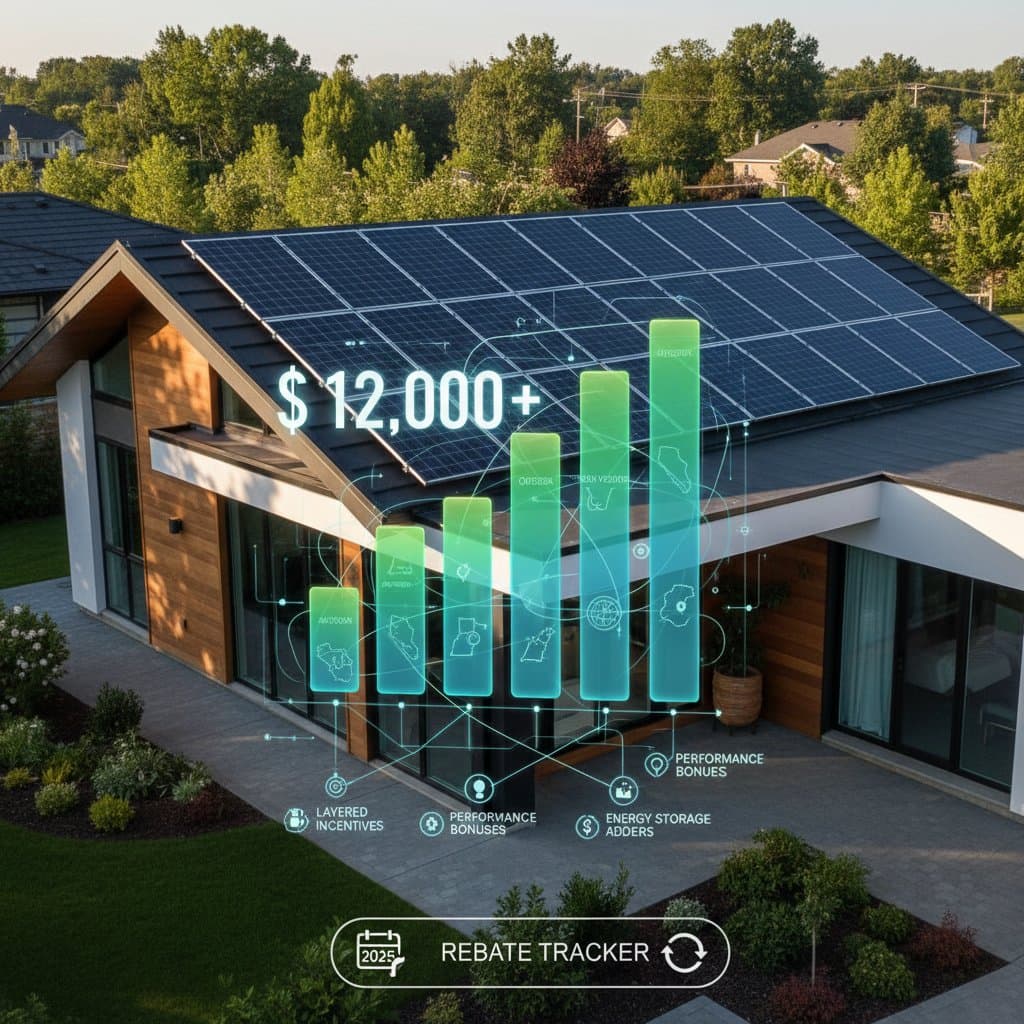
Top 8 States Offering Over $12,000 in Solar Rebate Savings
Homeowners considering solar installations often find state rebates pivotal in turning a worthwhile investment into an immediate financial advantage. Federal incentives support widespread adoption, yet certain states have developed rebate systems that surpass $12,000 per household. Based on current program details, market analyses, and ongoing monitoring of incentive changes, the following eight states present the strongest opportunities for substantial solar savings.
The Growing Importance of State Rebates
Residential solar economics have evolved considerably in the last ten years. Although equipment costs have declined, reductions in net metering benefits in some areas have elevated the role of upfront rebates. These rebates directly lower installation expenses, shortening payback times by years and enabling additions like advanced panels or battery storage.
Effective programs integrate upfront payments with output-based rewards or efficiency bonuses. States that finance these through public utility fees or renewable energy mandates experience variable funding levels, which underscores the need for timely action.
1. California: A Leader in Layered Incentive Strategies
California has transformed its solar rebates from the initial California Solar Initiative into diverse local and utility programs. Base incentives have decreased, but combining them yields significant results.
Installations featuring efficient panels and battery storage qualify for state rebates alongside utility storage bonuses. In designated utility areas, these combinations surpass $12,000 in direct rebates. Success depends on integrating residential solar benefits with low-income supports or storage enhancements.
Local governments in coastal regions often add sustainability grants to core programs. When stacked properly, these create one of the nation's most rewarding incentive packages.
2. Massachusetts: Performance-Driven Incentive Layers
Massachusetts emphasizes system performance in its solar framework. Rebates, linked to capacity and income, frequently reach five figures when paired with SMART program payments.
Customers of municipal light plants access distinct rebate funds. For solar paired with batteries, totals exceed $12,000. The system encourages precise project scaling, and knowledgeable installers optimize incentive stacking for maximum client benefits.
This program has demonstrated reliability since its pilot stages. While other states reduced funding, Massachusetts sustained its tiers, fostering homeowner trust and steady investments.
3. New York: Decentralized Yet Powerful Regional Rebates
New York structures solar rebates through the NY-Sun initiative, with rates varying by region, system scale, and market conditions.
In high-adoption areas like Con Edison service zones, rebates are modest, but upstate and Long Island residents receive elevated per-watt amounts. Adding local tax credits or city clean energy grants pushes benefits over $12,000.
The design promotes even market growth by prioritizing underdeveloped areas. Installers monitoring regional funds assist homeowners in claiming value before allocations deplete.
4. Maryland: Focused Rebates with Equity and Performance Emphasis
Maryland's Clean Energy Rebate Program exemplifies how smaller markets can offer robust support. The core rebate offsets system costs, with greater impact from storage grants and benefits for low-to-moderate income families.
Combining these elevates savings beyond $12,000. Emphasis on fairness and grid stability provides higher tiers for solar-plus-storage setups.
Installers report that Maryland's process offers greater predictability than nearby states. Clear application timelines and communicated funding cycles maintain consistent participation amid varying equipment prices.
5. Illinois: Direct Cash Through the Adjustable Block Program
Illinois' Adjustable Block Program delivers straightforward cash rebates via upfront renewable energy credit purchases. For standard home systems, payments often exceed $10,000, rising above $12,000 with community solar or low-income adjustments.
The program ensures stable project flow by securing payments post-approval. Since its launch, it has elevated Illinois solar from marginal to a key regional force, with reliable funding rounds supporting confident planning by homeowners and installers.
6. Minnesota: Reliable Rebates in a Balanced Market
Minnesota manages solar rebates via state and utility channels. Xcel Energy's Solar Rewards program excels with per-kilowatt-hour incentives accumulating thousands over time.
Upfront rebates from community clean energy sources, when combined, surpass $12,000 in savings. Moderate electricity rates previously hindered adoption, but these incentives have shifted the landscape.
At energy forums in the region, installers highlight how rebate stability shapes sales. Despite average sunlight levels, the incentive framework generates consistent demand and enduring homeowner assurance.
7. Colorado: Flexible Utility and State Rebate Combinations
Colorado integrates state renewable targets with utility involvement. Providers such as Xcel Energy and Colorado Springs Utilities deliver rebates worth thousands per system. State energy office grants or city bonuses elevate totals over $12,000.
Flexibility defines the approach, allowing choices between performance or upfront options. This enables installers to tailor financial plans to individual needs.
Local utilities innovate with pilot rebates that scale statewide upon success. Such adaptability maintains a vibrant, inclusive market.
8. Oregon: Substantial Rebates Targeting Storage and Equity
Oregon's program prioritizes income-eligible homes and solar-storage integrations. The Department of Energy provides rebates up to $12,000 for joint installations, with extras for low-income applicants.
This targets households gaining most from bill reductions and resilience. Simplified applications via certified contractors reserve funds pre-installation.
Installers praise the process for its ease, prompt funding, and effective cost reduction.
Strategies for Monitoring and Securing Rebates
Staying current with state solar rebates requires vigilance, as funds open and close abruptly and amounts adjust with budgets. Homeowners and professionals use trackers and agency alerts to anticipate changes.
Cross-referencing updates, utility reports, and installer insights reveals that transparent schedules correlate with higher adoption and fewer delays. Clarity accelerates solar progress more than any single factor.
Steps to Claim Your Rebates
Homeowners begin by gathering system specifications, installation timelines, and contractor credentials, as required by each program. Partnering with experienced, certified installers streamlines paperwork and avoids setbacks.
Installers must integrate rebate guidance into services. Maximizing incentives enhances project viability and strengthens client relationships, setting top performers apart in crowded markets.