
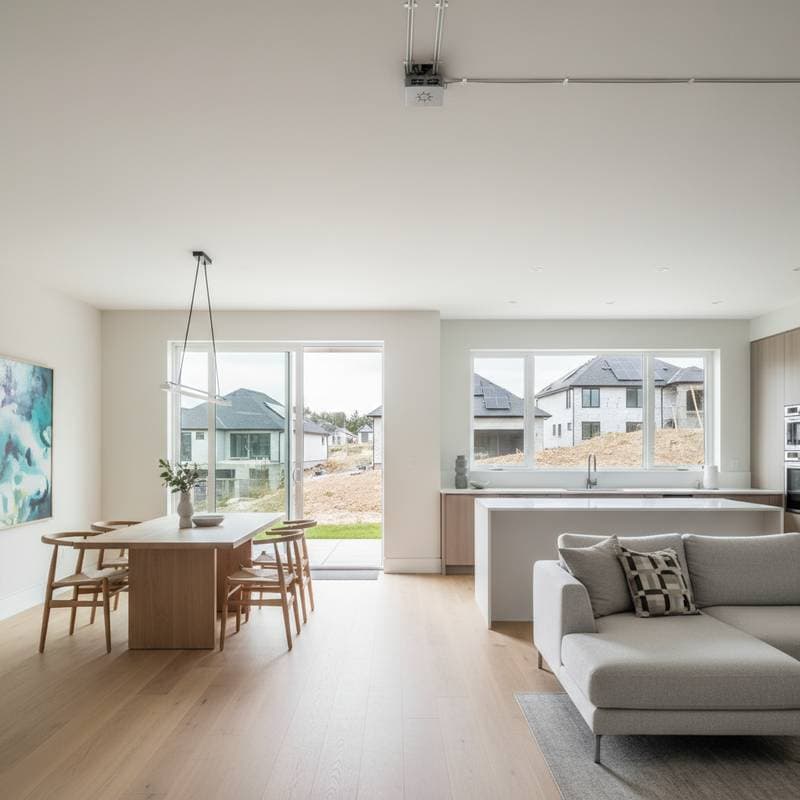
Pre-Wired Solar Homes: The Emerging Builder Standard
United States homebuilders wire an increasing number of new houses for future solar installations. This practice signals a fundamental change in residential construction. Analysts report that over 25 percent of new single-family homes include conduit or junction boxes prepared for rooftop solar arrays. Builders adopt this solar-ready construction method to address buyer expectations, state regulations, and cost-saving opportunities.
Technical Elements of Solar-Ready Design
Solar-ready homes feature electrical systems that support the addition of photovoltaic panels with limited modifications. Essential components consist of conduit pathways from the roof to the main electrical panel, reserved breaker spaces, and roof truss configurations suitable for mounting hardware. The National Renewable Energy Laboratory describes a solar-ready home as one that accommodates photovoltaic equipment through minor structural or electrical adjustments.
Jason Miller, senior project manager at SunGrid Installations, notes that builders recognize the benefits of early design adjustments. Builders learn that small changes during construction save thousands in later expenses. He explains, "Running conduit through open framing is a two-hour job during construction. Once drywall is up, that same task might require cutting and patching, which can multiply costs by a factor of five."
Pre-wiring involves careful planning for roof load capacity, inverter locations, and overall electrical capacity. Builders collaborate with solar experts to align roof pitch and orientation for maximum panel efficiency. Architectural plans now specify details like rafter spacing and flashing locations to facilitate seamless future installations.
Builders Adapt to Market and Policy Influences
Multiple states promote or mandate solar-ready features in new residential structures. California energy codes require solar systems in new buildings, while other states evaluate comparable requirements. In areas without such rules, builders incorporate solar-ready elements to enhance market appeal.
Laura Sanchez, director of sustainability at GreenStone Homes in Texas, observes heightened interest from buyers. Homebuyers inquire about solar options more frequently than before. She states, "Even if they do not add panels right away, they want the option. Pre-wiring gives them flexibility and protects their investment."
Solar Energy Industries Association data highlights steady growth in residential solar capacity, fueled by lower equipment prices and better financing. Builders view pre-wiring as a method to meet anticipated demand without immediate full-system commitments. This strategy aligns with broader sustainability objectives, including certifications like LEED or Zero Energy Ready Home.
Economic Factors for Builders and Homebuyers
Solar-ready additions increase construction costs by $500 to $2,000, based on home size and design. Retrofitting equivalent features post-construction costs three to four times as much. For builders producing hundreds of homes each year, these efficiencies compound significantly.
Homebuyers gain from simplified installations and long-term adaptability. In a pre-wired home, solar contractors finish the work in one day. Inspectors process standardized configurations more efficiently, shortening approval times.
Builders form alliances with solar providers to optimize workflows. Certain developers offer contracts allowing buyers to install panels via vetted professionals within the first year. This arrangement cuts installer marketing expenses and distinguishes builders in crowded markets.
Impacts on Mounting and Installation Practices
Solar-ready construction influences structural and mounting decisions beyond electrical work. Manufacturers develop products compatible with predefined roof layouts. Options include low-profile rails, shared-rail setups, and built-in flashing solutions specified early in projects.
Mark Liu, engineering director at Titan Mounting Systems in Colorado, emphasizes integrated planning. Roof integration evolves into a core structural discussion. He adds, "We are working directly with architects and truss designers to identify load paths and attachment points before the first nail is driven."
Such collaboration minimizes installation hazards and enhances visual appeal. It enables advanced techniques like rail-less systems or direct-to-deck fixes, which perform best on prepared roofs. Electricians encounter straightforward connections and fewer compliance issues during reviews.
Evolving Policies and Building Codes
Local governments revise codes to address the blend of housing and energy systems. Some areas demand roof plans marking solar-ready zones clear of obstacles such as vents or skylights. Additional rules set minimum panel capacities to handle future photovoltaic circuits.
Organizations like the Interstate Renewable Energy Council push for consistent solar-ready protocols nationwide. Standardized guidelines would enable builders to use uniform design blueprints and ease permitting processes. Experts predict that broad code adoption could boost residential solar output by multiple gigawatts in the coming decade.
Opportunities in Construction and Solar Industries
The alignment of building and solar sectors creates fresh commercial prospects. Engineering, procurement, and construction firms partner with major homebuilders for advisory and planning support. Suppliers target mass-market products designed for large-scale residential use.
Pre-wired homes shape financing and valuation trends. Lenders treat solar-ready elements as enhancements akin to high-efficiency windows or superior insulation. Builders leverage this in promotions centered on enduring energy cost reductions and eco-friendly attributes.
Establishing Solar-Ready Homes as the Norm
Pre-wired solar homes mark a logical progression in how residences integrate renewable energy. Builders achieve cost-effective future-proofing and attract environmentally aware purchasers. Installers benefit from predictable setups that cut operational hurdles.
Advancements in solar technology blur boundaries between traditional construction and energy systems. Structures equipped with solar-ready provisions today set expectations for tomorrow's standard builds, delivering lasting value through efficiency and adaptability.