
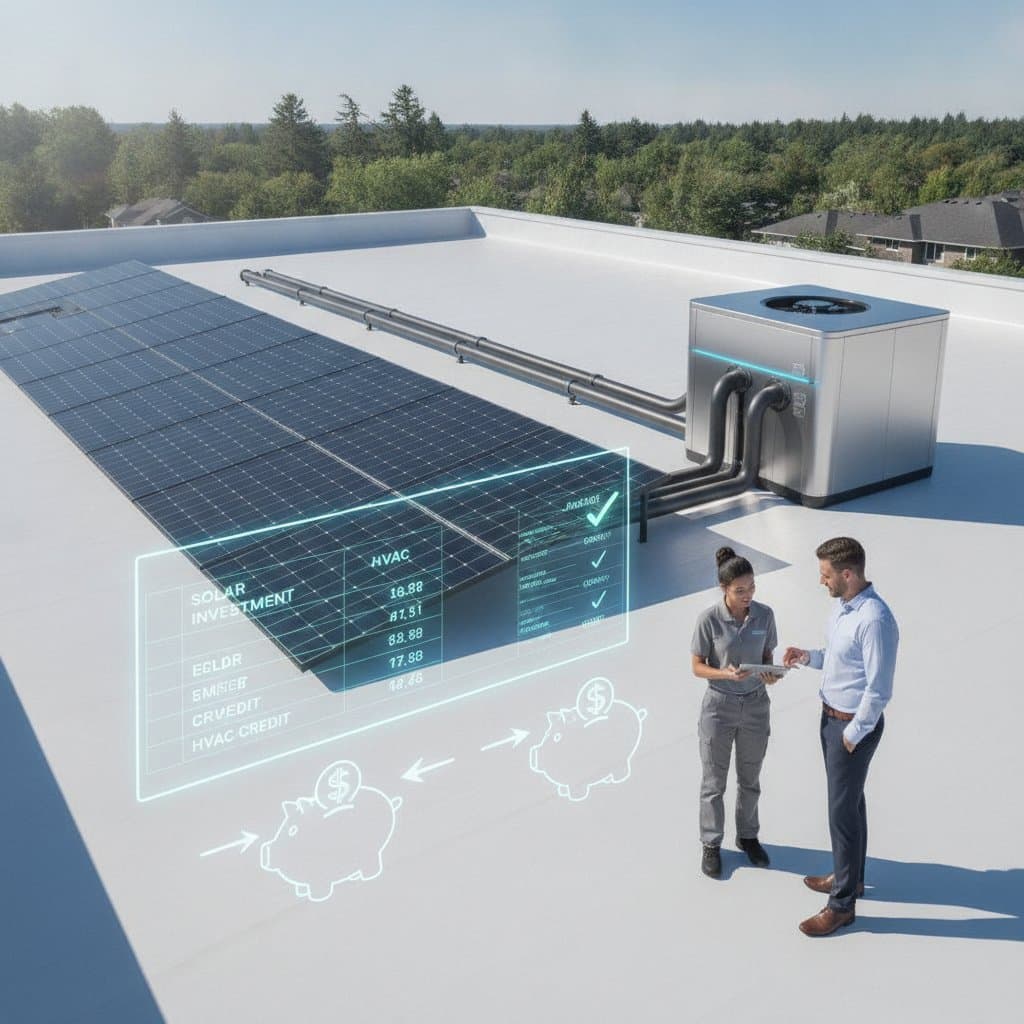
Double Deduction Rules for Solar and HVAC Systems
Does New Tax Law Allow Double Deduction for Solar HVAC?
Recent updates to federal tax guidance have raised questions across the solar and HVAC industries. Homeowners and businesses wonder whether they can claim a double deduction when combining solar photovoltaic systems with high efficiency HVAC upgrades. Industry professionals, tax advisors, and installers continue to examine whether the new structure of clean energy credits permits overlapping benefits.
Background on the Combined Credit Question
The discussion centers on how the law defines separate energy improvements compared with integrated systems. In previous versions of residential and commercial energy tax credits, solar installations and HVAC units were treated as distinct categories. The new guidance introduces separate incentive structures for renewable generation and energy efficient building equipment.
A homeowner may install rooftop solar panels that offset electricity used by a new variable speed heat pump. The solar array qualifies for the investment tax credit. The HVAC system falls under energy efficient property deductions. The question many ask is whether both benefits can apply to the same project costs when electrical upgrades or shared installation expenses overlap.
What the Law Says About Overlapping Costs
According to current Internal Revenue Service interpretations, taxpayers cannot claim the same expenditure under two different credit categories. If a cost item such as wiring or inverter connections directly supports the solar generation system, that cost belongs solely to the solar credit. If a component serves the HVAC equipment exclusively, such as ductwork, thermostats, or refrigerant lines, it may qualify under the energy efficient equipment deduction.
The challenge arises with shared infrastructure. Electrical service upgrades, main panel replacements, or system monitoring devices might serve both the solar array and HVAC system. Tax professionals recommend allocating costs proportionally based on written installation contracts and invoices that clearly separate work categories. Without documentation the IRS may disallow duplicate claims.
How the Combined Installation Bundle Works
Several contractors now offer integrated solar and HVAC bundles. These packages combine rooftop solar arrays, battery storage, and modern high efficiency heat pumps under one financing or installation contract. The bundled approach can simplify project management, yet it complicates tax reporting if costs are not itemized.
Installers are encouraged to provide line item breakdowns that distinguish solar related materials from HVAC components. This transparency allows homeowners and commercial property owners to claim each credit correctly. It also protects contractors from potential disputes if customers face tax audits later.
For commercial properties the situation can be more complex. Businesses may qualify for multiple deductions, including the ITC for solar generation, accelerated depreciation under the Modified Accelerated Cost Recovery System, and deductions for energy efficient building upgrades. Each incentive follows separate eligibility rules and documentation standards. Claiming overlapping benefits on the same dollar of expense remains prohibited.
Key Clarifications from Tax Authorities
Tax guidance issued following these changes emphasizes that while multiple credits may apply to a single property, they cannot apply to the same equipment or cost basis. The law intends to encourage comprehensive energy efficiency, not duplicate rewards for identical expenditures. Taxpayers can combine credits across separate systems on the same property if each system independently qualifies.
- A homeowner can claim the solar credit for the photovoltaic system and a separate deduction for a qualifying heat pump, as long as installation costs are allocated correctly.
- A business owner can claim the commercial solar ITC for rooftop panels and a separate energy efficient building deduction for upgraded HVAC equipment that reduces building load.
- A multifamily developer can assign solar costs to common areas and HVAC improvements to individual unit systems, provided proper accounting is maintained.
These clarifications reinforce that the tax law supports integrated energy solutions but stops short of allowing double counting of expenditures.
Implications for Installers and Contractors
For solar and HVAC contractors the updated rules emphasize the need for precise documentation and customer education. Installers should explain credit eligibility before project initiation and ensure invoices reflect accurate cost allocations. Bundled proposals should outline separate system components to help customers claim appropriate credits without overlap.
Many contractors are now coordinating with tax professionals during the proposal phase. This collaboration helps determine how to categorize shared infrastructure and avoid future compliance issues. It also supports a smoother customer experience during tax filing.
Developers working on large scale commercial or mixed use projects face additional considerations. When solar generation offsets electricity used by high efficiency equipment, both systems contribute to energy savings. Yet from a tax perspective only distinct cost elements qualify under each program. Clear accounting and engineering documentation are vital to justify credit allocations.
Practical Advice for Property Owners
Property owners planning combined solar and HVAC upgrades should take several steps to maximize benefits while remaining compliant.
- Obtain itemized quotes and invoices. Ensure each major system is listed separately with its associated costs.
- Consult a tax professional early. Clarify how shared installation work will be allocated between credits.
- Keep all records. Documentation such as contracts, equipment specifications, and utility data supports credit claims.
- Avoid assumptions. Do not assume that all costs qualify under both credits without written evidence.
- Coordinate with installers. Request detailed breakdowns of system interconnections and electrical work to prevent confusion during tax filing.
Following these practices can help homeowners and businesses capture maximum value while maintaining compliance with IRS guidelines.
Coordinated System Design for Maximum Value
The current tax framework encourages adopting both renewable generation and high efficiency equipment, but it also demands careful accounting. The combination of solar and HVAC upgrades delivers significant energy savings. Financial incentives must be claimed correctly to remain valid. Installers who emphasize transparency, documentation, and customer education can strengthen trust and reduce risk.
For the industry this situation underscores a broader shift toward integrated energy solutions that combine generation, storage, and efficiency. While double deductions are not permitted, coordinated system design and accurate cost allocation can deliver strong financial outcomes under existing tax law.