
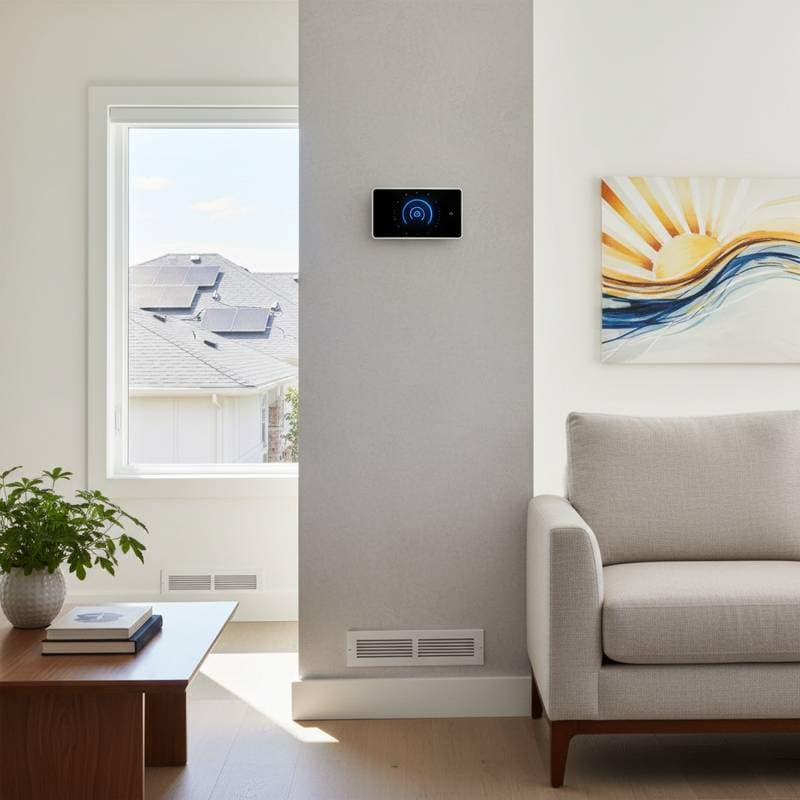
Smart Thermostats Boost Solar Home Savings by 23% More
U.S. homeowners who pair smart thermostats with rooftop solar systems reduce energy costs by an average of 23% more than those who rely on solar alone. Data from energy analytics firms supports this figure. The synergy between intelligent heating, ventilation, and air conditioning controls and solar power generation transforms household energy management, including consumption patterns, energy storage, and grid interactions.
This development signals a shift in the residential solar sector. Energy management tools now rival panels and inverters in importance. With utilities introducing time-of-use pricing and rate adjustments, the benefits of aligning solar output with household loads become even more pronounced.
How Solar and Smart Thermostats Integrate
The link between these technologies proves simple yet effective. A smart thermostat tracks indoor temperature, occupancy levels, and grid conditions. It then fine-tunes heating and cooling operations to align with solar production cycles.
During peak solar generation in the mid-afternoon, the thermostat might pre-cool the home. This approach minimizes reliance on grid electricity during higher-rate evening hours. Homeowners achieve this without major overhauls.
"Solar customers increasingly seek systems that optimize consumption alongside production," notes Laura McKinney, Director of Product Strategy at SunGrid Energy, a California-based provider of solar and storage solutions. "Smart thermostats offer one of the easiest and most economical methods to achieve that goal."
Installers often complete the setup using existing infrastructure. Smart thermostats connect via Wi-Fi or low-voltage lines to current HVAC setups. When linked to solar monitoring apps, they access live production data to automate temperature shifts and cut grid usage.
Measuring the Financial Impact
EnergySage reports show the greatest gains in areas with time-of-use electricity rates. For a standard home equipped with a 6 kW solar array and an efficient smart thermostat, annual savings reach 1,200 to 1,500 additional kilowatt-hours over homes with basic or manual controls.
At electricity rates exceeding 15 cents per kilowatt-hour, these reductions yield about 180 dollars in yearly extra savings. Beyond direct bill reductions, smart thermostats prolong HVAC equipment lifespan by preventing frequent on-off cycles and stabilizing temperatures.
They also generate usage profiles that reveal operational inefficiencies. Homeowners and service professionals use this information to refine system performance. "These tools reveal patterns that were once hidden," explains Robert Alvarez, Senior Engineer at EcoTherm Controls in Texas. "By observing how the compressor interacts with solar output, adjustments ensure loads match generation precisely. That level of control drives the real savings."
Opportunities for Solar Professionals
Solar installers and energy service providers view connected HVAC systems as a fresh source of income. Many now include smart thermostats in packages with solar panels and batteries, positioning them within a holistic home energy framework.
SunGrid Energy observes 32% higher customer satisfaction in installations featuring smart thermostats. Service calls decrease as well, thanks to enhanced comfort control and performance insights. The company credits these outcomes to the devices' role in system oversight.
Utilities promote uptake through demand response initiatives. Smart thermostats respond to signals by making minor cooling adjustments during grid peaks. Participants earn bill credits or rebates, amplifying overall savings.
"Smart thermostats quickly evolve into standard components of solar setups," McKinney adds. "Professionals skilled in both HVAC and electrical integration stand out in the market."
Key Technical Aspects
Successful pairing demands precise setup. The thermostat needs reliable data from the solar inverter or monitoring system. Third-party software often connects the components, enabling algorithms to predict and schedule HVAC activity based on forecasted solar yield.
Advanced models incorporate machine learning. They analyze family routines, weather forecasts, and past solar performance to build tailored automation. For instance, the system could pause air conditioning for 15 minutes amid cloud cover, then restart once production stabilizes.
Devices from Ecobee, Google Nest, and Honeywell accommodate these capabilities, with varying integration levels. Installers choose based on compatibility with inverters and energy platforms. Start by verifying your solar system's communication protocols before selecting a thermostat model.
Influences from Policy and Market Trends
Government incentives bolster smart thermostat adoption. These devices frequently qualify for rebates in energy efficiency programs, which offset initial expenses. When stacked with solar tax credits, the investment case strengthens considerably.
Wood Mackenzie analysts identify smart home features as a major draw for solar-plus-storage adopters. Control over energy flows attracts eco-minded buyers and those prioritizing cost recovery alike. To explore options, assess local rebate programs and compatible devices early in your solar planning.
This movement aligns with grid modernization efforts. As solar and other distributed resources proliferate, utilities value responsive loads. Widespread smart thermostat use across neighborhoods delivers collective benefits, easing grid pressures from fluctuating supply.
Overcoming Adoption Barriers
Challenges persist despite clear advantages. Concerns over data privacy, cybersecurity, and device compatibility deter some users. Homeowners may resist cloud connections for HVAC controls, while older solar inverters sometimes lack seamless integration.
Professionals counter these by prioritizing education and certified equipment. Standards like Matter and OpenADR ensure secure, cross-brand communication. Before installation, review your setup for protocol support and discuss security features with your provider.
Building Efficient Solar Homes Step by Step
Solar power, smart HVAC, and automation converge to redefine home energy strategies. As these thermostats grow more sophisticated and accessible, they enhance solar returns significantly.
Experts anticipate expanded coordination among thermostats, batteries, electric vehicle chargers, and panels under single oversight. Homeowners can begin by integrating a compatible smart thermostat with existing solar. This move fosters greater efficiency, resilience, and long-term value in residential energy systems.