
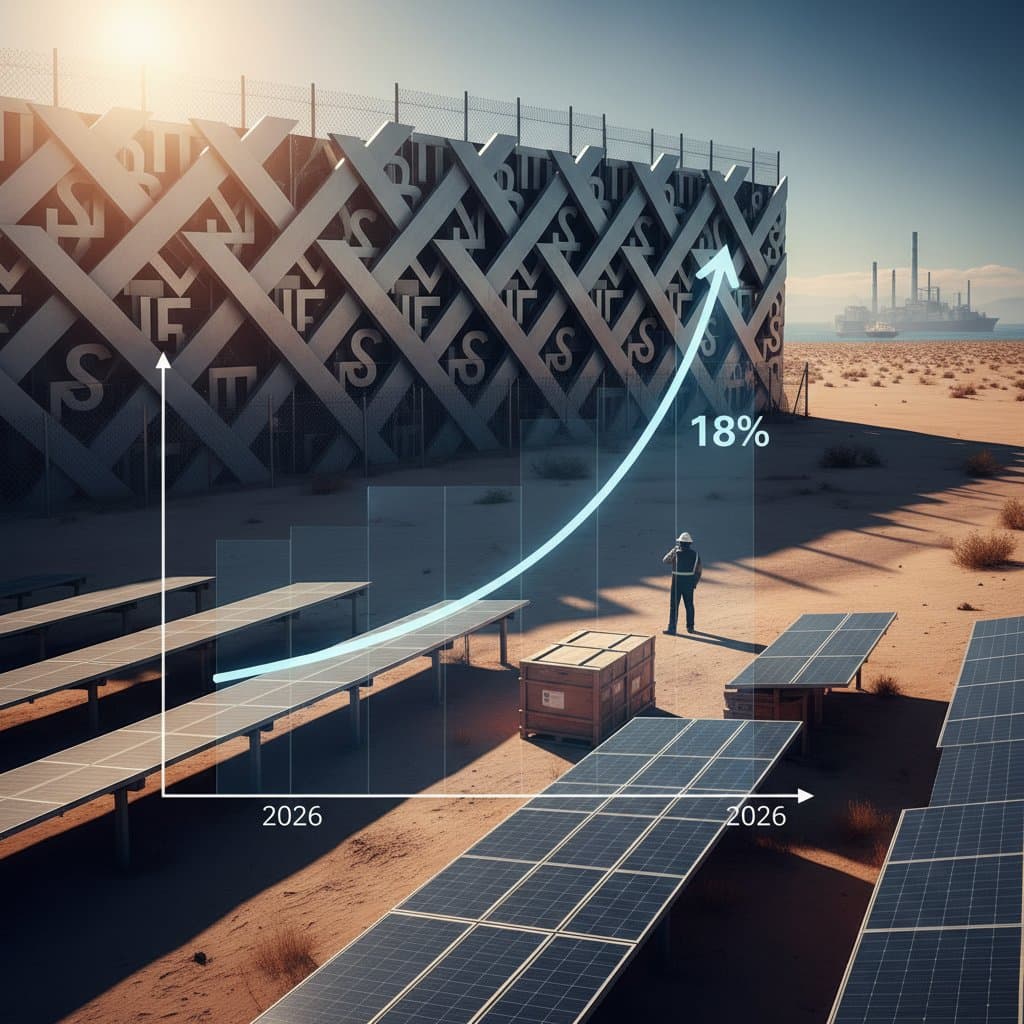
Solar Prices Surge 18% Next Month from 2026 Tariffs
The U.S. solar industry prepares for significant price volatility. Developers anticipate an 18% increase in panel costs next month due to the implementation of 2026 import tariffs. These measures target crystalline silicon photovoltaic modules and cells, already influencing procurement contracts and utility-scale project schedules.
Trade policies under Section 201 of the Trade Act have shaped the sector for years. Policymakers present tariffs as support for domestic manufacturing. Developers, however, highlight potential cost inflation that may hinder installation growth. The upcoming period will determine if the industry absorbs this shock or encounters renewed delays.
How the 2026 Tariffs Are Structured
The 2026 tariffs expand on prior actions, including Section 201 duties and anti-dumping cases. Coverage now includes bifacial modules, previously exempt, with duty rates rising several percentage points from earlier levels.
Tariffs apply to both imported modules from Southeast Asia and cells used in U.S. assembly. Many panels labeled as domestic production incorporate these imported cells. Manufacturers accelerate efforts to identify alternative suppliers or build inventory ahead of the effective date.
The U.S. Trade Representative and Department of Commerce cite the need for fair competition, pointing to ongoing circumvention of past rules. Industry experts agree that these changes will raise costs across residential, commercial, and utility-scale segments.
The Supply Chain Scramble
Past tariff implementations offer lessons. The initial Section 201 tariffs caused module prices to rise over 40% in months, stabilizing only after global suppliers adapted.
This cycle differs with duties covering four key Southeast Asian countries, limiting traditional bypass routes. EPC contractors and procurement managers report urgent actions to secure modules before tariffs activate. One developer described acquiring every available megawatt, while another noted suppliers withdrawing offers pending final details.
Uncertainty drives broader effects. Distributors increase prices on stock, freight providers constrain availability, and financiers adjust risk models. These factors create a sustained price escalation.
Domestic Manufacturing: Hope or Mirage?
Tariffs aim to bolster U.S. solar production by making imports less competitive, providing time for local expansion.
Several firms have launched new assembly lines and cell facilities, targeting multi-gigawatt output soon. Observations from a recent plant visit revealed operational automation, trained staff, and plans for rapid scaling.
Challenges persist. Despite Inflation Reduction Act incentives and state credits, domestic supply meets only a small portion of demand. Utility projects require tens of gigawatts yearly. Tariffs may widen the cost gap unless factories deliver reliable volumes at viable prices.
Analysts reference history: Tariffs briefly increase local output, but imports rebound after adjustments. Success hinges on scaling efficiency and sustained policy backing.
Market Reaction and Developer Strategy
Spot prices on exchanges have risen toward tariff-adjusted forecasts. Residential installers adjust customer quotes, cautioning about budget impacts from delays. Utility developers renegotiate contracts and consider hedging via long-term deals.
An EPC executive observed that trade policies repeatedly disrupt pricing stability. The sector has navigated tax credit changes, interconnection shifts, and supply issues, yet tariffs introduce the greatest variability.
Strategies include pre-ordering from U.S.-assembled lines to claim exemptions, despite imported cells. Some postpone starts for pricing certainty. Committing during peak surges carries substantial risk.
Policy Debate: Protection or Punishment?
Debate centers on industrial strategy. Proponents view tariffs as vital for energy independence and employment. Opponents see them as barriers to clean energy progress.
Evidence varies by perspective. Producers stress fair markets; developers emphasize consumer costs and pipeline slowdowns. Tariffs may build limited capacity but fuel inflation when expansion is critical for energy targets.
Effective supply chain resilience requires more than tariffs. Pair them with training programs, funding support, and steady policies. Isolated protectionism fosters instability without strategic depth.
Moving Forward with Strategic Adaptation
The U.S. solar sector's adaptability faces a key test. Firms with varied suppliers and local ties hold advantages. Others contend with cost adjustments and timeline shifts.
Practical measures can mitigate impacts:
- Secure module orders early to sidestep initial hikes.
- Partner with manufacturers offering hybrid chains, blending U.S. assembly and flexible global inputs.
- Incorporate adjustment provisions in EPC and offtake contracts for tariff effects.
Trade disruptions reveal opportunities. Businesses reinforcing robust sourcing and clear pricing will strengthen. The industry has endured past shocks; these tariffs underscore its growth and resilience.