
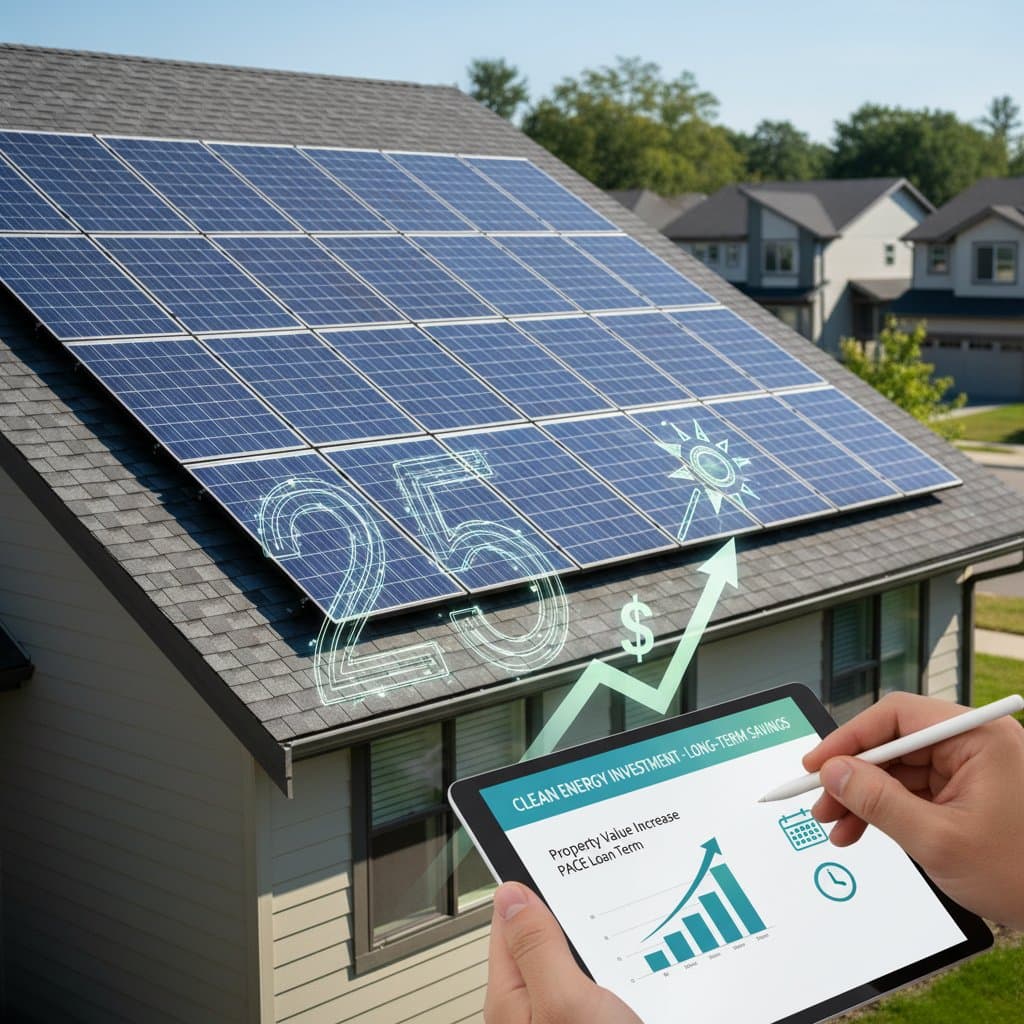
New PACE Loans Unlock 25-Year Solar Savings
The property assessed clean energy model, known as PACE, has evolved from a niche municipal financing tool into a flexible long-term funding option for residential and commercial solar projects. Recent PACE loans feature 25-year repayment terms that align with the lifespan of modern photovoltaic systems. This alignment transforms solar ownership economics, particularly for property owners with limited budgets or commercial entities managing multiple priorities.
Early coverage of PACE highlighted its struggle for legitimacy in residential markets, where terms rarely exceeded 15 or 20 years. Homeowners and local governments questioned compatibility with traditional mortgages. Today's 25-year PACE loans offer competitive rates, standardized underwriting, and flexibility that compete with conventional solar loans and power purchase agreements.
How PACE Financing Works
PACE transforms a property improvement loan into a public assessment linked to the property, not the borrower. Local governments or program administrators provide the financing, and repayment occurs via a dedicated line on the property tax bill. If the property sells, the obligation transfers to the new owner, addressing concerns about moving before investment recovery.
Private capital funds most PACE programs under state or municipal oversight. Repayment security through the property tax system results in low default rates compared to unsecured loans. This reliability attracts solar installers and lenders in a competitive financing landscape.
Why 25 Years Matters
A 25-year term lowers annual payments, improving qualification based on debt-to-income ratios for homeowners and small businesses. It mirrors solar equipment longevity, which often exceeds 25 years with minimal performance loss. This synchronization ensures financing matches system benefits.
Monthly payments on a 25-year PACE loan can drop by up to one-third versus a 15-year option. Such reductions influence decisions between outright purchase and leasing. Commercial owners benefit by spreading costs while accessing federal tax credits or depreciation.
The extended term boosts property value. New buyers acquire the solar system and its energy savings alongside the PACE obligation. Ongoing payments offset utility reductions, leveraging the model's transferability.
Overcoming Early Challenges
Initial PACE programs drew criticism for weak consumer protections and uneven disclosures. Lenders expressed concerns over mortgage complications and refinancing. Federal regulators temporarily discouraged residential applications due to lien priority and borrower comprehension issues.
The industry responded with standardized disclosures, pre-funding inspections, and post-installation checks. Transparent interest rates and income-based eligibility now prevent overextension. These reforms professionalized PACE, resolving early inconsistencies.
This maturation shifted PACE from fragmented initiatives to a stable energy finance component, comparable to green bonds and solar leases.
The Policy Landscape
State enabling legislation permits PACE assessments for renewables and efficiency upgrades in some areas, while others restrict to commercial use. Effective local partnerships with private providers drive higher adoption. Regulatory clarity sustains growth.
Successful programs emphasize consumer protections and lender coordination. Clear assessment recording and transfer processes minimize adoption barriers. PACE's future ties to federal incentives for distributed generation and resilience.
The model suits financing for rooftop solar, battery storage, microgrids, and retrofits. Its adaptability positions PACE for emerging clean energy technologies.
Comparing PACE to Other Financing Options
Solar financing includes bank loans, specialized lenders, leases, and power purchase agreements, each with unique benefits. PACE combines ownership advantages with affordability over extended periods.
Property owners claim tax incentives and full system value, unlike leases or PPAs. The property lien avoids personal credit reliance, distinguishing from unsecured loans. The 25-year term maintains low payments while savings accumulate.
Installers favor PACE for simplifying sales, as tax-based assessments feel routine. Program providers manage administration, allowing focus on design and installation.
Market Trends and Industry Perspectives
Regional installers and governments show increased PACE interest through new partnerships. Commercial developers finance solar, lighting, and HVAC under single assessments.
Insurance-backed funds enhance liquidity and credibility, enabling competitive rates and uniform underwriting for expansion.
Challenges persist in rural areas with limited tax bases and among owners cautious about tax encumbrances. Education efforts by administrators and installers address these hurdles.
Contractors use PACE to advance projects for those ineligible for standard loans, delivering immediate savings. In net metering states, it supports enduring energy strategies.
Looking Ahead: The Next Stage of PACE Evolution
The 25-year PACE structure may inspire hybrid products integrating with mortgages, normalizing clean energy as routine enhancements.
Homeowners gain accessible ownership with low payments, transferable terms, and reliable savings. Commercial managers preserve cash flow, enhance performance, and achieve sustainability goals without short-term debt.
Steps to Secure PACE Financing
-
Verify local PACE program availability through municipal resources.
-
Consult certified installers for system quotes and eligibility assessment.
-
Review disclosures and compare terms with other options.
-
Proceed with pre-funding inspection and installation.
-
Monitor energy savings against payments for long-term validation.