#2026

Articles tagged with 2026 - Page 3

Featured image for Perovskite Tandems Break 33% in Commercial Production

Perovskite Tandems Break 33% in Commercial Production

Perovskite-silicon tandem solar cells have reached 33% efficiency in commercial settings, a pivotal advancement for photovoltaic technology. This achievement highlights improved stability, manufacturing scalability, and certified performance, boosting investor interest and paving the way for reduced energy costs and expanded sustainable power solutions worldwide.

4 min read
Featured image for IRA Doubles Solar Depreciation Deductions in 2026

IRA Doubles Solar Depreciation Deductions in 2026

Beginning in 2026, updated IRS guidelines allow solar projects to depreciate their full cost basis alongside the Investment Tax Credit, effectively doubling depreciation benefits. This shift enhances project viability, improves cash flows, and may drive faster solar adoption across the United States, requiring developers and investors to adjust their strategies promptly.

5 min read
Featured image for IRS Solar Tax Credit Transfer Rules Start in 2026

IRS Solar Tax Credit Transfer Rules Start in 2026

From 2026, IRS rules allow solar developers to sell federal Investment Tax Credits, fostering a clean energy finance market. This innovation may release billions in funding, cut costs by up to 30 percent, and empower smaller entities, revolutionizing U.S. solar funding, construction, and expansion.

6 min read
Featured image for Why Solid-State Batteries Outlast Lithium by 3X

Why Solid-State Batteries Outlast Lithium by 3X

Solid-state batteries revolutionize energy storage by offering three times the durability of lithium-ion cells. Replacing liquid electrolytes with robust solids enhances safety, boosts energy density, and improves efficiency. Though production challenges persist, their longevity reduces waste and supports sustainable applications in electric vehicles and renewable systems.

4 min read
Featured image for IRS Depreciation Update Reshapes Solar Returns

IRS Depreciation Update Reshapes Solar Returns

A recent IRS rule alters depreciation for commercial solar assets, offering businesses enhanced tax deductions, refined financial modeling, and stronger incentives for direct ownership. This change clarifies component treatment, boosts net present value, and positions solar investments as more viable long-term options amid evolving clean energy policies.

4 min read
Featured image for IRA Doubles Tax Benefits for Commercial Solar Projects

IRA Doubles Tax Benefits for Commercial Solar Projects

The Inflation Reduction Act delivers transformative tax incentives for commercial solar projects. Businesses can now combine the Investment Tax Credit with accelerated depreciation to effectively double their financial returns. This approach lowers costs, improves cash flow, and advances sustainability objectives, positioning 2026 as a key opportunity to leverage these enhanced benefits.

5 min read
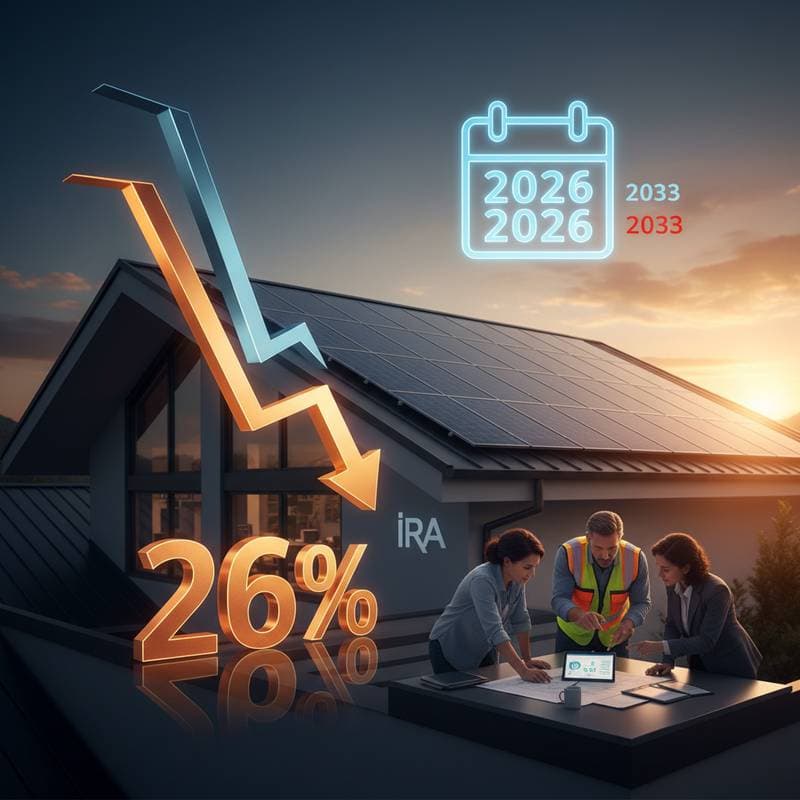
Featured image for Solar ITC Drops 4% in 2026: What It Costs You

Solar ITC Drops 4% in 2026: What It Costs You

The federal solar Investment Tax Credit faces a 4% reduction in 2026 as part of the Inflation Reduction Act's phase-down. This adjustment influences residential and commercial solar projects, prompting accelerated installations to lock in current incentives before changes alter financing and economics.

5 min read
Featured image for Solar Rebates Jump to 42% Under New IRA Rules

Solar Rebates Jump to 42% Under New IRA Rules

IRA updates effective 2026 lift solar rebates to 42 percent, emphasizing domestic production and energy communities. These incentives shorten paybacks, fortify supply chains, and spur investments in residential and large-scale solar, with simplified processes for broader access.

4 min read
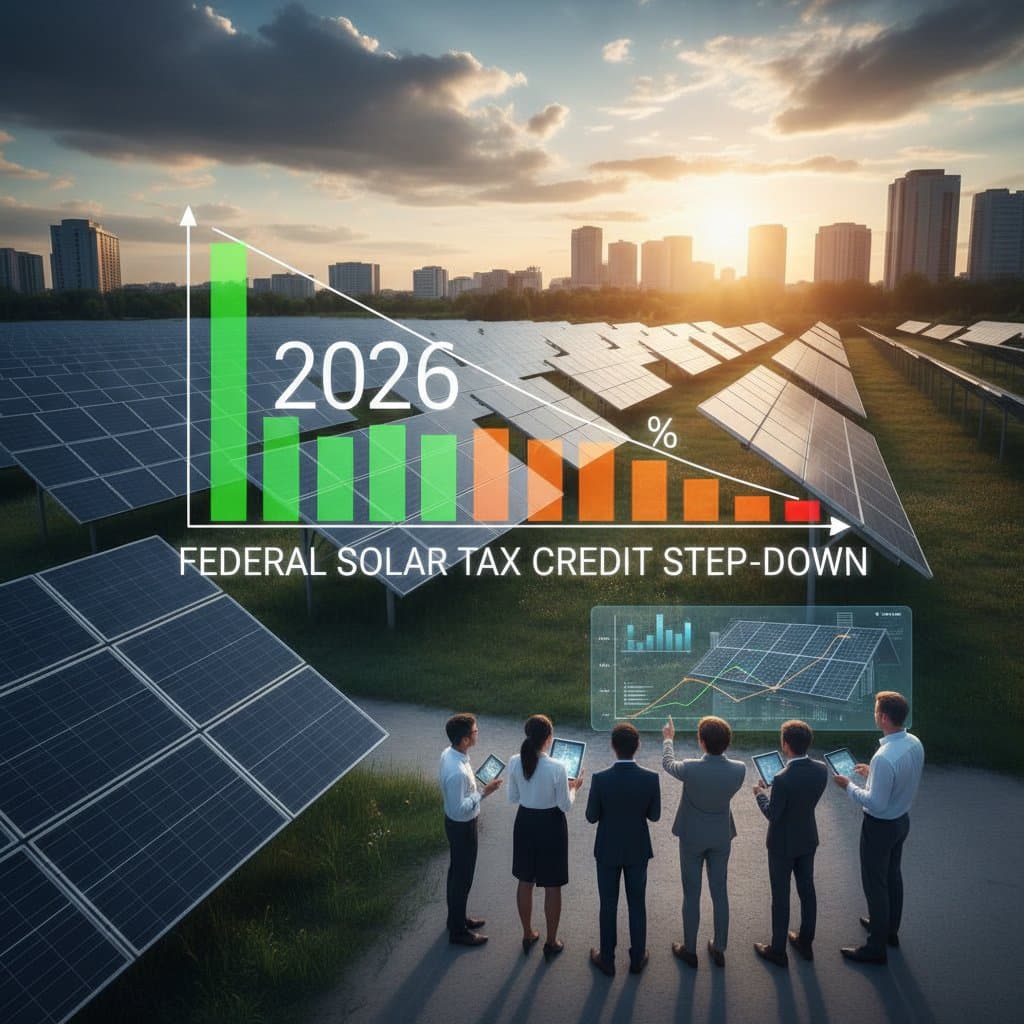
Featured image for Act Now to Lock In Full Solar Tax Credits Through 2026

Act Now to Lock In Full Solar Tax Credits Through 2026

The IRS solar tax credit approaches a critical phase-out in 2026. Homeowners and developers who initiate projects now secure higher incentives, sidestep installation delays, and capture substantial savings. Early planning aligns with IRS construction-start requirements, stabilizes costs, and positions projects for optimal financial outcomes before reductions apply.

4 min read
Featured image for Stack State and Federal Solar Credits Starting 2026

Stack State and Federal Solar Credits Starting 2026

Beginning in 2026, updated federal regulations permit solar developers and homeowners to stack state and federal credits without penalties, transforming project economics. This shift promises cost reductions of up to 50 percent, increased deployable capacity, and renewed growth in residential, commercial, and utility markets, alongside stricter compliance needs.

5 min read
Featured image for Solar Projects Must Run by June for 2026 ITC Credit

Solar Projects Must Run by June for 2026 ITC Credit

To claim the 2026 solar investment tax credit, projects must operate fully by June under IRS 'placed in service' rules. Delays in interconnection, supplies, or permits threaten millions in incentives. Strategic scheduling, early utility coordination, and meticulous records ensure compliance and maximize returns.

5 min read
Featured image for 2026 Solar Tariffs Already Shifting Panel Prices

2026 Solar Tariffs Already Shifting Panel Prices

With 2026 solar tariffs on the horizon, U.S. panel prices respond to policy risks. Developers encounter variable costs, supply challenges, and financing hurdles. Tariffs seek to support local production, yet success depends on flexible sourcing, clear pricing, and proactive planning in a policy-influenced global solar sector.

5 min read
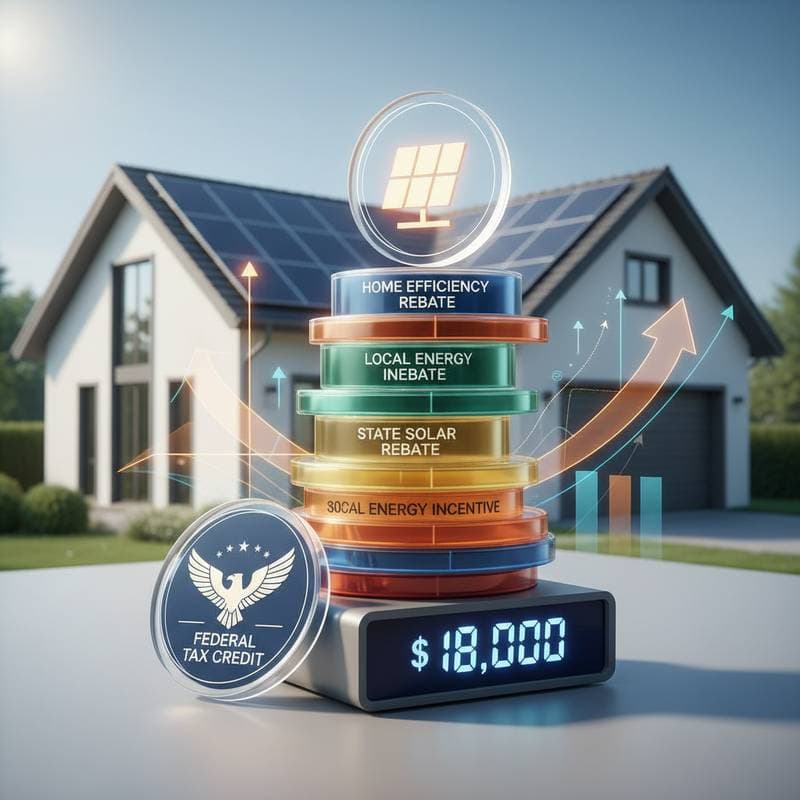
Featured image for Stack 3 IRA Programs to Cut Solar Costs by $20K

Stack 3 IRA Programs to Cut Solar Costs by $20K

Homeowners can achieve up to $20,000 in savings on solar projects by combining three Inflation Reduction Act incentives: the Residential Clean Energy Credit, Energy Efficient Home Improvement Rebate, and High-Efficiency Electric Home Rebate. This approach reduces costs, supports home electrification, and amplifies renewable energy advantages.

5 min read