
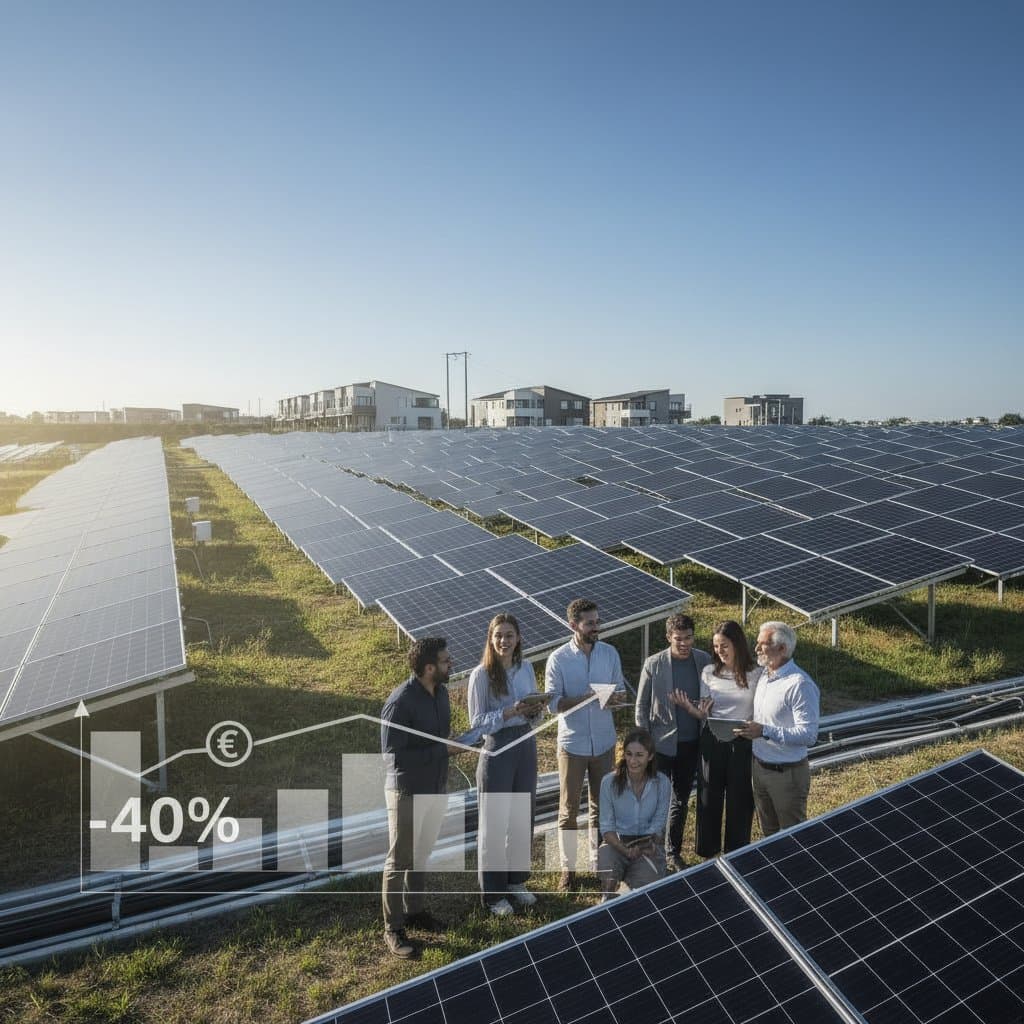
Slash Your Energy Bill by 40% with Community Solar Farms
Community solar has evolved from a limited pilot program into a vital component of the renewable energy landscape. Participants subscribe to portions of offsite solar arrays and receive credits on their utility bills, enabling savings without personal installations. This approach benefits renters, shaded-roof homeowners, and others previously excluded from solar options, with potential reductions in electricity costs reaching 40%.
Understanding Community Solar Operations
A community solar farm consists of a large, ground-mounted solar array connected to the local grid. Subscribers purchase a share, typically defined in kilowatts or as a percentage of the array's output. The electricityshare translates directly into credits on the participant's utility bill.
Virtual net metering facilitates this process. The utility monitors the share's production and applies equivalent value against the subscriber's usage. Participants continue drawing power from the grid, but the credits lower their overall charges, eliminating the need for on-site equipment or upkeep.
Utilities benefit by fulfilling renewable goals efficiently, while subscribers enjoy cost savings without capital outlays.
Primary Beneficiaries of Community Solar
Individuals unable to host rooftop systems gain the most from community solar. Renters, condominium residents, and homes with unsuitable roofs now access solar benefits seamlessly. Enrollment often involves minimal or no initial fees, with savings commencing right away.
Discount levels range from 10% to 40%, depending on program structure and local rates. This model serves as both an environmental and financial strategy. Small enterprises, such as cafes or retail shops, can subscribe to modest capacities and achieve prompt expense reductions.
Rural areas particularly profit, providing clean energy options without extensive infrastructure delays.
Expansion of Community Solar Infrastructure
Numerous community solar projects now operate nationwide through utility-led or independent initiatives. These installations utilize reclaimed sites or farmland peripheries, often in collaboration with local authorities or cooperatives for land and grid access.
Such projects deliver multifaceted value. They produce renewable energy while boosting local employment during construction and providing lease income to landowners. Nearby communities access affordable power, creating a balanced economic impact.
Navigating the Subscription Process
Joining a community solar farm typically begins with an online application through the provider or utility. Applicants submit details on their energy consumption to select an appropriate share size aligned with their needs.
No direct physical link exists between the residence and the farm; the utility manages the tracking. Monthly generation from the share converts to dollar credits on the bill, offset by a discounted subscription fee to the provider. The net difference represents the savings achieved.
Programs vary in commitment length, from long-term contracts to flexible monthly options. Superior plans ensure steady discounts despite weather variations. Review terms carefully for details on exits, fees, and credit adjustments, as provider practices differ.
Regulatory Framework and Market Growth
State policies enabling virtual net metering form the foundation for community solar success. Past debates involved utilities concerned about cost shifts, but evidence demonstrates reduced demand peaks, alleviated grid stress, and enhanced local economies.
Federal tax credits for developers, alongside state renewable mandates, drive project proliferation. As capacity increases, subscription costs decline, broadening access and amplifying household savings.
Quantifying Savings and Broader Impacts
Claims of up to 40% reductions stem from verified program data. Areas with elevated electricity prices yield the highest proportional gains, often translating to annual savings of several hundred dollars per household.
Participation extends beyond finances by promoting energy cost stability. Distributed solar generation decreases reliance on distant supplies during peaks, easing grid loads and curbing rate volatility.
Steps to Join a Community Solar Program
To explore community solar, first verify availability through your utility's offerings. Examine local projects, evaluate rate structures, and scrutinize contract specifics for alignment with your goals.
This established approach delivers tangible bill reductions alongside contributions to regional renewable energy development.