
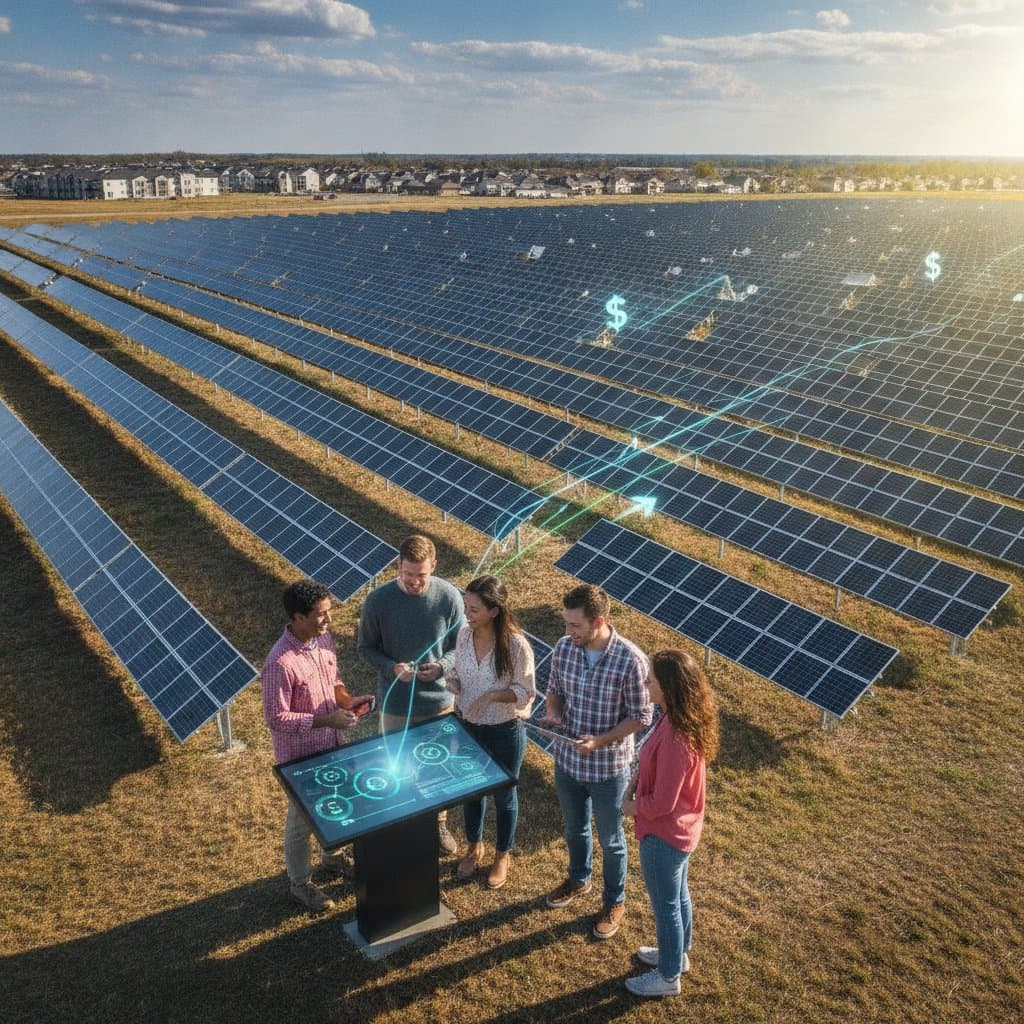
Community Solar Lets You Share Panels Without a Roof
Community solar projects in the United States now account for several gigawatts of installed capacity. These shared systems, often ranging from 1 MW to 5 MW, are built on offsite land. Multiple subscribers purchase or lease a portion of the generation and receive corresponding bill credits.
The model has become a key growth segment within the distributed generation market. It thrives in states with enabling legislation and standardized subscription programs.
Expanding Access Beyond Rooftops
Traditional rooftop solar excludes many potential customers. Renters, residents in shaded areas, and those with unsuitable roofs often cannot install panels. Community solar removes these barriers by centralizing the array at an optimal site.
Participants subscribe to a share that matches their average energy use. The system owner handles installation, maintenance, and monitoring. Subscribers gain predictable savings without upfront costs or ongoing responsibilities.
How the Subscription Model Works
Subscribers enter a contract with the project operator. Their share is measured in kilowatts or as a percentage of total capacity. The utility applies bill credits through virtual net metering while the subscriber continues to draw power from the grid.
Contract terms range from month-to-month options to multi-year commitments. Pricing may be fixed or tied to utility rates. Most participants achieve annual savings between 5 and 15 percent.
Opportunities for Developers and EPC Firms
Community solar creates a steady pipeline of medium-scale projects for engineering, procurement, and construction firms. These installations typically require one to five acres per megawatt. Developers select single-axis trackers or fixed-tilt racking based on site conditions and budget.
Mounting system manufacturers supply ground screws, helical piles, and lightweight aluminum racking to control labor costs. Some projects incorporate bifacial modules to boost yield per acre. Standardized designs across multiple sites reduce engineering expenses and speed permitting.
Policy Drivers and Market Challenges
State policies determine project success. Virtual net metering, clear interconnection rules, and transparent credit valuation support bankability. States with established frameworks have seen rapid deployment.
Interconnection queues and land-use concerns remain obstacles. Subscription management software helps operators track enrollment and maintain compliance. Programs that reserve capacity for low- and moderate-income subscribers often achieve stronger retention.
Utility Perspectives and Technical Requirements
Utilities operate their own programs or partner with developers to meet renewable goals. They manage billing integration and gain data on subscriber behavior that informs grid planning.
Site selection prioritizes proximity to distribution feeders and stable soil. Developers conduct geotechnical testing to choose appropriate foundations. Visual screening and landscaping address community concerns during permitting.
Financing Structures and Ownership Models
Projects may be utility-owned or developed by independent producers and sold after commissioning. Tax equity, debt, and subscriber revenue form the financial base. The Inflation Reduction Act incentives improve returns for projects meeting domestic content and labor standards.
Anchor tenants such as municipalities or corporations provide revenue stability. Third-party administrators often handle marketing and customer service to keep subscription levels high.
Environmental and Social Benefits
Community solar reduces carbon emissions and directs investment to local economies. Many developers partner with workforce training programs to hire nearby workers. Income-targeted participation provisions expand access and build community support.
Path Forward for Shared Solar
Growth will depend on improved billing systems and broader state adoption. Developers are testing hybrid projects that pair community solar with battery storage. For consumers, the model offers a direct route to renewable energy savings without rooftop ownership.