
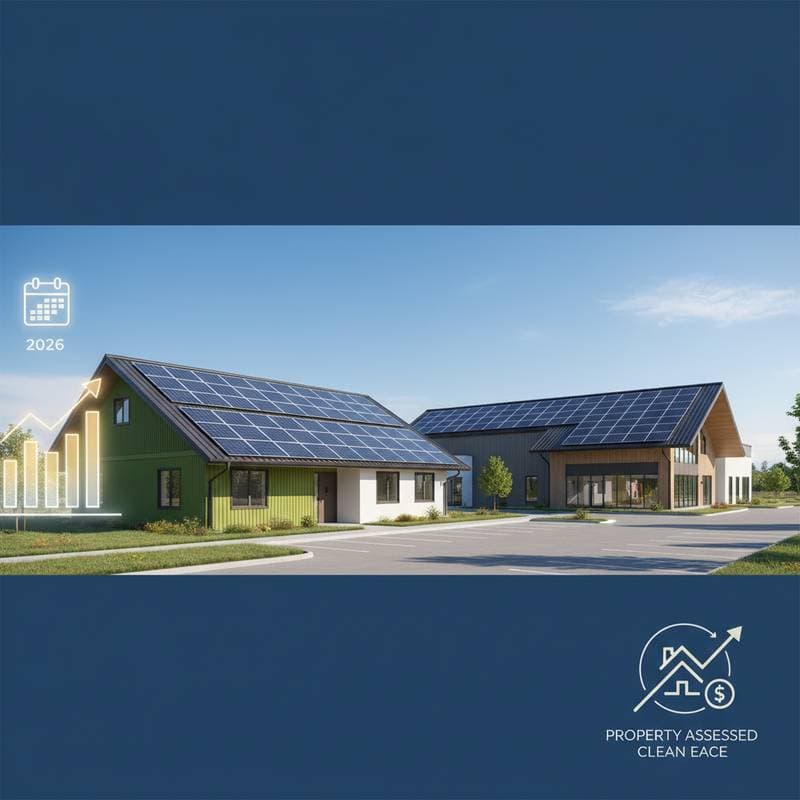
New PACE Solar Financing: Zero Down, Tax Repayment
Property Assessed Clean Energy (PACE) financing has gained steady attention across the renewable energy market for its ability to make solar installations more accessible. A new zero-down PACE option reinforces that momentum by removing upfront costs and linking repayment to property taxes. This structure provides homeowners, developers, and commercial property owners a way to fund solar projects without traditional loans or credit-based approvals.
PACE programs operate through local governments in partnership with private financiers. The new zero-down model enhances affordability by integrating the payment obligation directly into the property tax system. Borrowers repay the solar installation cost gradually over an extended period through their tax bill, which can transfer to a new owner if the property sells.
How Zero-Down PACE Financing Works
Unlike conventional bank loans, PACE financing relies on property assessments rather than personal credit. When a property owner enrolls, the financing covers the entire cost of the solar system, including equipment, labor, and permitting. The repayment amount then appears as an additional line item on the property tax statement.
This structure allows participants to start generating energy savings immediately without paying upfront capital. The zero-down feature removes one of the most common barriers to solar adoption. Because the financing ties to the property, not the individual, repayment obligations remain consistent even if ownership changes.
The total repayment term often matches the expected lifespan of the solar system, which helps align annual costs with long-term energy savings. As solar panels reduce electricity bills, many property owners find that their total monthly outlay remains stable or declines over time. For example, a typical residential system might generate enough savings to cover 70 to 100 percent of the added tax assessment, depending on local utility rates and sunlight exposure.
Why the PACE Model Appeals to Property Owners
PACE programs design to make clean energy upgrades financially stable and predictable. For homeowners, the ability to install solar with no upfront payment simplifies the decision process. For commercial property owners, the model provides a method to fund large-scale projects without draining working capital.
Key benefits include:
- No upfront payment: The property owner begins repayment only through property taxes.
- Transferable obligation: When the property sells, the new owner continues the tax-based repayment.
- Long-term stability: Fixed-rate repayment over a set term ensures predictable costs.
- Energy savings alignment: Reduced utility expenses offset most or all of the added tax payment.
This combination of flexibility and stability makes the zero-down PACE structure appealing to a wide range of customers, from single-family homeowners to large commercial developers. Property owners often report that the immediate drop in energy bills provides a tangible return on investment from day one.
Local Government and Private Partner Roles
PACE financing operates through a public-private partnership model. Local governments authorize the program, while private investors or administrators provide the capital. The government places the repayment assessment on the property tax roll and ensures collection through the tax system.
Private entities manage project approval, contractor coordination, and fund disbursement. The collaboration allows municipalities to promote clean energy adoption without using public funds directly. It also ensures consistent standards for energy efficiency, safety, and contractor performance.
Some programs include quality assurance steps, such as post-installation inspections and verification of expected energy output. These measures reduce performance risk for both property owners and investors. For instance, third-party engineers might certify that the system meets or exceeds projected annual energy production, providing peace of mind throughout the repayment period.
Expanding Options for Solar Contractors
The zero-down PACE model benefits solar installation companies by providing access to a larger pool of customers who might otherwise delay or decline solar adoption due to cost concerns. Contractors integrate financing into the sales process, which streamlines project approvals and reduces sales cycle times.
Many PACE administrators offer marketing support, digital tools, and contractor training. These resources help companies explain the program accurately and ensure that projects meet eligibility requirements. As more jurisdictions approve PACE financing, installers gain opportunities to expand their operations into new regions.
For contractors, the combination of predictable funding and verified payment collection through property taxes reduces administrative burdens. It also provides a stable revenue pipeline for both residential and commercial projects. Experienced installers note that PACE-eligible leads convert at rates 20 to 30 percent higher than traditional cash or loan-based sales.
Consumer Protections and Program Oversight
To maintain market confidence, PACE programs adhere to consumer protection and transparency requirements. Property owners receive clear disclosures about repayment terms, interest rates, and total costs. Many programs require confirmation that the property owner has the ability to repay through tax assessments without financial distress.
In some regions, administrators provide recorded documentation that outlines the assessment structure. This ensures that any future buyer or lender can easily identify the repayment obligation. PACE programs also coordinate with mortgage lenders when necessary to confirm that property taxes remain current and that the assessment does not interfere with existing loan agreements.
These safeguards help maintain stability in the real estate and financing markets while supporting continued adoption of renewable energy improvements. Oversight bodies, such as state energy commissions, periodically review program compliance to uphold these standards.
Driving Broader Solar Adoption
By removing upfront cost barriers, the zero-down PACE model expands access to clean energy. Many property owners who previously could not finance solar installations now find it possible to participate. This shift contributes to reduced carbon emissions and greater energy independence at the community level.
Local governments benefit by meeting environmental objectives without new public expenses. The property tax-based repayment mechanism ensures reliable collection and minimizes administrative challenges. Programs in states like California and Florida have seen adoption rates increase by over 50 percent since introducing zero-down options.
As the solar market matures, combining PACE financing with other incentives such as rebates or performance-based credits further enhances affordability. The zero-down structure allows property owners to access these benefits immediately, improving project economics from the first day of operation. This integration positions PACE as a cornerstone of sustainable energy policy.
Steps to Adopt PACE Financing for Solar
For property owners considering solar installation, PACE financing offers a practical path forward without large initial costs. The zero-down, tax-based repayment method simplifies the decision and allows clean energy savings to begin immediately.
- Confirm program availability in the local jurisdiction. Not all municipalities have approved PACE yet; check with the county assessor or state energy office.
- Compare financing terms with other available solar loan or lease options, focusing on interest rates, terms, and total costs.
- Work with approved contractors familiar with PACE project requirements to ensure smooth installation and compliance.
- Review repayment schedules carefully to understand how the assessment appears on annual tax bills and its impact on cash flow.
This structured approach ensures that property owners make informed decisions that align with their financial goals. With growing participation and strong oversight, the new zero-down PACE model stands ready to expand solar adoption across residential and commercial markets.
For installers, developers, and property owners alike, PACE financing demonstrates how innovative funding structures accelerate clean energy growth while maintaining financial responsibility. By connecting renewable investment directly to property value and long-term utility savings, the program supports both environmental progress and economic stability.