
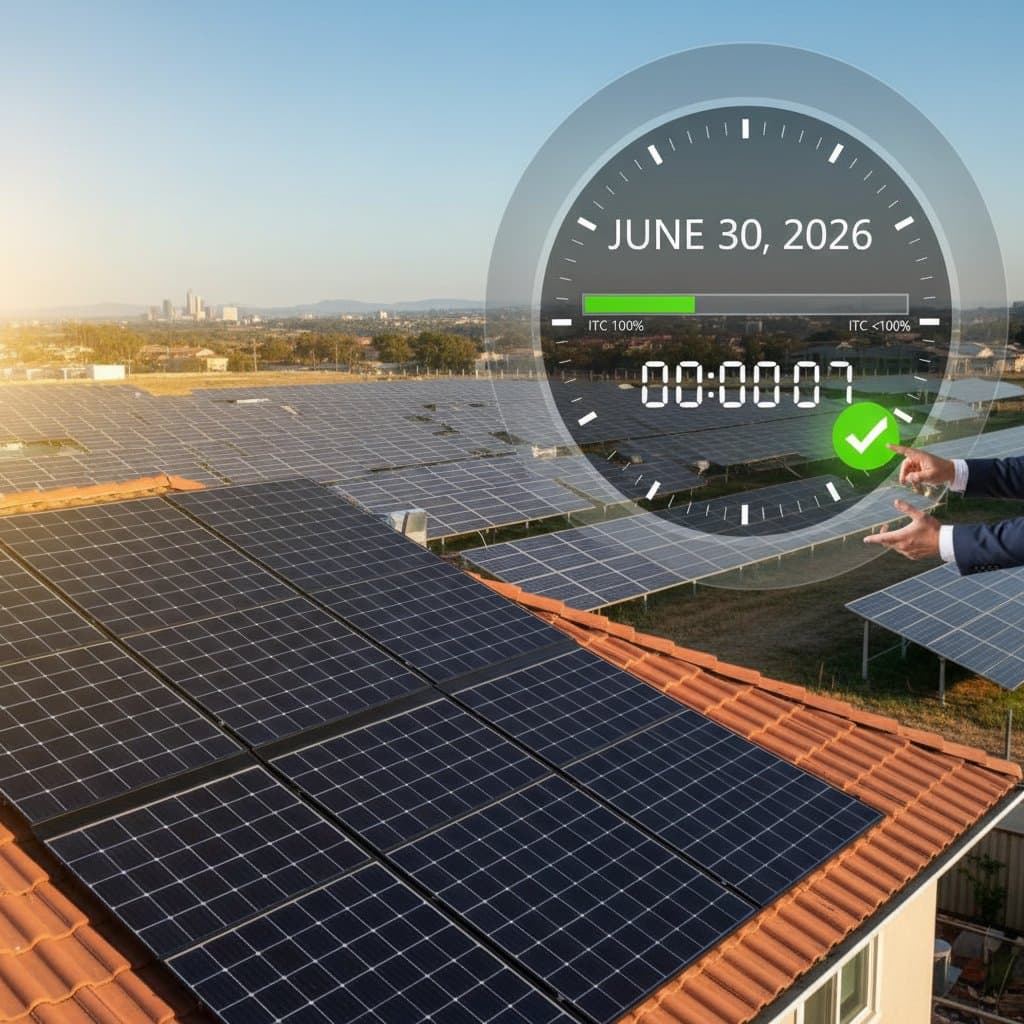
Don't Miss: Solar Must Go Live by June 30 for 2026 Tax Win
The clock is quietly ticking for solar developers and homeowners who want to secure the full federal Investment Tax Credit before it begins to phase down. The critical point is not when you sign a contract or break ground. What matters is when your system officially goes live. For anyone targeting the 2026 credit level, your project must be operational by June 30 to qualify under current guidance.
I have covered enough federal tax policy cycles to know how easily deadlines can sneak up on a project team. The solar industry has seen this pattern before, where developers rush at the last minute and find themselves stuck waiting on interconnection or final inspections. Missing the operational cutoff, even by a few days, can mean losing a valuable percentage of the credit. That is a painful outcome for a project that has already cleared the tough parts of permitting and construction.
Why the June 30 milestone matters
The federal Investment Tax Credit (ITC) has helped define the economics of modern solar development. Projects that achieve commercial operation by the cutoff date qualify for the higher percentage bracket. Systems that miss the date fall into the next phase of the schedule, where incentives are reduced.
This applies to residential, commercial, and utility-scale systems alike. The rule is simple: the project must be “placed in service” by that date. That phrase carries legal weight and generally means the system is complete, inspected, and capable of producing power for its intended use. In practice, delays in utility approvals or equipment commissioning can push a project past the finish line.
Lessons from past ITC transitions
I have reported through multiple tax credit step-down cycles, and the same story repeats every time. Developers push to commission projects before the deadline, utilities face inspection backlogs, and installers scramble to get final documentation in place. Some projects make it by a matter of hours, others miss by days. The difference can represent millions of dollars in lost credit value.
Early planning is the only reliable defense. Developers that lock in interconnection schedules and secure equipment ahead of time tend to make the deadline comfortably. Those that wait on permitting or financing often find themselves caught in a squeeze.
What homeowners and businesses should do now
For homeowners, the message is straightforward. If you want to claim the full credit under the 2026 schedule, your system must be installed, inspected, and producing power by the end of June. That means contracts and equipment orders need to be finalized well before spring. Installers will be booked solid as the date approaches, and supply chains can still tighten unexpectedly.
Commercial and utility-scale developers face more complexity, but the same principle applies. The safe approach is to treat the June 30 mark as hard, not flexible. Build in extra time for utility review, testing, and inspection. Every project manager I have spoken with in recent months has stressed that interconnection queues remain unpredictable.
Staying ahead of the deadline
The smartest move is to start now. Talk with your installer or EPC partner about construction timelines, permitting windows, and inspection availability. Get commitments in writing for delivery and commissioning targets. If you are in procurement, confirm that your modules, inverters, and racking are scheduled to arrive early enough for installation and testing.
The ITC has carried the solar industry through many growth phases, and its upcoming transition will test the same discipline the sector has developed over time. Missing the June 30 operational date could mean leaving money on the table. With careful planning and early action, your project can cross the finish line in time to capture the full 2026 tax advantage.