
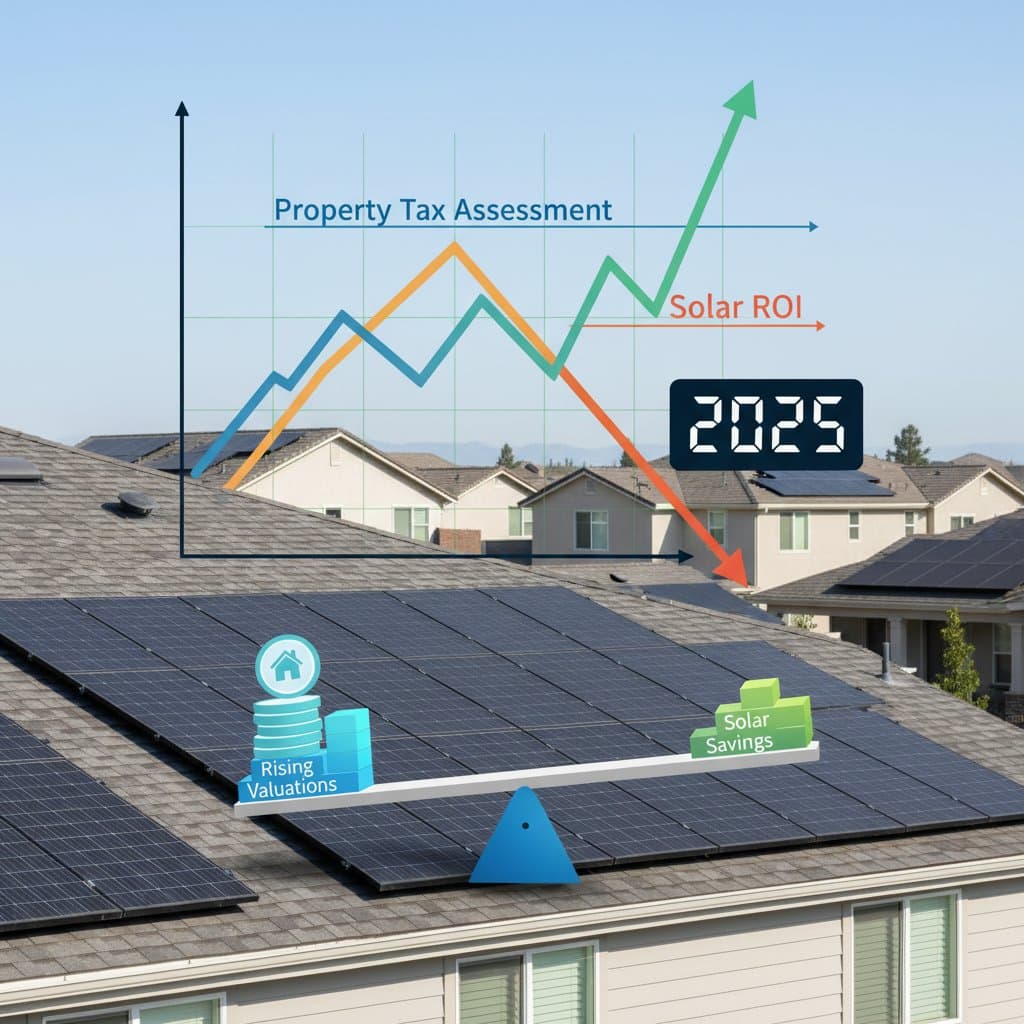
Are Property Tax Increases Undermining Solar Returns in 2025?
Homeowners and solar developers express growing concerns about how evolving property tax policies affect solar economics. New assessment rules take effect in multiple states, prompting recalculations of returns on investment for rooftop and commercial solar systems. Many now wonder if escalating property taxes diminish the financial benefits that have fueled solar adoption over the past decade.
Grasping the Property Tax Challenge
Local assessors frequently classify solar installations as property improvements that boost overall value. This classification leads to higher annual tax bills in regions without exemptions for renewable energy systems. Several states previously provided such exemptions, but revisions or phase-outs now reshape evaluations of solar payback periods by homeowners and businesses.
Residential users may encounter annual tax increases of several hundred dollars linked to solar additions. Commercial owners with extensive installations face proportionally larger burdens. Investors increasingly scrutinize whether traditional payback estimates of seven to ten years hold when factoring in these tax adjustments.
Differences in Regional Assessment Approaches
Property tax effects differ significantly nationwide. Certain counties uphold complete exemptions for solar equipment, whereas others implement partial or short-term relief. In expanding suburban areas, several jurisdictions now designate solar assets as taxable enhancements, which alters net savings from energy production.
States with elevated baseline property taxes amplify the impact of even minor valuation rises on investment returns. Local officials maintain that solar panels enhance property worth and thus warrant equivalent tax contributions. Solar proponents argue for viewing these systems as essential energy infrastructure, not mere upgrades.
Effects on Homeowner Finances
Post-installation property tax hikes often compress anticipated savings for homeowners. Actual utility bill reductions may fall short of projections, trimming overall returns by multiple percentage points. For those financing systems via loans, elevated taxes can counteract monthly energy cost savings that initially attract buyers.
Imagine a homeowner installing a standard rooftop system projected to cut electricity expenses by $400 annually. A comparable tax assessment increase could erase much of that gain. This scenario drives demands for more precise long-term savings forecasts from installers and lenders.
Impacts on Commercial and Large-Scale Projects
Commercial solar initiatives encounter amplified challenges. Developers for warehouses, retail spaces, and factories depend on stable property valuations for financing. Reclassifying solar arrays as taxable raises demands for revised financial projections, potentially lowering internal rates of return and delaying developments.
Utility-scale endeavors similarly suffer from novel valuation methods by tax authorities. Some counties establish dedicated categories for solar, basing taxable value on power output capacity. Although intended for uniformity, these can escalate yearly expenses into millions for major sites. Such shifts guide project locations and terms in developer-municipality pacts.
Reconciling Revenue Demands with Clean Energy Aims
Property tax decisions mirror tensions between municipal funding requirements and renewable targets. Counties rely on these taxes for roads, schools, and services. Expanding solar adoption broadens the taxable property pool, yet excessive taxation risks slowing installations and conflicting with statewide environmental mandates.
State assemblies examine options to sustain, adjust, or eliminate solar exemptions. Proposals include taxing only partial system values or granting initial-year waivers. These measures seek to uphold incentives for property owners while securing equitable municipal income.
Importance of Stable Policy Frameworks
Solar sector participants value policy consistency alongside direct incentives. Recurrent alterations in tax handling breed uncertainty for developers and funders. Unforeseeable liabilities restrict financing and prolong timelines. Installers note clients seeking assurances or detailed tax impact disclosures.
Trade groups press regulators for uniform guidelines safeguarding revenues and investments. Clear valuation processes and enduring exemptions minimize ambiguity, fostering reliable expansion.
Tactics to Secure Solar Investment Returns
Homeowners and developers employ targeted methods to counter property tax uncertainties:
- Examine municipal tax regulations prior to committing to an installation, clarifying solar valuation methods.
- Seek preliminary assessments from tax offices to forecast valuation shifts.
- Apply promptly for exemptions or reductions post-installation.
- Track pending laws that might influence exemption access.
- Partner with lenders who integrate possible tax variations into savings estimates.
Developers sometimes pursue payment-in-lieu-of-taxes deals with local entities. These fixed annual contributions replace variable assessments, aiding planning for all involved.
Assessing True Investment Value
Solar returns hinge on elements like upfront costs, local electricity prices, and rebates. Property taxes emerge as a key factor in this mix. Although increases may moderate gains, they seldom nullify them. Systems typically deliver enduring economic upsides, albeit with modestly prolonged recovery times.
Beyond finances, solar offers energy security and ecological gains that appeal to many. Economically, however, tax evolutions highlight needs for localized, precise projections. Providers must incorporate regional tax realities to build trust.
Advancing with Informed Solar Strategies
Escalating property taxes add layers to solar planning, yet viable returns persist with diligence. Proactive accounting for tax potentials enables sound choices and averts setbacks. Policymakers contribute by defining clear rules and reasonable supports. Collaborative dialogue between industry and officials can harmonize budgets with sustainable progress.